
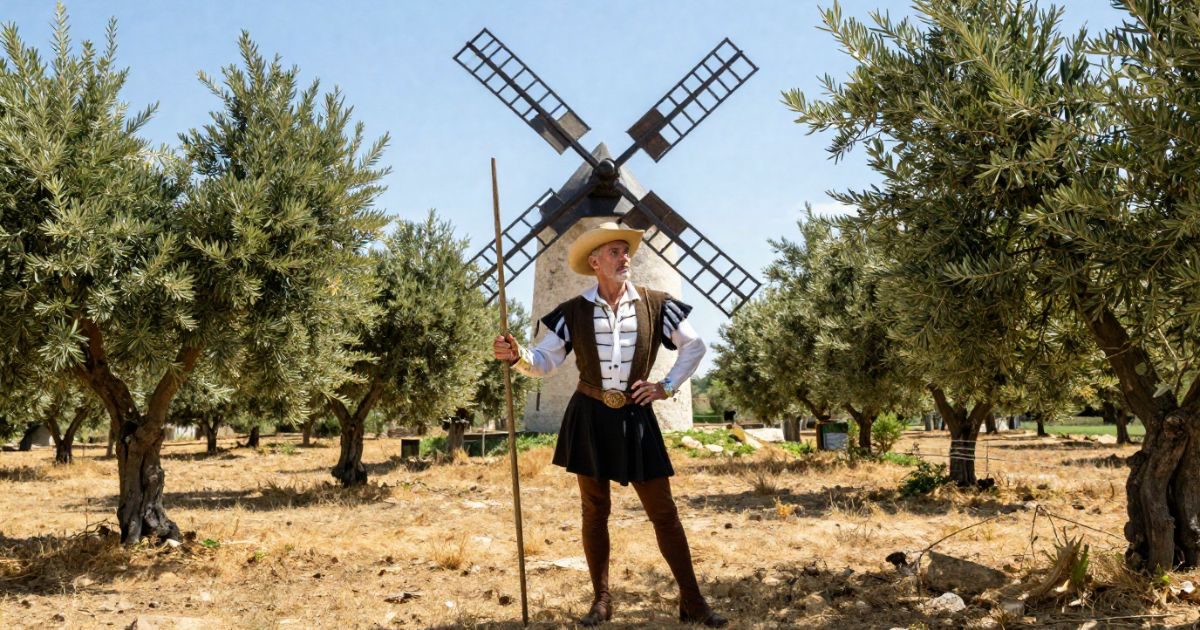
Hamete opens with a Moorish complaint that Part Two must stay on Quixote and Sancho without the novels of Part One, requests credit for what he refrains from writing, and calls the labour intolerable drudgery never equal to the author's pains, then records how written counsels dropped into the duke's hands, were read aloud by the duke, and Sancho was dispatched that evening to his island village with a great following.
Sancho, dressed as a lawyer on a mule with Dapple in silk trappings behind, tells Quixote the conducting majordomo is the Distressed One's face; Quixote says the devil will not carry him off yet and bids Sancho report his government, then weeps as Sancho kisses the duke and duchess hands and the household sees him off and Hamete promises two bushels of laughter from how he will govern.
Alone, Quixote refuses the duchess's four flower-like damsels, places a barrier between inclination and virtue, and will sleep in his clothes rather than be undressed; the duchess sends them away and he sups alone, swearing Clavileño was the quietest mount after the journey from Kandy and the duchess says Malambruno burned the horse to end his wandering and establish Quixote's valour by its ashes.
Undressing alone by two candles, he bursts two dozen stitches in a green stocking and would give silver for green silk; Hamete cries O poverty at cracked shoes, mismatched buttons, and crinkled ruffs while Quixote puts on Sancho's travelling boots and goes heavy-hearted to bed missing his squire.
From the grated window he hears Altisidora tell Emerencia she cannot sing since the stranger arrived; Emerencia bids her sing softly though the duchess sleep, and Altisidora's harp ballad mocks the knight in bed, offering petticoats, pearls, and to scratch his poll while naming herself at the end.
Don Quixote sneezes to show he hears, then shuts the window declaring himself dough and sugar-paste to Dulcinea alone, flint to all others, boiled or roast, chaste in spite of all enchanters, and stretches on his bed out of sorts while Hamete turns from the lonely knight to the great Sancho Panza's government.
Hamete opens with a Moorish complaint that Part Two must stay on Quixote and Sancho without the novels of Part One, requests credit for what he refrains from writing, and calls the labour intolerable drudgery never equal to the author's pains, then records how written counsels dropped into the duke's hands and Sancho was dispatched that evening to his island village with a great following. Sancho, dressed as a lawyer on a mule with Dapple in silk trappings behind, tells Quixote the conducting majordomo is the Distressed One's face; Quixote says the devil will not carry him off yet and bids Sancho report his government, then weeps as Sancho kisses the duke and duchess hands and Hamete promises two bushels of laughter from how he will govern. Cervantes makes the cost visible: not only what the characters suffer, but what bystanders must decide once the story can no longer stay private. The chapter asks whether comfort, silence, or intervention is the truer form of care when someone is living inside a plot of their own.
Explore this chapter with AI to uncover deeper meaning and practical takeaways.
AI Discussion