
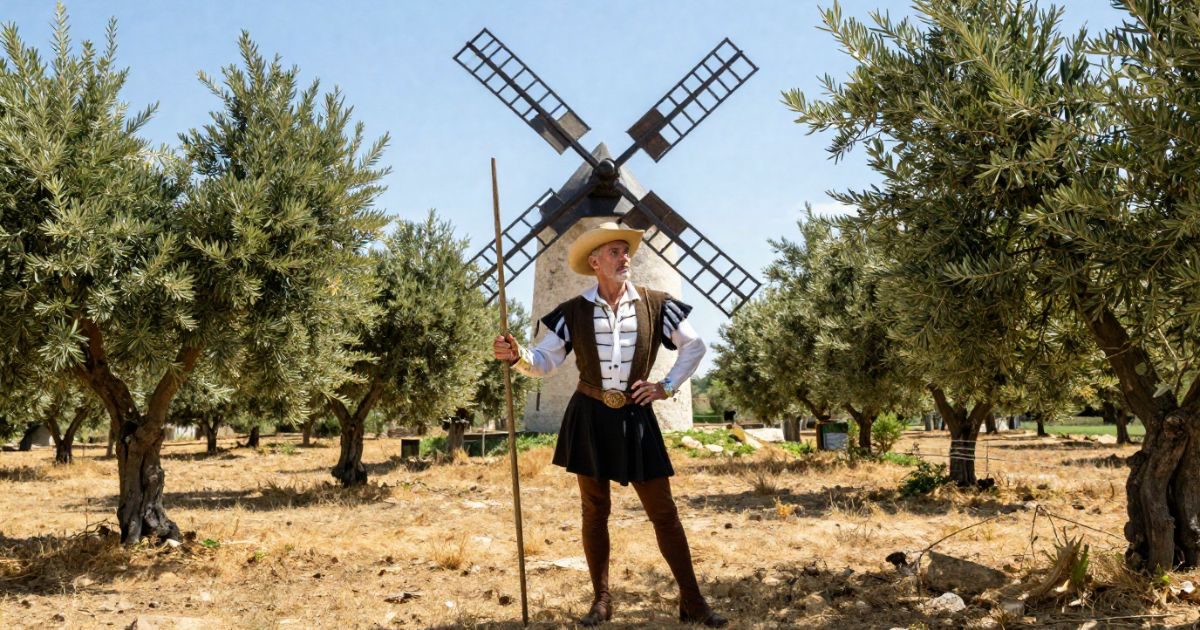
A young man fetching provisions from the village brings news: the student-shepherd Chrysostom died that morning, rumoured of love for Marcela, daughter of Guillermo the Rich, who wanders these wolds in a shepherdess's dress. He directed in his will that he be buried like a Moor at the Cork-tree spring where he first saw her. The village clergy say the rites savour of paganism and must not be obeyed. His friend Ambrosio, also dressed as a shepherd, insists every direction be kept, and tomorrow they will bury him with great ceremony.
Don Quixote asks who the dead man was. Pedro tells the tale, mixing cris for eclipse and estility for sterility while Quixote corrects him until Pedro snaps that they will never finish at this rate. Chrysostom came home from Salamanca learned in the stars and in verse, inherited land, cattle, and money, then put off the scholar's gown for a crook and sheepskin, and Ambrosio did the same. Marcela, orphaned rich and raised by a priest uncle who would not marry her against her will, refused every suitor, then took to the fields with her own flock. Pedro swears she has given no one even the semblance of a hope, yet her affability and beauty do more harm than plague: the hills resound with laments, and a couple of dozen beeches carry her name carved in the bark.
Quixote apologises for the word-catching and promises to attend the burial, half a league away. Pedro says he does not know even the half of what has happened to Marcela's lovers, and that the night air may hurt the wounded ear, though the rosemary remedy should hold. Sancho, wishing the goatherd's loquacity at the devil, begs his master into Pedro's hut. Quixote passes the rest of the night thinking of Dulcinea, in imitation of Marcela's lovers. Sancho settles between Rocinante and the ass and sleeps not like a discarded lover but like a man who has been soundly kicked.
A messenger brings news from the village: the student-shepherd Chrysostom has died, rumoured of love for Marcela, the rich orphan who tends sheep in these hills. He asked to be buried like a Moor at the cork-tree spring where he first saw her, and the clergy resist while his friend Ambrosio insists on the pagan rites. Pedro tells the full tale. Chrysostom returned from Salamanca learned in stars and verse, inherited wealth, then put on shepherd's dress to pursue Marcela. She refused marriage, became a shepherdess anyway, and keeps her honour so strictly that no suitor can claim even a hope. Yet Pedro says her beauty and frankness do more harm than plague, filling the hills with laments and carved trees. Cervantes makes the cost visible: not only what the characters suffer, but what bystanders must decide once the story can no longer stay private. The chapter asks whether comfort, silence, or intervention is the truer form of care when someone is living inside a plot of their own.
Explore this chapter with AI to uncover deeper meaning and practical takeaways.
AI Discussion