
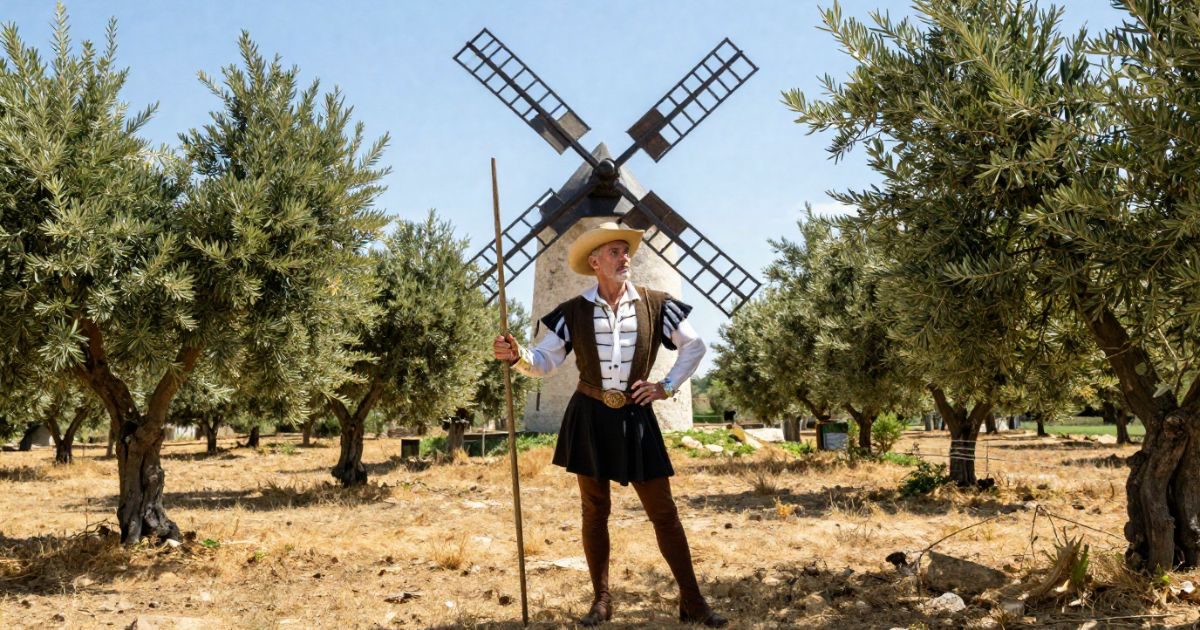
The goatherds welcome Don Quixote and Sancho with salted goat simmering in a pot, then spread sheepskins and press the knight onto an upturned trough. Sancho remains standing to serve the horn cup. Quixote insists he sit, eat from the same plate, and drink from the same vessel, because knight-errantry, like love, levels all. Sancho would rather eat bread and onions in a corner than turkeys at a table where he must chew slowly and cannot sneeze. Quixote seizes his arm and forces him down anyway. The goatherds eat in silence and stare.
After the meat they heap parched acorns and a half cheese harder than mortar, and the horn drains a wine-skin. Quixote takes a handful of acorns and delivers the Golden Age speech: a time that knew not mine and thine, when oaks and streams fed everyone, maidens wandered unattended, and justice had not yet been bent by favour. Knights-errant were instituted later, he says, to defend maidens, widows, and orphans, and he belongs to that order. The narrator notes that the long harangue might well have been spared. The goatherds gape without a word. Sancho holds his peace, eats acorns, and pays repeated visits to the second wine-skin hung on a cork tree.
One of the fold promises a comrade who can read, write, and play the rebeck. Antonio, about two-and-twenty, sits on a felled oak and sings his uncle the prebendary's ballad to Olalla: Sunday clothes on Monday, Teresa of the hillside calling her a monkey, and a vow that if he quits the mountains it will be in a friar's gown. Sancho has more mind for sleep than songs and says the labouring men cannot spend the night in singing. Quixote blames the wine-skin and asks for his ear to be dressed again. A goatherd chews rosemary with a little salt, binds it on, and assures him no other treatment will be required, and so it proved.
The goatherds welcome Don Quixote and Sancho with salted goat, cheese, acorns, and wine. Quixote insists Sancho sit as his equal because knight-errantry levels all ranks. Sancho refuses: he eats better standing, alone, without the manners required at a noble table. Quixote forces him down anyway. After supper Quixote contemplates the acorns and launches into the Golden Age speech: a time without mine and thine, when nature fed everyone and maidens wandered safe until knights were needed. The narrator says the harangue might well have been spared. The goatherds listen gaping. Sancho eats, drinks, and says nothing. Cervantes makes the cost visible: not only what the characters suffer, but what bystanders must decide once the story can no longer stay private. The chapter asks whether comfort, silence, or intervention is the truer form of care when someone is living inside a plot of their own.
Explore this chapter with AI to uncover deeper meaning and practical takeaways.
AI Discussion