
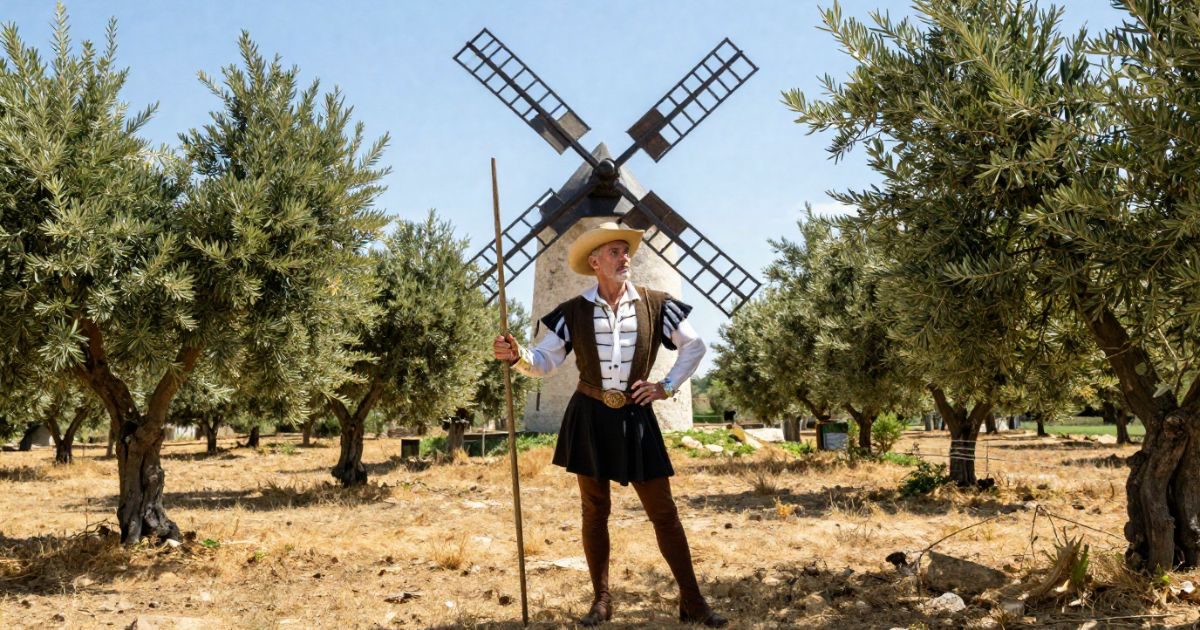
A spring in a cool grove washes off the bull dust; Quixote, vexed and fasting, says he was born to live dying while Sancho eats, citing let Martha die with a full belly, and Quixote asks him to lash himself for Dulcinea though Sancho puts it off with until death it's all life.
They reach an inn where the landlord boasts birds of the air and fowls of the earth but kites had stolen the chickens; Sancho settles for cow-heels like calves' feet crying come eat me, eats at the head of the table while Quixote overhears gentlemen call a Second Part absurd stuff though no book so bad but it has something good.
Hearing they say he forgot Dulcinea, Quixote bursts in declaring his motto is constancy; Don Jeronimo and Don Juan present the spurious history, which wrongly names Teresa Panza Mari Gutierrez and mishandles Sancho as glutton and fool; Quixote censures its preface, Aragonese language, and errors, while Sancho insists the true pair are those Cide Hamete Benengeli wrote and not this impostor.
Over supper Quixote recounts Dulcinea's enchantment and Merlin's scourging prescription; the gentlemen marvel at his medley of wit and folly, debate Apelles and the fake author, and learn he means Saragossa until Don Juan says the counterfeit book puts him at the ring jousts there; Quixote resolves I will not set foot in Saragossa and will expose the liar by going to jousts at Barcelona instead, then leaves recommending the landlord keep a better larder.
A spring in a cool grove washes off the bull dust; Quixote, vexed and fasting, says he was born to live dying while Sancho eats, citing let Martha die with a full belly, and Quixote asks him to lash himself for Dulcinea though Sancho puts it off with until death it's all life. They reach an inn where the landlord boasts birds of the air and fowls of the earth but kites had stolen the chickens; Sancho settles for cow-heels like calves' feet crying come eat me, eats at the head of the table while Quixote overhears gentlemen call a Second Part absurd stuff though no book so bad but it has something good. Cervantes makes the cost visible: not only what the characters suffer, but what bystanders must decide once the story can no longer stay private. The chapter asks whether comfort, silence, or intervention is the truer form of care when someone is living inside a plot of their own.
Explore this chapter with AI to uncover deeper meaning and practical takeaways.
AI Discussion