
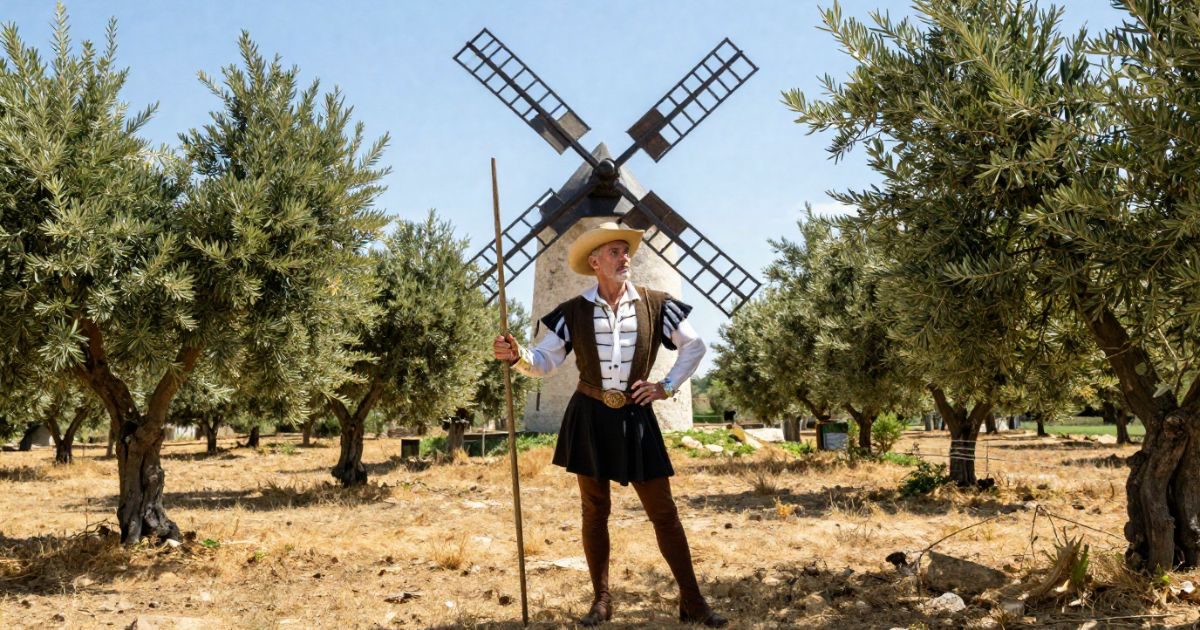
Leaving the castle, Quixote tells Sancho that freedom is one of the most precious gifts heaven has bestowed, that captivity is the greatest evil, and that even amid dainty banquets he hungered because favours owed restraint the spirit; Sancho replies with thanks for two hundred gold crowns from the majordomo, carried next his heart like a warming plaster or comforter against roadside cudgels.
Half a league on they find labourers dining beside cloth-covered retablo images: Saint George on horseback, Saint Martin dividing his cloak with a beggar, James the Moorslayer trampling Moors, and Paul falling from his horse at conversion; Quixote hails each as a knight of arms like himself though they fought with divine weapons, Sancho cites for giving and keeping there's need of brains, and both read the meeting as a happy omen while the carriers resume their journey puzzled.
Sancho marvels that this adventure left them unbelaboured and undismayed without drawing sword; Quixote rebukes vulgar omens, telling how Scipio clasped Africa crying thou canst not escape me, answers Sancho on Santiago and close Spain, and then weighs Altisidora's shameless love against two sorts of beauty, of mind and body, insisting honest wit may win love without handsome face.
Suddenly green cord nets entangle Quixote; two gorgeously dressed shepherdesses explain a genteel Arcadia two leagues off, with Garcilasso and Camoens eclogues and field tents by a brook, nets set only to snare startled birds; Quixote likens his wonder to Actaeon beholding Diana bathing, is recognised from the printed history, feasts with thirty pastoral masqueraders, and rising denounces ingratitude as filling hell, offering for two full days on the Saragossa highway to maintain by arms that these disguised shepherdesses are the fairest and most courteous maidens on earth except Dulcinea del Toboso.
Sancho's boast that no priest or knight could match his master sends Quixote into rage; he plants himself mid road shouting that any who deny the shepherdesses' beauty must fight, repeats the challenge twice unheard, then meets not a challenger but a drove of bulls; a herdsman warns these bulls will knock you to pieces, Quixote cries rabble and demands confession, the herd tramples Rocinante, Dapple, Sancho, and himself, and without farewell to the mock or imitation Arcadia they ride on more in humiliation than contentment.
Leaving the castle, Quixote tells Sancho that freedom is one of the most precious gifts heaven has bestowed, that captivity is the greatest evil, and that even amid dainty banquets he hungered because favours owed restraint the spirit; Sancho replies with thanks for two hundred gold crowns from the majordomo, carried next his heart like a warming plaster or comforter against roadside cudgels. Half a league on they find labourers dining beside cloth-covered retablo images: Saint George on horseback, Saint Martin dividing his cloak with a beggar, James the Moorslayer trampling Moors, and Paul falling from his horse at conversion; Quixote hails each as a knight of arms like himself though they fought with divine weapons, Sancho cites for giving and keeping there's need of brains, and both read the meeting as a happy omen while the carriers resume their journey puzzled. Cervantes makes the cost visible: not only what the characters suffer, but what bystanders must decide once the story can no longer stay private. The chapter asks whether comfort, silence, or intervention is the truer form of care when someone is living inside a plot of their own.
Explore this chapter with AI to uncover deeper meaning and practical takeaways.
AI Discussion