
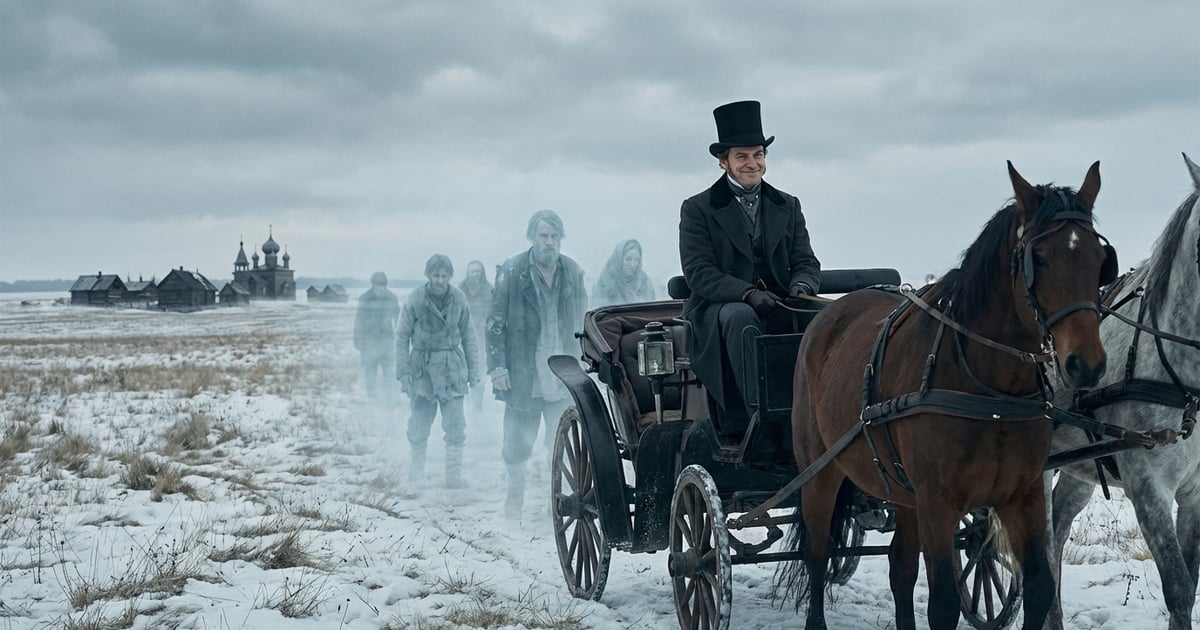
Chichikov arrives at the General's house in Tientietnikov's koliaska, having attuned his features to deference. The General receives him with reasonable goodwill. He asks Chichikov who he is staying with. The name Tientietnikov produces a frown. The General softens. And then, to explain why Tientietnikov has not called in person, Chichikov improvises: the young man is shy, and in any case is occupied with an important project , a history of the Generals of 1812. He is mildly curious about the history. He says Tientietnikov is welcome to call and gather material. She stops short on seeing a stranger. Her father introduces them. She immediately speaks up to defend Tientietnikov: "Who ever supposed him to be a fool? Chichikov is invited to luncheon. During the General's ablutions, he ventures his request.
His opening is carefully pitched: he has deemed it his duty to present himself before the valiant men who on the field of battle have proved the saviours of their country. Chichikov does not hesitate: Tientietnikov greatly regrets that on a former occasion he failed to show proper respect for the services your Excellency has rendered to the fatherland. This last invention alarms Chichikov even as he produces it. Mentally he spits upon himself. "What rubbish I am talking!" The General takes the bait. At this moment the door opens and the General's daughter Ulinka appears , thin, fragile, bright as a ray of sunlight. You took Vishnepokromov's word , a man who is himself both a fool and a good-for-nothing." She vanishes. He plants further seeds of reconciliation between the families.
He invents a decrepit uncle who owns three hundred souls and has demanded that Chichikov acquire an equal number before he will leave him anything. If the General would transfer to him the dead souls on his estate , on paper, as though still living , Chichikov could present them to the uncle and secure the inheritance. The General collapses into laughter. He cannot stop. He bellows, chokes, subsides, and begins again. The butler and Ulinka come running in alarm. When he recovers he confirms: Chichikov may have the dead souls. They cost him nothing, and the joke they will play on the uncle is worth far more. Before leaving, Chichikov visits a second nearby estate , the Betrishchevs , where the daughter Tentetnikova had lived before her estrangement from Tientietnikov.
The General isn't stupid, he's a successful military leader. Yet he falls completely for Chichikov's absurd dead souls scheme. Why? Because Chichikov doesn't attack his intelligence; he validates his identity. Once the General feels truly seen as a military hero, his critical thinking shuts down. This reveals something crucial about human psychology: we're most vulnerable through our strengths, not our weaknesses. The person who prides themselves on being 'street smart' falls for cons that make them feel clever. The 'good judge of character' gets taken by someone who praises their insight. The 'independent thinker' gets manipulated by anyone who validates their nonconformity. Modern scammers use this ruthlessly, romance fraudsters tell lonely people they're 'special,' investment scammers tell proud people they're 'savvy enough' for exclusive deals, political grifters tell each group they're the 'real patriots.' The defence isn't cynicism, it's pattern recognition. When someone validates your core identity right before asking for something, that's not coincidence. The question becomes: are they speaking to your identity to help you, or to use you?
Explore this chapter with AI to uncover deeper meaning and practical takeaways.
AI Discussion