
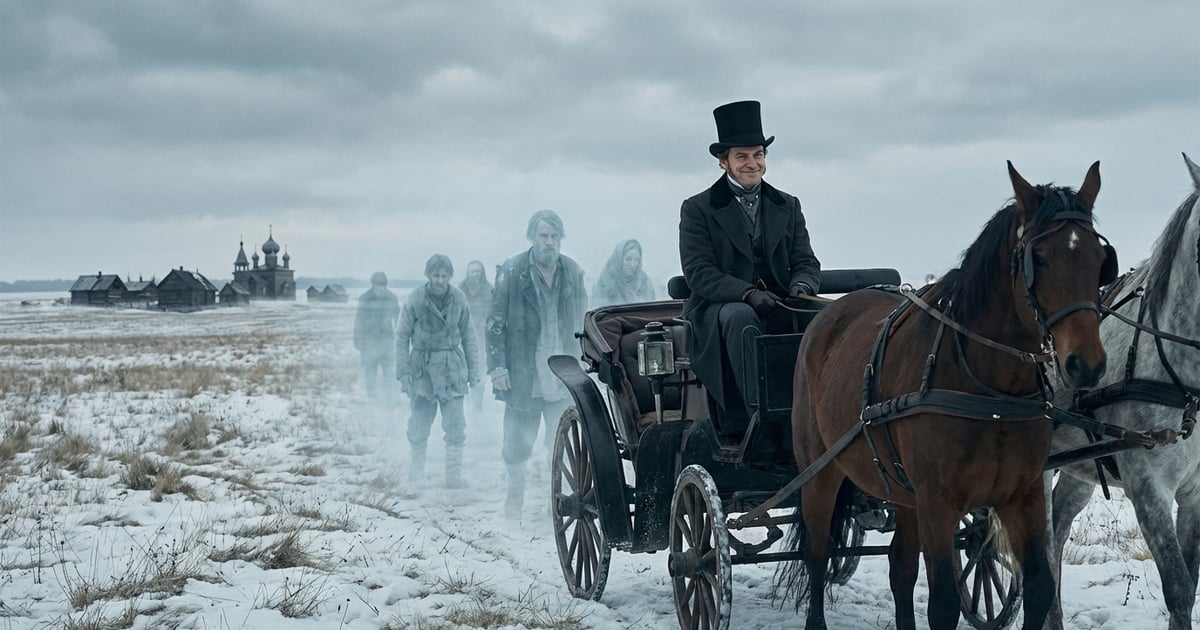
Volume Two opens with Gogol asking why he paints poverty and imperfection, why he delves into Russia's remotest corners. At the summit sits a house extraordinary from every approach. Its owner is Andrei Ivanovitch Tientietnikov, thirty-three, unmarried, existing in deliberate inactivity: pipe, tea, windows, dressing-gown until noon. Gogol traces a school under Professor Alexandr Petrovitch, who made boys see Russia as worth loving and thinking about, who taught feeling as well as facts. One ambiguous humiliation ended his career; he retreated to his estate. He reduced barstchina, walked the fields, built a school. Failure convinced him the world was unworthy of his ideals, so he stopped trying and called the withdrawal integrity. Chichikov's britchka overturns on the bad road and rumbles into the courtyard. He asks shelter for a day or two and stays weeks. From servants Chichikov learns of a broken friendship with a neighbouring General and an attachment to the General's daughter ended by a word Tientietnikov cannot forgive. Chichikov judges the offence nothing; Tientietnikov insists dignity was wounded. The contrast is Vol II in miniature: one man acts, the other meditates; one turns insult into strategy, the other into retirement. Tientietnikov watches astonished; Chichikov calculates that reconciliation may open doors as surely as dead souls opened ledgers. Gogol's landscape description frames paralysis: beauty without use, ideals without labour, a nobleman who could be useful but chooses the dressing-gown. Chichikov arrives as corruption's ambassador, yet his energy throws the idle estate into motion. When the guest leaves for the General's house, the mountain estate returns to quiet, but the plot has turned from census fraud toward social repair, however insincere the repairman may be.
Because, he says, that is where his temperament leads him. But what a spot! The spot is a mountain fortress of limestone cliffs above a boundless plain: forests, meadows, a winding river, peasant huts, a church whose gilded crosses seem hung in air without support. He was not always idle. When that man died, pedants replaced him. Tientietnikov entered government service full of reforming zeal and found a machine for forms, a superior who promoted laughter at his jokes above competence. He tried honestly. The peasants thanked him and worked their own plots better than his; women defied instruction; the schoolmaster achieved nothing visible. He reads a little of A Son of the Fatherland, speaks of bridges and philosophy he will never build, and lets the bailiff manage what management means. Tientietnikov is glad of company; Selifan bonds with grooms; the horses approve the oats. Chichikov raises marriage three evenings running with increasing directness. On the third, Tientietnikov tells the story: he visited the house, felt slighted by a tone or gesture, withdrew in wounded pride, and has since nursed the injury as moral principle. The next morning Chichikov borrows the koliaska, announces he will visit the General to offer personal respect, and sets off to meddle where pride froze two households. The chapter asks whether Russia's educated class can act or only feel. Tientietnikov had every advantage of sentiment and lost to peasant cunning and office vulgarity. Selifan and Petrushka thrive; the master smokes and stares. Idle landlords and active schemers form Vol II's first partnership: one supplies house and hurt; the other supplies nerve and lies.
Gogol's opening panorama matters: cliffs, river, church crosses in air, huts below, a house on the summit that looks noble from every angle while its master rots inside. Tientietnikov's day is pipe, tea, windows, dressing-gown; his wife in boarding-school French and purse-knitting is absent from action because gentle nurture taught piano, not kitchen. The professor who loved Russia is dead; pedants replaced him; the civil service laughed him out. Estate reforms failed because peasants outplayed a sentimental owner. Chichikov overturns on the road and stays weeks because idleness loves an audience. He probes the General feud, praises marriage, calls wounded pride a trifle, then borrows the carriage to fix what pride broke. The comedy is that a schemer becomes matchmaker; the tragedy is that only a schemer bothers. Vol II asks whether Russia's educated men will act or only feel. Tientietnikov chose feeling; Chichikov chooses interference. The koliaska departure ends the chapter on motion after pages of stillness. Tientietnikov's servants gossip about the General's daughter; Chichikov listens and schemes. He plays bilboquet with the boys, drinks tea endlessly, and avoids the labour of estate repair. The mountain weather matches grey uniforms: neither bright nor stormy, only serviceable melancholy. When he proposes visiting the General, Tientietnikov is astonished yet hopeful; wounded pride has frozen him, but flattery from a guest reopens the possibility of reconnection. Chichikov will use military compliments and invented histories in the next chapter; here he only borrows the carriage and sets the wheels turning. The General's daughter waits beyond the ridge; Chichikov will visit her father with compliments rehearsed on the road.
Tientietnikov represents something we see everywhere today, people so committed to doing things 'the right way' that they end up doing nothing at all. His story reveals how easily wounded pride disguises itself as moral principle. When his peasants don't respond to his enlightened management style, when his boss treats him dismissively, when the General's daughter's family seems beneath his standards, he retreats rather than adapts. Each withdrawal feels noble, he's preserving his integrity, refusing to compromise his values. But what's really happening is that he's choosing the comfort of righteous isolation over the messiness of actual engagement. This pattern shows up constantly in modern life. The parent who stops volunteering at school because other parents seem shallow. The worker who refuses to learn new systems because they're 'dumbed down.' The neighbour who stops attending community meetings because people don't immediately embrace their vision. The activist who retreats from organising because the process is too slow and imperfect. In each case, the person convinces themselves that their withdrawal proves their superiority. But Gogol shows us the devastating cost: Tientietnikov's peasants suffer under poor management, his community loses his potential contributions, and he himself withers in isolation. The chapter suggests that real integrity might require staying engaged with imperfect systems and flawed people, learning practical skills to serve your values rather than preserving your values in pristine isolation.
Explore this chapter with AI to uncover deeper meaning and practical takeaways.
AI Discussion