
Marx begins with a worker who has already been paid. The capitalist has bought his labour-power at its full value, and replacing what he needs each day takes, say, six hours of work. Those six hours are fixed. The rest of the day is not. Stretch the line by one, three or six hours and you get days of seven, nine and twelve hours, with rates of surplus-value of 16 2/3, 50 and 100 per cent. So the working day is a variable, and only two things hold it back. The body must sleep, eat and wash, and the worker needs time for the thinking and company his age expects. Both limits are elastic, which is why real days run from eight hours to eighteen. Inside that space the capitalist speaks first. He is only capital in human form, and capital is dead labour that lives like a vampire by sucking living labour. Any hour the labourer keeps for himself is an hour robbed from the buyer. Then the labourer answers, in a speech Marx writes for him. He has been told to save and to abstain, so he will, and he will spend his only wealth slowly. If he could last thirty years and is used up in ten, he is paid a third of his daily value and gives three days for the price of one. He asks for a normal day, and he asks without any appeal to the capitalist's heart. Each side stands on the law of exchange, and each is right. Between equal rights force decides, so the length of the day is fought out between the class of capitalists and the working class.
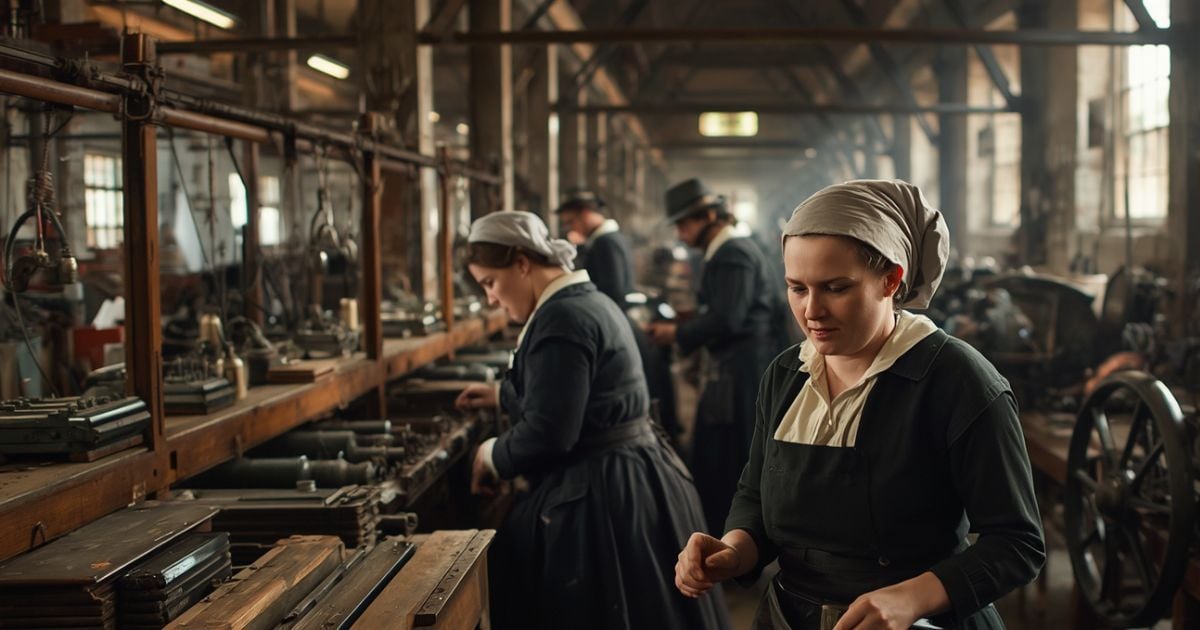
Capital did not invent the hunger for surplus-labour. The well-to-do Athenian, the Roman citizen, the Norman baron and the Wallachian boyard all lived on it. But where goods were made for use, a household's wants set a limit. The limit vanishes when goods are made for money, which is why the cotton trade pushed Southern slave-owners to use up enslaved lives, sometimes in about seven years. The Danubian peasant makes the theft easy to count, because his days on the lord's land are kept apart from the days on his own field. The code of 1831, issued under the Russian General Kisseleff and dictated by the boyards themselves, demanded twelve days of labour, one of field work and one of wood-carrying. Then it declared that the twelve days meant the product of thirty-six, and it multiplied the other two by three. With the extra service called jobagie, the total came to 56 days. A boyard drunk with victory said that the twelve days amounted to 365. England has no boyard, only a law that curbs the same greed, and the inspectors who enforce it record how the greed gets round it. Under the Factory Act of 1850 the day is ten and a half hours, but the fraudulent mill-owner starts a quarter of an hour before six, stops a quarter of an hour after, and takes minutes from breakfast and dinner. The inspectors add it up: 340 minutes a week, or 27 working days a year. The workers call it 'nibbling and cribbling'. Slack trade does not slow the nibbling, because when business is bad each hour has to yield more. In the crisis of 1857 and 1858 Leonard Horner counted 122 mills given up and 143 standing idle in his district, and the complaints of stolen minutes still came in. One respectable master told Marx that ten minutes of overtime a day put a thousand a year in his pocket. Even the labels give the game away: adults are 'full-timers', children under thirteen are 'half-timers', and the worker becomes personified labour-time. In 1836 magistrates at Dewsbury heard that mill-owners had kept five boys at work for thirty hours in the dust of the 'shoddyhole'. The owners, who were Quakers, said they had offered the boys four hours' sleep and the children would not go to bed. They were fined £20. Where no law reaches, the picture is worse. At a meeting in Nottingham in January 1860, the magistrate Mr. Broughton Charlton described lace-making children of nine and ten pulled from their beds at two, three or four in the morning to work until ten, eleven or twelve at night. In the Staffordshire potteries William Wood, aged nine, ran moulds from six in the morning to nine at night. J. Murray, aged twelve, worked all night and was paid nothing extra, and Dr Greenhow found that each generation of potters was smaller and weaker than the last. Of the witnesses from the match trade, where phosphorus causes a lockjaw peculiar to the workers, 50 were under ten and five were only six. In a wallpaper works, a partner named Smith said his hands worked through their meals, so that a day of ten and a half hours was done by half past four and the rest was 'over-time'. For eighteen months, he admitted, the average had been seventy-eight and a half hours a week.
Bread is the oldest trade in the chapter, and no safer. A parliamentary inquiry showed that London loaves were adulterated, and Commissioner Tremenheere's report on the bakers 'roused not the heart of the public but its stomach', because readers learnt they were eating sweat, cobwebs and dead beetles. The London journeyman baker begins at about eleven at night, makes the dough, sleeps a couple of hours on the kneading-board, bakes for five hours and then carries bread round the town. The 'underselling' masters, three-quarters of the trade, compete by getting eighteen hours of work for twelve hours' wages, and the Commission counts journeymen bakers among the short-lived, who rarely reach 42. Yet the trade is always full of applicants. In Ireland the journeymen held meetings in 1858 to 1860 and won day-work in Wexford, Kilkenny, Clonmel and Waterford. In Limerick, Cork and Dublin the master bakers beat them, because they could turn men out of work. Three railway men, a guard, an engine-driver and a signalman, stood before a London coroner after an accident that hurried hundreds of passengers into another world. They said their day had been eight hours ten years before and had risen to fourteen, eighteen and twenty, and at holiday times to forty or fifty hours without a break. The jury sent them for trial on a charge of manslaughter and hoped the railway magnates would be more 'thrifty' in draining paid labour-power. A note gives a fireman's week: 88 hours and 30 minutes, paid as six and a quarter days. Then Marx sets two figures side by side to show that before capital all men are alike. In June 1863 the papers reported the death of Mary Anne Walkley, a milliner of twenty, who had worked 26½ hours without a break, with sixty other girls, to make gowns for a ball for the new Princess of Wales. Thirty girls shared a room with a third of the air they needed, and they slept two to a boarded-off hole. She fell ill on the Friday and died on the Sunday, before she had finished the work in hand. Her doctor said she had died of long hours in a crowded workroom. The coroner's jury said apoplexy, with a fear that overwork had hastened it. The Morning Star called such girls 'our white slaves', and a note shows the Times using her case to argue that people who work their own young women to death had little right to attack American slave-owners. The blacksmith is the opposite type, hearty and strong, yet in Marylebone he dies at 31 per thousand, eleven above the average. Made to strike a fourth more blows, he dies at 37 instead of 50.
Section 4 asks what capital does with a machine that stands still. An idle furnace is a loss, because the means of production exist only to absorb labour, so capital would run them for all 24 hours. One person cannot work day and night, so two sets of workers take turns. This relay system runs in blast-furnaces, forges and rolling-mills in England, Wales and Scotland, and in the cotton mills near Moscow, with boys from eight, and sometimes six, up to eighteen. The official report calls the over-work beyond the twelve-hour shift 'truly fearful'. A boy of nine worked three twelve-hour shifts running, and another, aged ten, worked two days and two nights. George Allinsworth, aged nine, began at three in the morning, slept on the floor of the furnace and said it was hot in there. A note records what such children knew of the world: one twelve-year-old said that a princess is a man. Capital then speaks for itself. Cammell's managing director handed in written evidence, then suppressed it when it came back for revision, but Commissioner White remembered that stopping the night-work of boys would, in their words, be 'tantamount to stopping their works', though boys under eighteen were only about six per cent of their hands. Mr. Sanderson of Attercliffe gives the frankest answer. Boys cannot learn their trade by day, he says, because the men would lose half the profit they make from the boys. Marx's reply is that steel-making is only a pretext for surplus-value making. The furnaces and mills are there to absorb surplus-labour, and they lose their character as capital the moment they stand idle. Section 5 gives capital's own answer to the question of what a working day is. It is all 24 hours, less the few hours of sleep without which labour-power refuses to serve. Time for education, for social life, even the Sunday rest, is 'moonshine'. Capital shortens the labourer's life as a greedy farmer robs the soil of its fertility. Its own interest might point towards a normal day, since worn-out hands must be replaced, and a slave-owner who buys a man as he buys a horse loses capital if he loses him. But where slaves can be bought in a market, a writer Marx quotes says, the planter finds it cheaper to drive them hard, because Virginia and Kentucky can resupply. Marx tells the reader to read 'labour-market' for 'slave-trade'. London bakeries are always stocked with German replacements, and a witness says the cotton trade destroyed nine generations of operatives in ninety years. When the mills ran short of hands in 1834, the agricultural poor were chosen at an office in Manchester and sent north 'ticketed like bales of goods'. In 1860 the 'flesh agents' searched Dorsetshire and Devon and found the surplus population already absorbed. Après moi le déluge is the watchword of every capitalist, and no single owner is to blame, since free competition turns the laws of capital into outside force on each of them.
The normal day, Marx says, is the product of centuries of struggle, and the record shows two opposite tendencies. After the plague of 1349 the first Statute of Labourers fixed wages and hours, because employers could no longer hire at a price that left a reasonable surplus. The statute of 1496 ran the day from five in the morning to seven or eight at night, with meal breaks twice as long as modern factory law allows. Through most of the eighteenth century capital still had not won the whole week, since a labourer who could live on four days' wages saw no reason to work the other two. The author of the Essay on Trade and Commerce of 1770 answered that the cure would not be perfect until the manufacturing poor worked six days for what they earned in four. He proposed an 'ideal workhouse', a 'House of Terror', where paupers would work fourteen hours with twelve of 'neat labour'. Marx sets that beside 1833, when Parliament cut the day for children of thirteen to eighteen to twelve hours and the judgment day of English industry was declared to have dawned. The ideal workhouse arrived within a few years, he says, and is called the Factory. Parliament passed five labour laws between 1802 and 1833 and voted no money for officials, so they stayed dead letters. The Factory Act of 1833 set the day from half past five in the morning to half past eight at night, banned children under nine and limited children of nine to thirteen to eight hours. Its authors would not touch adult labour, so they proposed relays of children. The same Parliament sentenced children under thirteen to 72 hours a week in the 'Factory Hell', while its Emancipation Act forbade planters to work any slave more than 45 hours. Masters then invented a new relay in which workers were re-harnessed at changing stations, and in 1844 the inspectors told the Home Secretary that no control was possible. The workers pushed back. From 1838 they made the Ten Hours' Bill their economic cry, as the Charter was their political one, and the manufacturers' leaders, fighting to repeal the Corn Laws, needed their help and promised the Bill. The Act of 1844 brought in women, cut the time of children under thirteen to six and a half hours and ordered that hours be set by a public clock. The Act of 1847 cut the day for young persons and women to ten hours from 1 May 1848.
Capital's reply came before the Act took effect. Owners cut wages by 10 per cent, then by 8 1/3 and then by double that, at least 25 per cent in all, and collected petitions against the Act whose signers later said their names were extorted. One said he signed because he would have been turned off. When Horner questioned the men, about 70 per cent wanted ten hours, and those who worked longer said they had no choice, since others would take their places. The Chartists collapsed, the June rising in Paris frightened the ruling classes together, and in Marx's words the manufacturers began a pro-slavery rebellion in miniature. They dismissed many of their young workers and women, in some cases half, and restored night-work for men, and argued that meals could be taken before the factory opened. They used the letter of the law like Shylock: on 15 July 1850, 3,742 children were being worked in 257 factories until half past eight in the evening. The relay system returned, with workers dragged in and out of the mill across fifteen hours, belonging to it for fifteen and paid for ten. Magistrates who were mill-owners judged their own cases. Eskrigge sat on the Stockport bench and acquitted Robinson for the very plan Eskrigge had been refused, then used it himself. Horner prosecuted ten times and was backed once. On 8 February 1850 the Court of Exchequer found that the Act contained words that made it meaningless, and the Ten Hours' Act was abolished. The workers answered with threatening meetings in Lancashire and Yorkshire, and some masters complained of anarchy, since the law differed from parish to parish. The Act of August 1850 was the compromise: ten and a half hours from six to six for young persons and women, meals at one time for all, and no more relays. The silk masters kept special licence over children, saying that the delicate fabric needed their light touch. Later Acts reached dye-works, bleach-works, lace, earthenware, matches and bakers, and in 1863 twenty-six Staffordshire potteries, Wedgwood among them, asked Parliament for a law, because competition would not let any one of them shorten the day alone. Marx draws two conclusions. The passion for an unlimited day strikes first where machinery arrives first, and then it spreads even to nail-making at home. And the isolated labourer, once capitalist production has reached a certain stage, gives way without any power of resistance, so a normal day is the product of a protracted civil war between the two classes. France needed the February revolution for a twelve-hour law. In the United States, labour could not free itself in the white skin while it was branded in the black, and the first fruit of the Civil War was the eight hours' agitation, taken up by a congress at Baltimore in August 1866 and, at the same time, by the International Working Men's Association at Geneva. The labourer comes out of the process other than he went in. In the market he stood as an owner facing other owners, and the contract showed him free. Afterwards he finds that the time for which he is free to sell his labour-power is the time for which he is forced to sell it. The vampire, Marx says, will not loosen its hold while there is a muscle, a nerve or a drop of blood to use, so the workers must put their heads together and force a law through as a class. In place of the grand list of the rights of man comes the modest Magna Charta of a legally limited working day, which will make clear when the time that the worker sells is ended, and when his own begins.
Marx showed that telling individual workers to negotiate better hours is like telling someone drowning to swim harder—it misses the structural forces at play. When Marx wrote about the Ten Hours' Bill, he wasn't just describing factory conditions. He was revealing why individual solutions fail when facing systematic problems. Today, we hear 'just find another job' constantly. But what happens when all the jobs in your area offer similar conditions? When you need health insurance that only kicks in after 90 days? When you can't afford to be unemployed while job hunting? The gig economy makes this worse by eliminating the pretense of negotiation entirely. The app sets your rate, your schedule, your conditions. Take it or leave it. Marx understood that when one side holds all the power, 'free negotiation' becomes a cruel joke. The English workers didn't win the ten-hour day by asking nicely or finding better individual employers. They won through collective action that changed the rules for everyone. This isn't ancient history—it's the blueprint for every workplace protection we have today, from overtime pay to safety regulations. And it explains why those protections face constant attack from those who profit from their absence.
Explore this chapter with AI to uncover deeper meaning and practical takeaways.
AI Discussion