
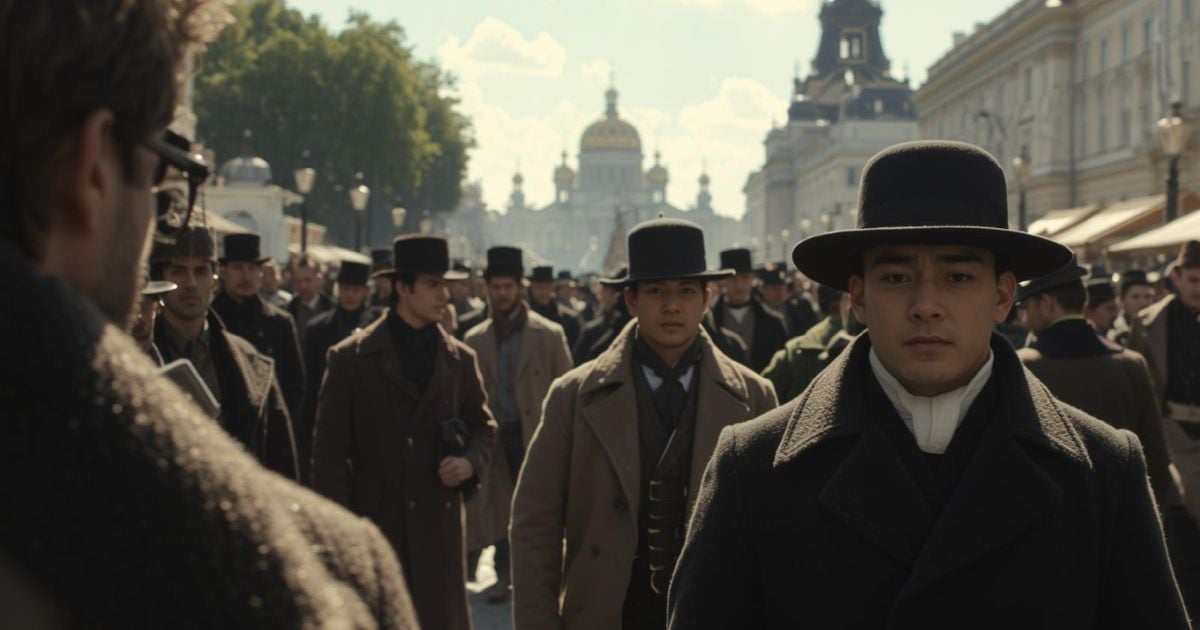
After the pawnbroker visit, Raskolnikov does something he rarely does: he wants company. He stays in a filthy tavern where the air alone could make you drunk, and a bloated former clerk named Marmeladov locks onto him before a word is spoken. The man opens with a polished speech about poverty versus beggary, then confesses the ruin of his household. He married Katerina Ivanovna, a proud consumptive widow with three children, after her first husband died. He has sold her stockings and her mohair shawl for drink. She coughs blood while scrubbing. When honest sewing paid starvation wages and the children cried, Sonia asked whether she really had to do a thing like that. Marmeladov lay drunk while she went out and returned with thirty roubles. Katerina spent the night on her knees at Sonia's feet. Since then Sonia has carried a yellow ticket and lives partitioned off at the Kapernaumovs, still bringing money after dark. At first a lodger tried to make up to her, then stood on his dignity about sharing rooms with a girl like that, and the household split. Marmeladov drinks, he says, so that he may suffer twice as much.
For five weeks hope returned. Marmeladov begged his way back into a government post under Ivan Afanasyvitch, the family cooked real meals, and Katerina whispered to the landlady that her husband was respectable again. Then he stole the key to her box, took his fresh earnings, pawned his uniform, and vanished on another binge. He has slept on hay barges for five nights. That morning he went to Sonia for pocket change. The quart in his hand was bought with her last thirty copecks, the money she needs just to look presentable for her work.
When the tavern crowd mocks him, he strikes the table and erupts into a sermon about crucifixion and divine forgiveness. He insists God will call forth drunkards and children of shame, and will forgive Sonia because she loved much. Raskolnikov walks him home to a squalid fourth-floor room at Kozel's house. Katerina paces with feverish eyes while hungry children huddle in the corners. She screams, searches his empty pockets, and drags him across the floor by his hair while neighbours laugh through the doorway.
Raskolnikov slips leftover coppers onto the windowsill and leaves. On the stairs he almost turns back, then mutters bitterly that Sonia's appearance costs money. Walking through the summer night, a reckless thought surfaces: what if mankind is not a scoundrel after all, and every moral barrier is only prejudice? The neighbours have already wept over the room and grown used to it. Man grows used to everything, the scoundrel, he thinks, and then the opposite thought arrives just as fast.
Marmeladov is not a simple villain. He loves his wife, remembers Sonia's sacrifice in exact detail, and weeps over his own degradation. He is also the man who took her last coins that morning. Dostoevsky uses him to expose a trap that looks compassionate from the outside: the long, honest confession that never alters the behavior. The tavern audience laughs because they have heard this performance before. Raskolnikov listens because part of him recognizes the pattern. If you can describe your harm beautifully, you can feel cleansed without doing anything harder. That is why insight alone is dangerous. It can become another form of intoxication. Modern life rewards the person who names their trauma on social media, in therapy language, in a group chat apology, then repeats the same choice next week because the speech earned forgiveness in advance. The hard question is not whether Marmeladov feels guilty. He feels everything. The hard question is what structure would make the next theft less likely. Sonia keeps paying. Katerina keeps raging. The neighbors keep watching. Confession without consequence becomes theater, and theater keeps the pain visible without ending it.
Explore this chapter with AI to uncover deeper meaning and practical takeaways.
AI Discussion