
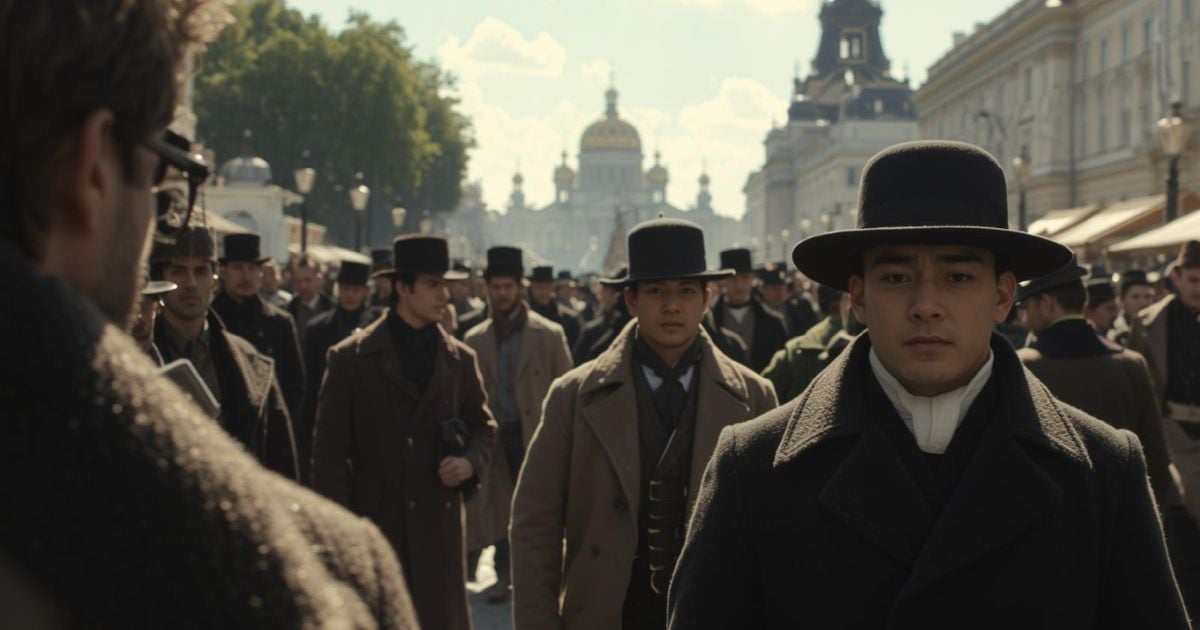
Isolation and poverty can twist a sharp mind until a terrible plan starts to feel like proof of genius. Rodion Raskolnikov, a former law student, slips out of his coffin-like garret on a suffocating July evening, dodging the landlady he owes and muttering that he wants to attempt a thing like that yet flinches at everyday frights. He has barely eaten in days, talks to himself in the heat, and half-insists the scheme is only a fantasy to amuse himself.
The walk to the pawnbroker's becomes a rehearsal in dread. A drunk driver shouts "German hatter" and Raskolnikov panics over his absurd hat, convinced trifles could ruin everything. He counts the seven hundred thirty steps to Alyona Ivanovna's building, slips up the back stairs, pawns his father's watch for a pittance, memorizes her tidy rooms and the oversized key on her ring, and casually asks whether her gentle sister Lizaveta will be home alone. The visit leaves him repelled by his own thoughts.
He stumbles into a basement tavern for the first time in his life, gulps beer, and briefly convinces himself it is only physical derangement. Even as his mood loosens, he senses the relief is not normal. The room holds a sleeping drunk and a solitary clerk who will soon break the silence; Raskolnikov has crossed from private brooding into a city that will test whether he can still turn back.
Intelligence without wisdom is dangerous territory. Raskolnikov isn't stupid—he's educated, articulate, capable of complex reasoning. That's exactly what makes him dangerous to himself. Smart people often make the worst decisions because they're skilled at building elaborate justifications for what they want to do anyway. We see this pattern everywhere: the accountant who embezzles because 'the company exploits workers,' the nurse who steals medication because 'healthcare is broken,' the student who cheats because 'the system is rigged.' Each starts with a legitimate grievance, a real injustice. But intelligence becomes a weapon against conscience when we use it to rationalize rather than reflect. The smarter you are, the more convincing your self-deception becomes. Raskolnikov's education doesn't save him—it enables him to construct philosophical frameworks for murder. This reveals something crucial about how we navigate moral decisions: our feelings often guide us better than our reasoning. When your gut says 'this is wrong' but your mind says 'but here's why it's actually right,' trust your gut. The most dangerous person isn't the one who can't think—it's the one who thinks too much and feels too little. Intelligence amplified by desperation and isolation becomes intelligence weaponized against your own moral compass.
Explore this chapter with AI to uncover deeper meaning and practical takeaways.
AI Discussion