
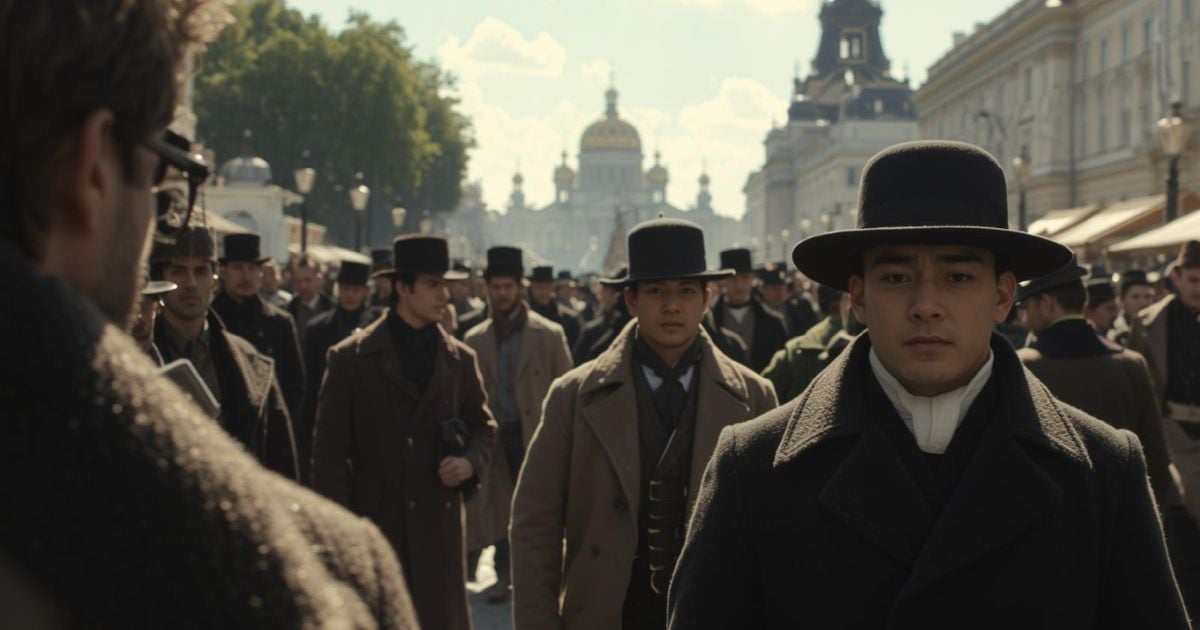
Raskolnikov leaves the crossroads crowd and finds an elegant carriage, grey horses, and a man crushed under the wheels, blood on his face. He pushes forward shouting I know him! I know him!, identifies Marmeladov the retired government clerk, gives the police his name and address, and helps carry the unconscious body to Kozel's house on Sadovy Street. The coachman repeats what a misfortune; inside, Katerina Ivanovna in her concert dress rages at fate, the children cry, and German lodgers jam the stairs. The doctor whispers there is no hope; a priest is called. Raskolnikov pays, stays in the corner, and watches poverty perform its dignity.
Katerina sends little Polenka barefoot through the Hay Market to Sonia's yellow ticket lodging. The room grows louder: Amalia Lippevechsel, tipsy Germans, Katerina's commands for coffee and a proper funeral. Marmeladov on the sofa mutters scripture about the harlot forgiven. When Sonia arrives, thin, in a cheap dress with a worn yellow feather, shame enters with her. The stepdaughter who supports the family with her body stands before the children and the lodgers. Katerina scolds and sobs; lodgers offer unwanted advice; the dying man strains toward the daughter he sold into the street trade while preaching divine forgiveness to harlots.
He dies in Sonia's arms calling Sonia! Daughter! Forgive! Katerina throws herself on the corpse crying He's got what he wanted, then straightens to arrange the priest and burial club payments. Raskolnikov, trembling with a strange new feeling, leaves twenty roubles, asks Polenka's name, kisses the child, and tells her to pray for sister Sonia. Sonia follows him to the door, confused by his charity. His waistcoat is stained; he walks as if drunk on life itself.
On the canal bridge he halts: Enough. Life is real. Haven't I lived just now? The same man who toyed with confessing to Zametov has just spent his last coins on a stranger's death, and the blood on his waistcoat is from carrying Marmeladov, not from naming the axe. At his lodging Razumihin's house-warming still roars; the uncle is drunk. Nikodim Fomitch, coming from the house-warming, asks about the accident; Raskolnikov answers that he is covered with blood, and blames his old faint on paint fumes from the painters. He slips past the roaring party to his room and finds Pulcheria Alexandrovna and Dunya on the sofa, waiting an hour in tears with Razumihin trying to soften the shock. His mother runs to him. Dunya stands rigid, pale, her hand already trembling. The weeks of fever and Marmeladov's blood meet the people he has been hiding from. His mother's love arrives in the garret before he can stand it, and then he falls insensible at their feet.
Part II Chapter VII turns the novel from inward crime to shared ruin. Marmeladov's accident is public; Raskolnikov cannot walk past. Naming him, paying police, carrying him upstairs is the first sustained compassion since the murders. Katerina's pride and poverty fill the room; Polenka's barefoot errand links the children to Sonia's yellow ticket world. When Sonia enters, shame and love sit in the same frame. Marmeladov's forgive is the tavern theology made unbearable. Katerina's he's got what he wanted is cruel and accurate. Raskolnikov's twenty roubles and Polenka's kiss are guilt spending itself as mercy. On the bridge, Life is real! is not philosophy; it is breath after touch. Then he opens his door on Razumihin's noise and finds mother and sister. The faint is the chapter's truth: you cannot receive grace from family until you face what you are. Sonia's line to the plot is now open; Luzhin waits in the next room of the story.
Explore this chapter with AI to uncover deeper meaning and practical takeaways.
AI Discussion