
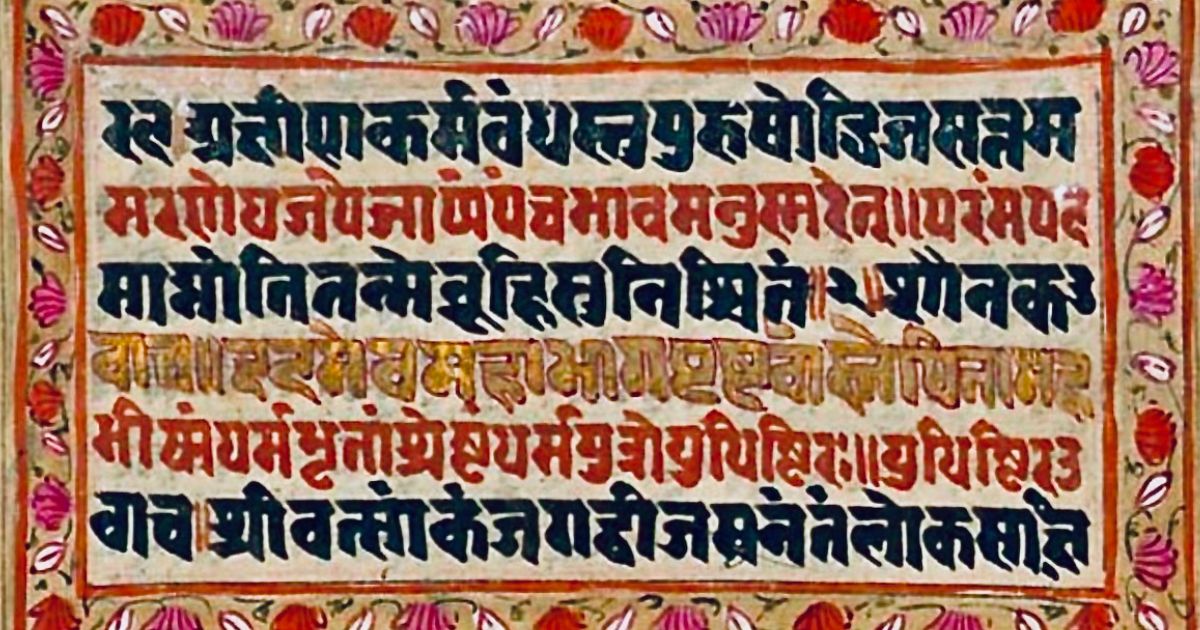
Arjuna is confused. Krishna praised quiet meditation as the higher thing, yet he keeps pushing him toward this dreadful fight. Arjuna asks for one clear answer, because he cannot move until he has it.
Krishna says the two paths are really one, and that no one can escape action, not even for a moment. A man who sits still with his senses held down while his mind chases what it craves is a hypocrite. Do the work that belongs to you, without hunger for reward. From the start of creation, people were told to work and give back, and anyone who only takes is a thief from the world. Even Krishna, who needs nothing and has nothing left to win, still acts. If he stopped, the people who look to him would slide back into sloth. Better to fail at your own duty than to succeed at someone else's. To die doing your duty is no disgrace.
Arjuna asks what force drives a man toward evil when he knows better, as if someone were pushing him. Krishna names kama, desire and passion, which covers wisdom the way smoke covers a fire or rust dulls a mirror. It fools even the wise. So govern your heart, rein in your senses, and cut down the doubts that wear a friendly face. The chapter ends with Krishna telling him to fight, to beat his foes and to slay what haunts him in fond shapes.
We live in an age of beautiful excuses. Online posts give us endless ways to appear principled while avoiding actual work. We share posts about systemic problems instead of addressing the specific dysfunction in our workplace. We talk about self-care while neglecting our responsibilities to others. We claim to be 'setting boundaries' when we're really just avoiding difficult people. The Gita exposes this pattern with uncomfortable clarity: sometimes what we call wisdom is just fear dressed up in spiritual language. Krishna doesn't tell Arjuna that fighting is inherently good—he tells him that avoiding his specific duty as a warrior will cause more suffering than facing it. This principle applies everywhere. The nurse who won't confront a colleague's dangerous shortcuts because 'it's not my place' isn't being humble—she's prioritising her comfort over patient safety. The parent who won't discipline their child because 'punishment is harmful' isn't being enlightened—they're avoiding the hard work of teaching consequences. The employee who won't speak up about workplace problems because 'nothing ever changes anyway' isn't being realistic—they're choosing helplessness over action. True spiritual practice isn't about rising above the messy world—it's about engaging with it skillfully, doing what needs doing without attachment to whether it makes you popular or comfortable.
Explore this chapter with AI to uncover deeper meaning and practical takeaways.
AI Discussion