
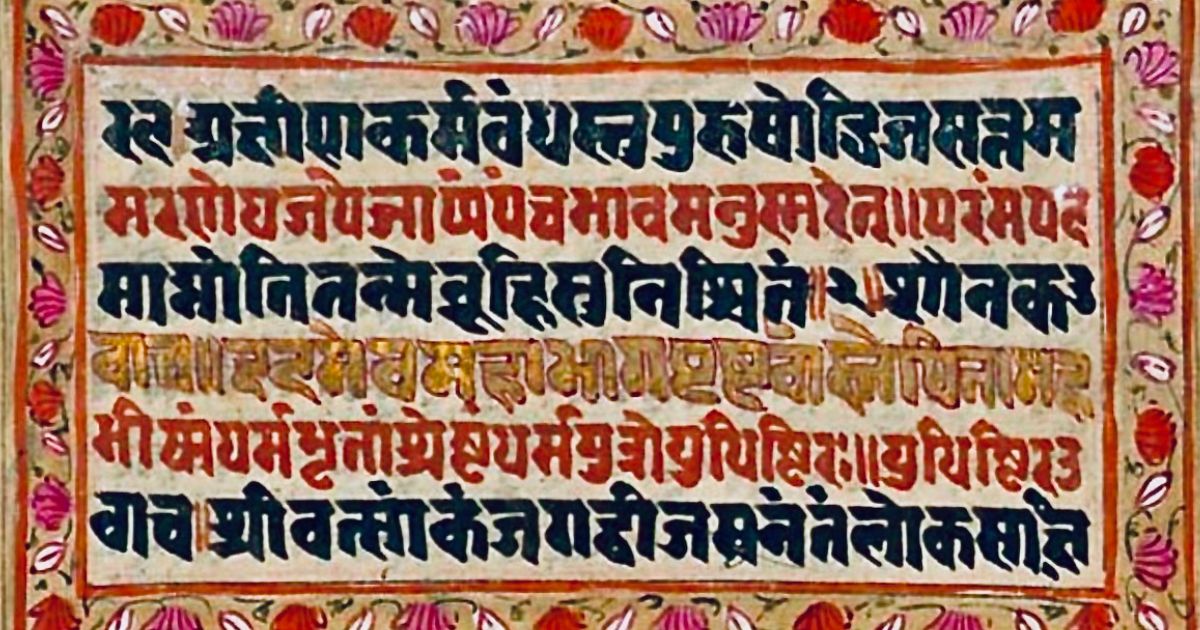
Sanjaya tells the blind king that Krishna scolds the weeping prince. Weakness does not suit a warrior, Krishna says, but Arjuna pushes back. He cannot shoot Bhishma or Drona, the men who taught him. He would rather eat beggar's bread with the people he loves than feast on a guilty victory. At last he says plainly, "I will not fight," and falls silent between the two hosts.
Then Krishna answers with hard teaching. The wise do not grieve for those who cannot truly die. The soul was never born and never dies. Bodies are like old clothes you leave behind and replace. Weapons cannot touch the life inside. For a warrior, lawful battle is duty, and running away would bring shame worse than death. Arise, Krishna says, and treat pleasure, pain, winning, and losing the same way.
Next Krishna teaches karma yoga, the path of action without clinging to results. Do your duty because it is right, not because you are chasing reward. Right thinking matters even more than right action alone. Arjuna asks how to spot a person who has that steady mind. Krishna closes with vivid pictures: a tortoise pulling its limbs inside its shell, desire climbing a ladder into ruin, and an ocean that takes in every river without overflowing. The man who rules himself, Krishna says, finds peace even on a battlefield.
We're taught that good people prioritise relationships over rules, but this chapter exposes the hidden cruelty in that thinking. When Maya protects Sarah's feelings over patient safety, she's not being compassionate—she's being selfish, choosing her own comfort over her actual responsibility. This pattern shows up everywhere in pressured workplaces: the factory worker who doesn't report safety violations because 'we're all family here,' the home health aide who covers for a colleague's neglect because 'she's going through a divorce,' the retail manager who enables theft because 'I don't want to ruin someone's life.' We call this loyalty, but it's actually a form of moral cowardice dressed up as kindness. The Gita reveals that true compassion sometimes requires actions that feel harsh in the moment but serve the greater good. Real love protects the vulnerable, even when it means disappointing people we care about. The question isn't whether our choices will hurt someone's feelings—they will. The question is whether we're willing to accept that temporary pain to prevent greater harm. This doesn't make us cold; it makes us responsible. When we mistake enabling for caring, we become complicit in the very systems that crush the people we claim to love.
Explore this chapter with AI to uncover deeper meaning and practical takeaways.
AI Discussion