
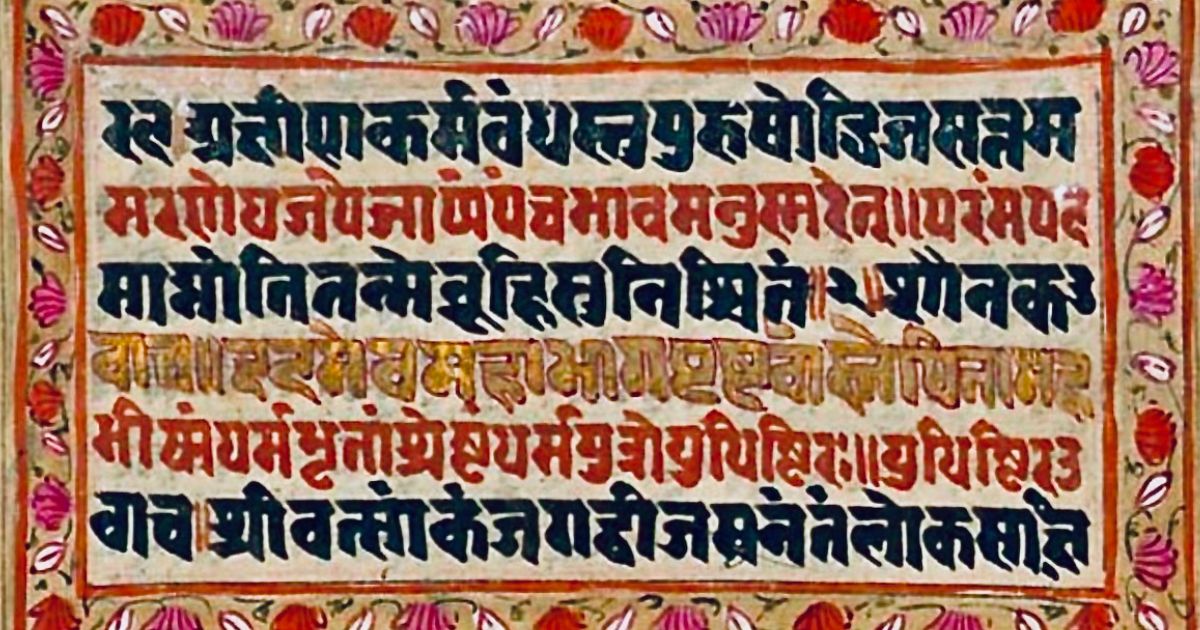
Blind King Dhritarashtra asks his advisor Sanjaya what is happening on the holy battlefield at Kurukshetra. Sanjaya says Prince Duryodhana looked at the huge Pandava army, cheered up his own side by naming their heroes, and ordered the war trumpets blown. Krishna and Arjuna answered with their own conch shells, and the whole plain rang like a storm.
Arjuna asked Krishna to drive the chariot into the open space between the armies so he could see who he would have to kill today. Krishna pointed out grandfathers, teachers, cousins, and friends on both sides, people who used to love each other now lined up to fight. The sight hit Arjuna like a physical blow. His hands shook, his mouth went dry, and his famous bow Gandiv slipped from his fingers.
He told Krishna that a victory bought with this blood would taste like poison. Killing elders and teachers would wreck families and cheat the dead of proper rites. He would rather be killed himself, with no weapon in his hand, than strike these men. Then, in front of both armies, he sank down on the chariot seat and let his bow and arrows fall. The war has not even started, but the greatest warrior on the field is already frozen.
The Bhagavad Gita opens with a truth modern psychology has rediscovered: some situations create moral injury regardless of what we choose. Arjuna's paralysis isn't character flaw—it's his nervous system recognising an impossible bind. This ancient text predates our understanding of trauma by millennia, yet perfectly captures what happens when duty conflicts with love. People on wages face these impossible choices constantly. The factory worker who must choose between reporting safety violations and keeping their job. The home health aide who discovers a client is being financially abused by family but fears losing access to help them. The retail manager forced to cut hours for single parents while corporate profits soar. Each situation creates the same physical rebellion Arjuna experiences: shaking hands, racing heart, the body's wisdom recognising moral injury. The Gita's insight remains radical: sometimes paralysis is the sanest response to insane circumstances. But the text doesn't stop at validation—it pushes toward a framework for action. Not action that eliminates the moral cost, but action that honours the weight of that cost while still moving forward. The question isn't how to avoid moral injury in an unjust system, but how to navigate it with integrity intact. What situations in your own life create this same paralysis, and what would it mean to honour both the weight of the choice and the necessity of choosing?
Explore this chapter with AI to uncover deeper meaning and practical takeaways.
AI Discussion