
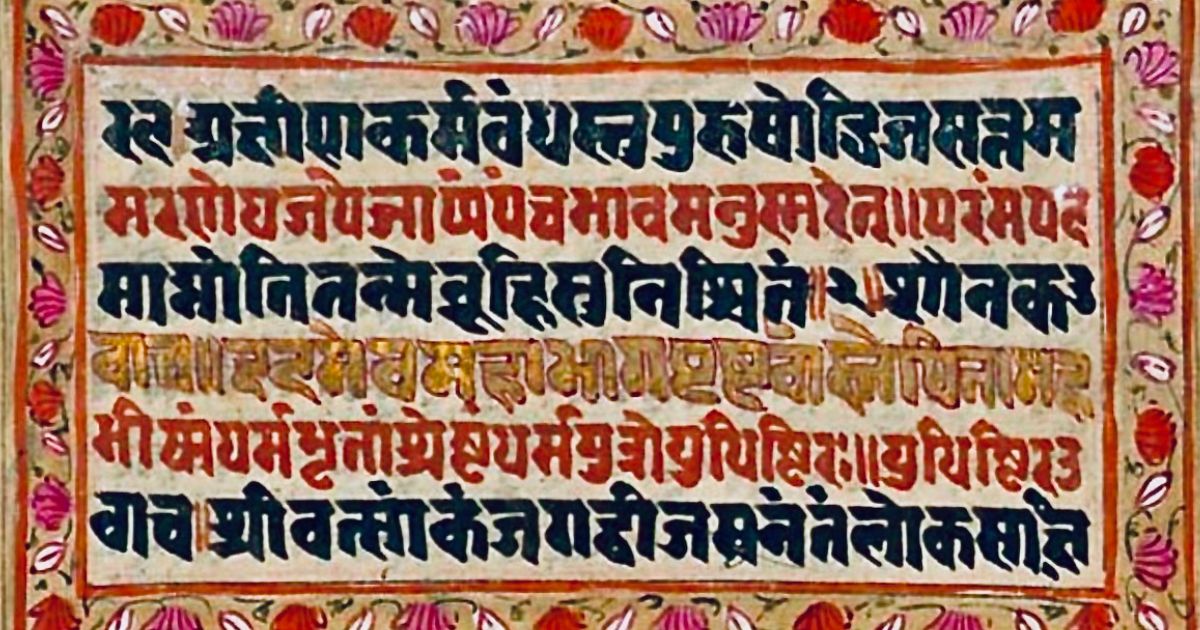
Krishna begins with the signs of a heavenly birth: fearlessness, singleness of soul, the will to strive for wisdom, an open hand, governed appetites, humility, truthfulness, slowness to anger, a mind that lightly lets go of what others prize, tenderness to all who suffer, and a spirit that is not revengeful and does not rate itself too high. Against these he sets the signs of the unheavenly: deceit, arrogance, pride, quick anger, harsh speech, and an ignorance that is blind to its own darkness. The heavenly birth brings deliverance, he says, and the birth with the Asuras brings bondage. He tells Arjuna to be glad, because his lot is the heavenly one.
Then Krishna describes those on the downward path. They do not understand how souls go forth from him and return. They say the world has no law, no order, and no Lord, and is only a house of lust. Ensnared by a hundred idle hopes, they buy wealth with base deeds and boast, "Today we gained this, and tomorrow we will slay our other enemy." They think themselves lords, rich and proudly born, and their offerings have only a show of reverence. Krishna says he casts such people down again and again into devilish wombs, until they find and worship him.
The chapter closes with the three doors of hell: lust, wrath, and avarice. Let a person shun all three, Krishna says, and he goes straight to find his peace and comes to the gate of heaven.
Krishna identifies lust, anger, and greed as the three doorways that destroy human potential. These aren't abstract concepts—they're daily traps that show up in recognisable patterns. Lust appears as the endless scroll through curated feeds, comparing your life to highlight reels, wanting what others have. It is the colleague who cannot focus because they are obsessed with an ex, or the friend who maxes out credit cards chasing a curated online lifestyle. Anger manifests as road rage, explosive arguments with family, or the person who makes every workplace problem about personal disrespect. It's the neighbour who calls the cops on kids playing too loud, or the customer who screams at minimum-wage workers over store policies. Greed isn't just about money—it's hoarding credit at work, refusing to share knowledge that could help teammates, or believing happiness comes from accumulating more stuff. The devastating truth is that all three promise satisfaction but deliver slavery. They create addiction cycles where the temporary high requires increasingly extreme behaviour. The person driven by lust never feels attractive enough. The angry person never feels respected enough. The greedy person never feels secure enough. Krishna's insight cuts through modern self-help culture: the problem isn't having desires, it's being owned by them. When you can recognise these three doorways in yourself and others, you can choose differently.
Explore this chapter with AI to uncover deeper meaning and practical takeaways.
AI Discussion