
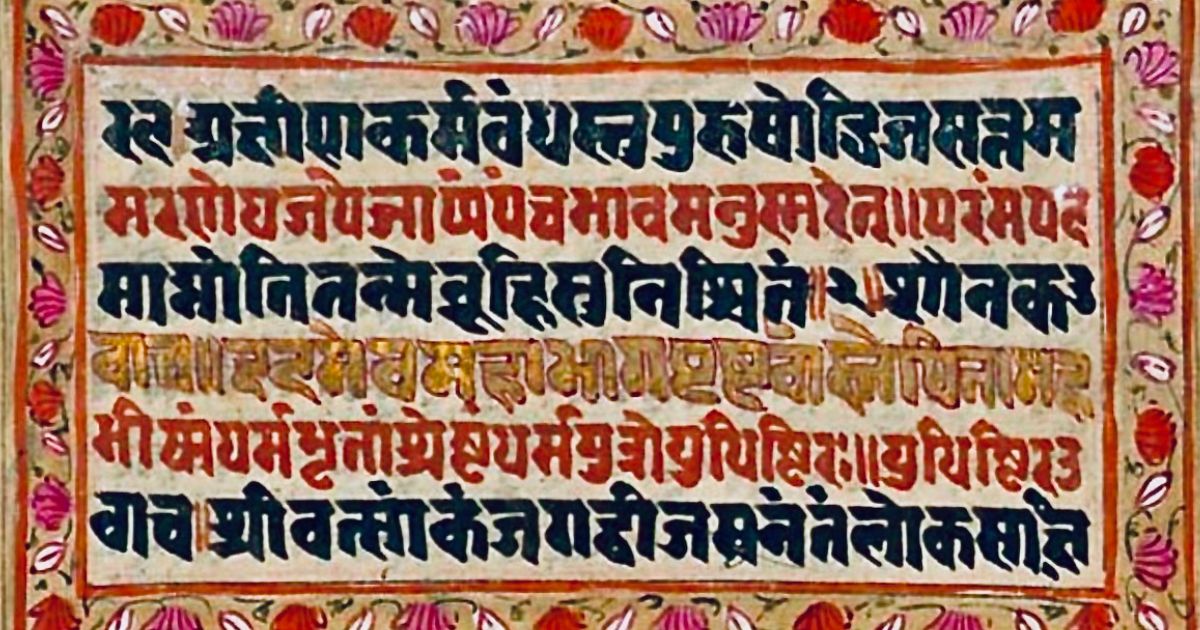
Krishna describes the Aswattha, the banyan tree, with roots above and boughs beneath. It is ever holy, and its leaves are green, waving hymns that whisper truth. Whoever knows this tree knows the Vedas and all. Its branches shoot to heaven and sink to earth like the deeds of men, which spring from the qualities, and its rootlets reach the soil below, the way actions bind people with ever-tightening bonds.
If you knew what the tree's shape says, where it springs from and how it ends, you would whet the axe of detachment, cut the clinging, snaky roots, and lay this tree of sense-life low. Then you would reach the Father and First, who made the old creation. Those who break away from passion and dreams worship him and no longer sway at the mercy of every breeze of pleasure or blast of tempest. Another sun and another moon shine there, and those who see that light do not return.
When the Spirit takes a body or leaves it, it gathers the senses and mind the way wind gathers scent from flower-beds. The unenlightened do not notice this, and the holy see it in themselves. From Krishna comes the light of the suns and moons. He enters the earth to give shapes their living force, becomes the sap in plants, and becomes the warmth in living bodies, feeding them through the breath. Being is twofold, the Divided and the Undivided, and higher still is the Lord, Purushottama, who fills all worlds. Whoever knows him with an unclouded mind knows all, and is free of works in bliss.
Krishna's upside-down tree reveals why most of our problem-solving efforts fail. We naturally focus on what's most visible and urgent - the squeaky wheel gets the grease. But this creates an exhausting cycle where we're always in reactive mode, putting out fires instead of preventing them. In ordinary life when money is tight, this pattern is everywhere. We treat financial stress with second jobs instead of examining spending patterns driven by emotional needs. We medicate physical symptoms while ignoring lifestyle factors. We fight with family members about surface issues instead of addressing deeper unmet needs for respect or security. The healthcare system exemplifies this backwards approach - billions spent treating diabetes and heart disease while the food systems and stress factors that create them remain unchanged. At work, management focuses on productivity metrics instead of asking why morale is low. The pattern persists because symptoms are visible and concrete, while root causes often involve uncomfortable truths about systems, beliefs, or power structures. Addressing roots requires admitting that our current approaches aren't working and that real change might be more complex than we hoped. But when we develop the ability to see past surface drama to underlying patterns, we stop being victims of circumstances and become architects of solutions.
Explore this chapter with AI to uncover deeper meaning and practical takeaways.
AI Discussion