
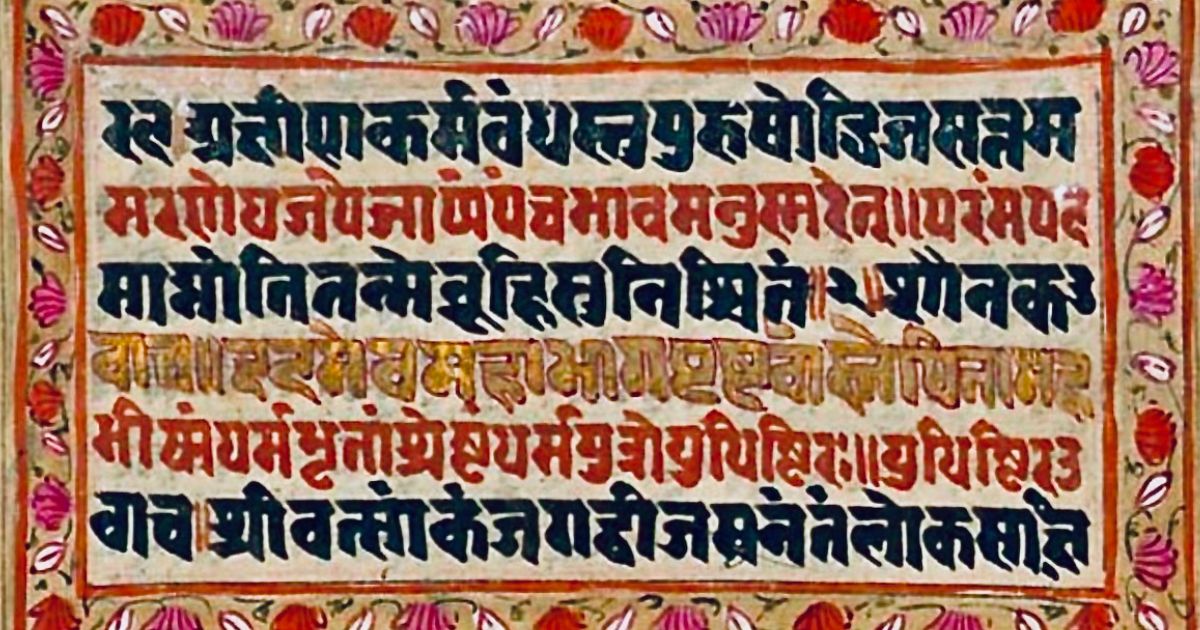
Krishna calls this the wisdom of all wisdoms, and says the saints who rely on it pass to perfection and are not born again. The universe is a womb where he plants the seed of all lives. Then he names three qualities of Nature that bind the changeless Spirit in changeful flesh: sattva, rajas, and tamas.
Sattva, soothfastness, is pure and clear and binds the soul to happiness and truth. Rajas, passion, is kin to appetite and binds through the strain of works, with longing, unrest, and the urge to gain. Tamas, ignorance, is born of darkness and binds through stupor, sloth, and drowsiness. Where one is weak, another rules. A soul that leaves the body in sattva goes to the place of those who know the truth. One that dies in passion goes to the world of spirits tied to works, and one that dies in ignorance is born again in an unlit womb. Their fruits are sweet truth, painful toil, and deeper darkness.
Whoever watches life and sees that the qualities are the only actors, while knowing what rules beyond them, comes near to Krishna. Passing beyond the three, the soul overcomes birth, death, sorrow, and age. Arjuna asks how to know such a person and how he lives. Krishna says he is not angry when the qualities are present or wishful when they are absent, and he sits among them like a stranger, saying, "These be the Qualities," when trouble breaks. Grief and joy sound alike to him, and clod, marble, and gold are one. He is the same in praise and blame, and to friend and foe. Such a person, adoring Krishna with single faith, is fit to become Brahma.
Modern life on a wage often demands we stay in drive mode - the mental state of constant productivity, stress, and never having enough. Healthcare workers pull doubles, retail employees work multiple jobs, parents juggle schedules that would break a CEO. We're told this hustle is virtue, that rest is laziness. But the Gita reveals something crucial: operating primarily from drive mode creates a cycle that's impossible to sustain. You make decisions based on stress and scarcity, which creates more stress and scarcity. The exhausted nurse makes medication errors. The overwhelmed parent snaps at their kids. The burned-out worker calls in sick, creating more pressure on their teammates. What's radical about this ancient text isn't that it tells us to stop working hard - it's that it shows us how to work from a different place. When you can step back and observe your mental state, you gain the power to choose. Maybe you still work the double shift, but you do it from clarity instead of panic. Maybe you still have the difficult conversation with your teenager, but you approach it from wisdom instead of frustration. The goal isn't to eliminate drive or even stress - it's to stop being controlled by them. In a culture that profits from keeping us in reactive mode, developing this inner observer becomes an act of resistance.
Explore this chapter with AI to uncover deeper meaning and practical takeaways.
AI Discussion