
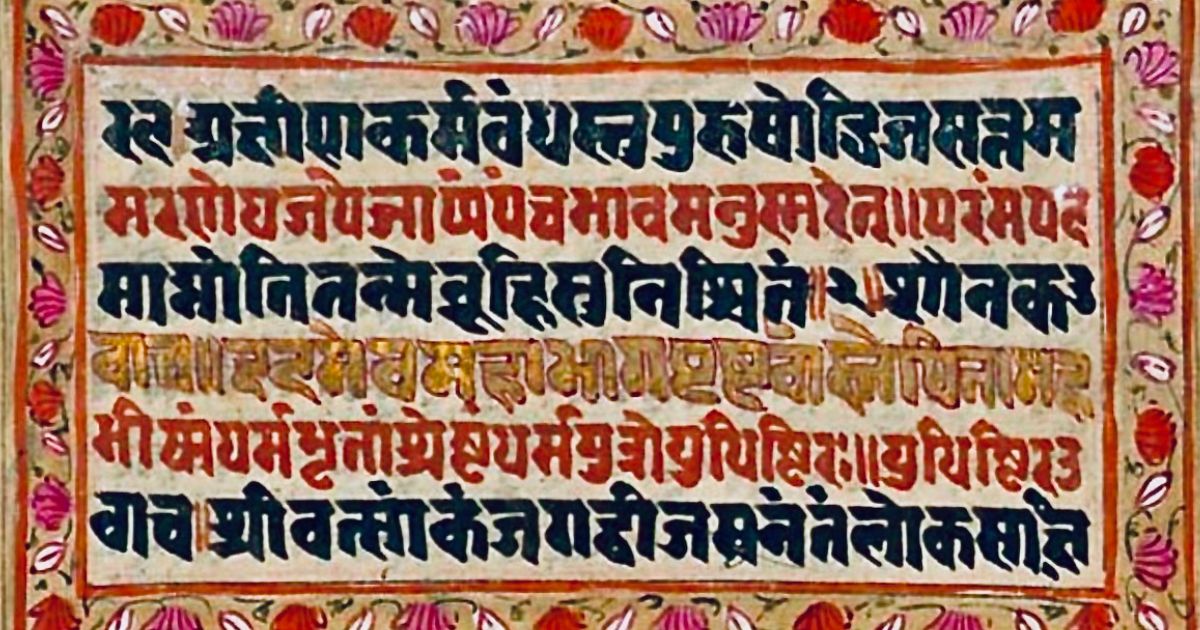
Arjuna asks which of two kinds of worshippers takes the better way: those who serve Krishna as he shows himself, or those who worship the Unrevealed, Unnamed, Unthinkable. Krishna says the first are very holy to him. The second also reach him, but the road is hard for anyone still carrying a body.
Krishna promises to lift out of life's ocean of distress and death the one who does every deed for him and keeps him in mind night and day. Then he comes down the ladder with Arjuna. If you cannot fix your mind on him constantly, worship steadily. If you cannot, work for him. If your heart fails there too, bring him your failure, let go of the fruit of your labour, and take refuge in him. Knowing is more than effort, worship is better than knowing, and renouncing is better still. Near renunciation, he says, peace is very near.
Then Krishna describes the person he loves: one who hates nothing that lives, is gentle and without pride, is the same in good and ill, is true to his word, troubles no one, and is not troubled by others. Such a person is clear of anger, unmoved by praise or blame, steady in heat and cold, and equal to friend and foe. But most of all he loves those who live in single, fervent faith, drinking the blessed Amrit of his being.
Krishna's graduated approach reveals something crucial about human nature: we're wired to quit when we can't be perfect immediately. This isn't weakness—it's how our brains protect us from perceived failure. When we set impossible standards, our subconscious interprets inevitable mistakes as evidence we're not capable, triggering shame spirals that make us give up entirely. Modern culture amplifies this trap. Curated feeds show us everyone else's highlight reels while we live our behind-the-scenes struggles. Self-help culture promises transformation in 30 days. Corporate training expects instant mastery. We're surrounded by messages that sustainable progress isn't enough—we must revolutionize ourselves immediately or we're failing. But Krishna understood what neuroscience now confirms: lasting change happens through small, consistent actions that build new neural pathways over time. The person who meditates five minutes daily for a year develops more inner stability than someone who does hour-long sessions for a month then quits. The worker who improves one small process consistently gets promoted over the one who tries to fix everything at once then burns out. This isn't about lowering standards—it's about understanding how real progress actually works. When we honour our current capacity while gently expanding it, we create momentum instead of resistance. The question becomes: what's one small thing you can do consistently that moves you toward who you want to become?
Explore this chapter with AI to uncover deeper meaning and practical takeaways.
AI Discussion