
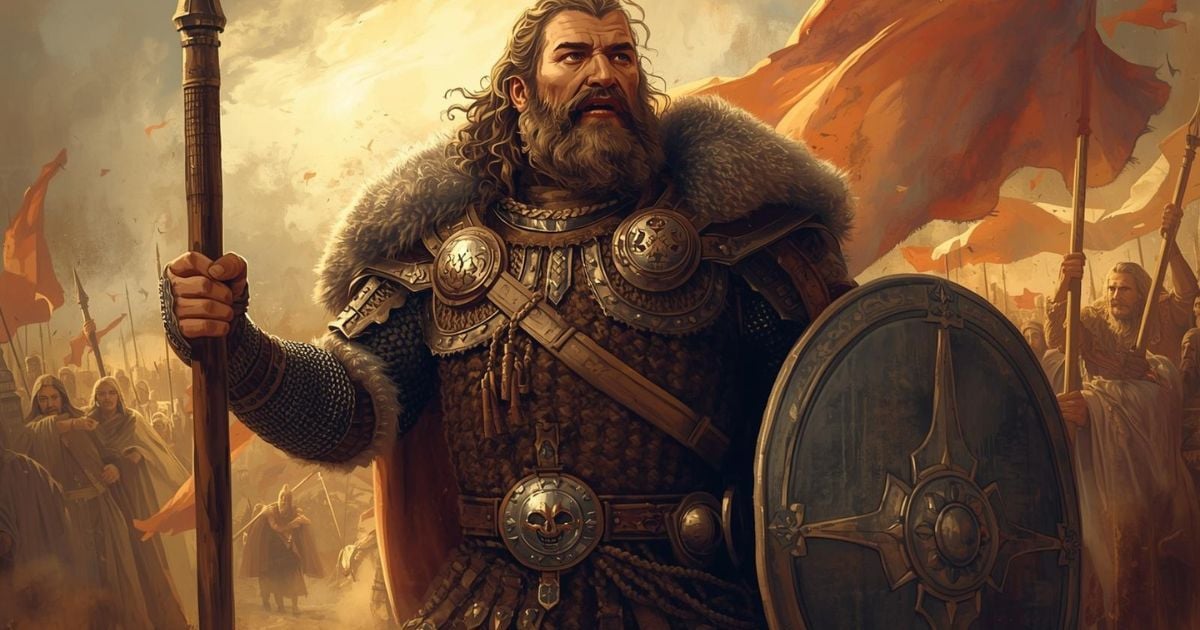
Beowulf stands at the edge of his greatest challenge yet. Before diving into the monster-infested waters to face Grendel's mother, he does something that reveals true leadership: he makes arrangements for his people's future if he doesn't return.
He asks Hrothgar to care for his men like a father and to send his treasures back to his king as proof of Hrothgar's generosity.
This isn't pessimism, it's responsibility. The dive into the underwater lair takes a full day, showing the immense depths Beowulf must traverse. When Grendel's mother finally grabs him and drags him to her cave, everything goes wrong. The borrowed sword Hrunting, which has never failed before, proves useless against her supernatural hide. Sea monsters attack him during the journey. Even his great strength seems insufficient as she wrestles him to the ground and sits on him with a knife drawn. Only his armor saves his life. This chapter shows us what happens when our usual tools and strategies fail us completely. Beowulf must abandon his sword and trust in his bare hands and core strength. The moment reveals a crucial truth about facing life's deepest challenges: sometimes you have to strip away everything external and rely on what's truly yours. The chapter ends with Beowulf rising again, suggesting that our lowest moments often precede our greatest victories, but only if we can adapt when our first approach fails.
Beowulf's preparation before diving into the underwater lair reveals something most leadership advice misses: the lonelier you get at the top, the more people depend on your decisions. He's not just risking his own life, he's risking the security of his warriors, the alliance with Hrothgar, and the reputation of his homeland. This weight of responsibility shows up everywhere in leadership on a wage. The shop steward who challenges unsafe conditions knows that failure could cost others their jobs. The experienced worker training newcomers understands that their methods will shape careers long after they're gone. The parent working double shifts to save for their kid's education carries the dreams of the whole family. What makes this particularly challenging is that taking these risks often means using tools and strategies that have never been tested at this level. Beowulf's borrowed sword fails him completely, just like the management techniques that work on small problems often crumble under the pressure of major crises. The chapter suggests that our greatest challenges require us to strip away external supports and rely on our core strengths. But it also shows that preparation isn't about guaranteeing success, it's about ensuring that failure won't destroy what matters most. How do we balance the courage to take necessary risks with the responsibility to protect those who depend on us?
Explore this chapter with AI to uncover deeper meaning and practical takeaways.
AI Discussion