
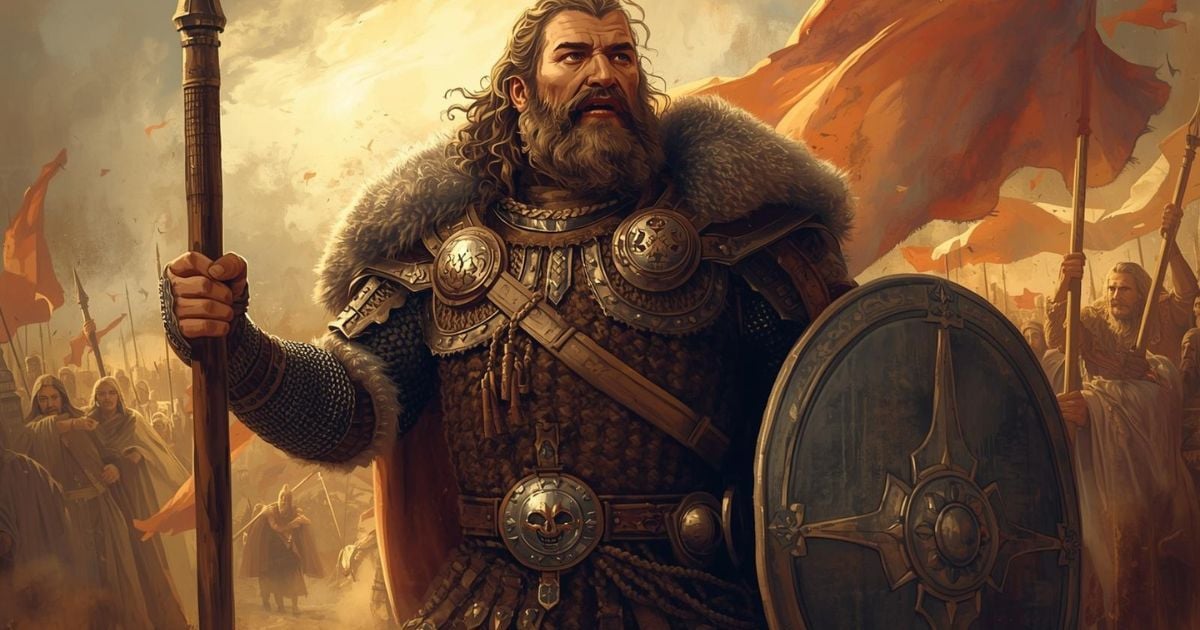
After Grendel's mother kills Æschere in revenge, Beowulf refuses to let King Hrothgar wallow in grief. Instead of empty comfort, he delivers hard truth: 'It's better to avenge your friend than just cry about it.' This is leadership in action, acknowledging pain while pushing toward solution. Beowulf promises the monster won't escape, no matter where she hides, showing how commitment creates confidence in others.
The tracking party follows bloody footprints through treacherous terrain to a horrifying lake filled with sea monsters and Æschere's severed head. The sight devastates Hrothgar's men, but Beowulf doesn't hesitate. He arms himself methodically, chainmail, helmet, and Unferth's sword Hrunting.
This preparation matters because he's about to dive into unknown waters to fight an unknown enemy. The chapter reveals how Unferth, who once mocked Beowulf, now lends him his prized weapon but won't risk his own life for glory. This contrast highlights the difference between those who talk and those who act.
Beowulf's willingness to enter the monster's domain underwater shows that sometimes solving problems means going where others fear to tread. The chapter builds tension while demonstrating that real leaders don't just make promises, they gear up and follow through, even when the path leads to the most dangerous places.
Beowulf's harsh response to Hrothgar's grief reveals something uncomfortable about leadership: sometimes the kindest thing isn't comfort. In a comfort-first culture, we've elevated emotional processing above problem-solving, but this chapter suggests a different hierarchy. When Æschere dies, Beowulf doesn't minimize Hrothgar's pain, he redirects it. This is not stubborn pride; it is strategic emotional intelligence. The pattern shows up everywhere in life on a wage. After workplace accidents, some focus on supporting the victim's family while others demand safety changes. During layoffs, friends either enable endless venting or push for concrete next steps. In family crises, relatives split between 'take time to process' and 'here's what we need to do.' The story doesn't condemn comfort, it reveals its limitations. Unferth represents the middle ground many of us occupy: willing to help but not willing to risk. He lends the sword but won't enter the battle. This isn't cowardice; it's calculated self-preservation. But it also means the burden falls on those willing to act. The chapter asks us to examine our own crisis responses: Do we offer tissues or solutions? Do we lend resources or actually show up? When we're in leadership positions, how do we balance acknowledgment with action? The answer matters because in life-or-death situations, whether literal or metaphorical, forward momentum often saves more lives than endless emotional processing.
Explore this chapter with AI to uncover deeper meaning and practical takeaways.
AI Discussion