
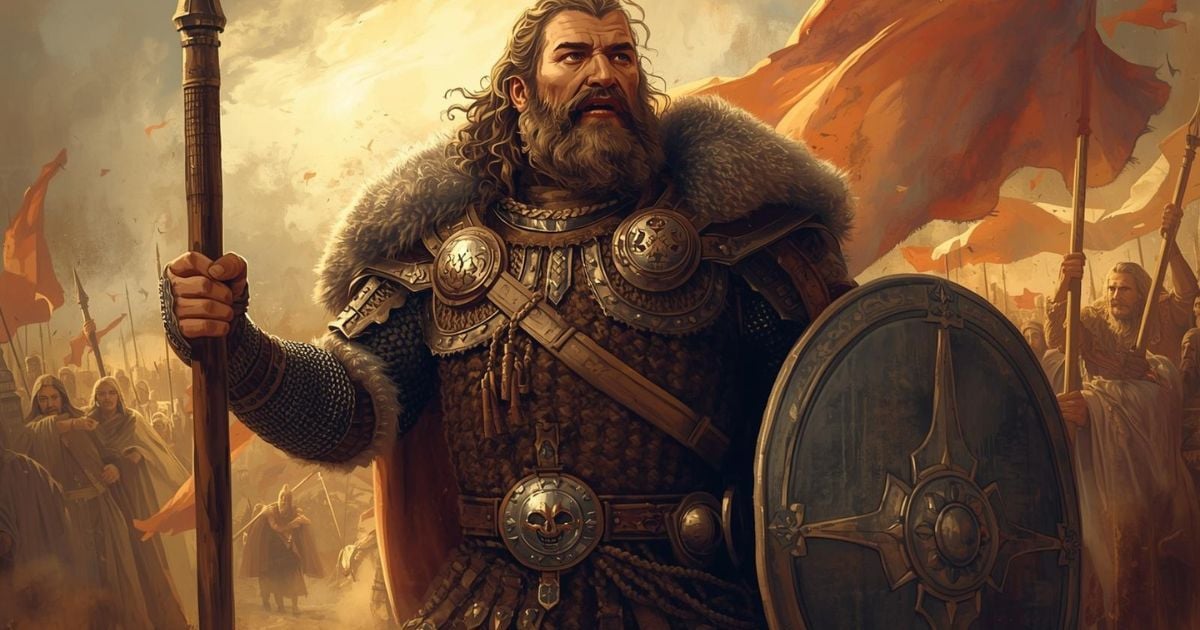
Deep in the underwater lair, Beowulf discovers an ancient giant-sword, the only weapon powerful enough to kill Grendel's mother. He strikes her down with it, finally ending her reign of terror. But Beowulf isn't done yet.
He spots Grendel's lifeless body and cuts off his head, settling the score for all the innocent people the monster killed. Meanwhile, above water, Hrothgar's men watch blood rise to the surface and assume Beowulf is dead. They give up and go home, but Beowulf's own warriors stay, hoping against hope.
Something remarkable happens to the giant-sword, it melts away from the poisonous blood, leaving only the jeweled hilt as proof of what happened. Beowulf swims back up carrying Grendel's massive head, shocking everyone who thought he was gone forever.
This chapter shows us that sometimes the solution to our biggest problems appears when we're in the deepest trouble. It also reveals something important about loyalty, some people will stick around when things look hopeless, while others will walk away. The melting sword reminds us that even our greatest tools and achievements are temporary, but the results of our courage last forever. Beowulf's decision to take Grendel's head isn't just about proof, it's about completing what he started and giving the community the closure they need to truly move forward.
Beowulf's story reveals something uncomfortable about human nature: when blood hits the water, people sort themselves into two camps. Hrothgar's men see the blood, assume the worst, and head home. Beowulf's warriors see the same blood but choose to wait and hope. This isn't about intelligence or even loyalty, it's about how people handle uncertainty. The ones who leave aren't necessarily bad people. They're practical. They've seen enough battles to know that blood usually means death, and they have their own lives to protect. But the ones who stay aren't just being loyal, they're betting on possibility over probability. They're choosing faith over evidence. In our world, this plays out constantly. When someone gets arrested, loses their job, faces a serious illness, or makes a public mistake, watch who sticks around. Some friends disappear immediately. Others make excuses and gradually fade away. But a few dig in deeper, showing up with groceries or just sitting with you in the mess. The pattern isn't about who loves you more, it's about who can tolerate uncertainty and who needs closure to feel safe. Understanding this helps you appreciate the people who stay without resenting the ones who leave. Both responses are human. But knowing the difference helps you invest your energy wisely and recognize real support when crisis reveals it.
Explore this chapter with AI to uncover deeper meaning and practical takeaways.
AI Discussion