
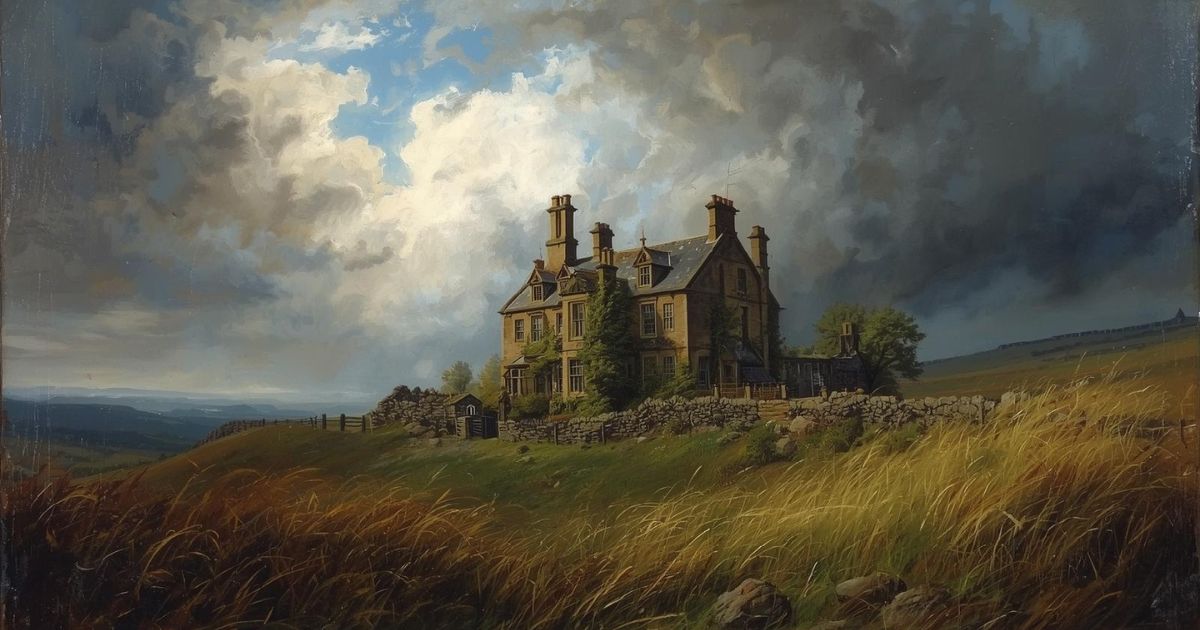
On a bright frosty morning Lockwood rides to the Heights with a note from Nelly. Hareton, handsome but rough, unchains the jealous gate and watches him like a watchdog rather than a host. Catherine, sulky in the kitchen preparing vegetables, never returns Lockwood's bow and exposes the dropped letter; Hareton seizes it for Heathcliff, then flings it to her. She reads, weeps, and mourns the Grange hills and her pony Minny.
She tells Lockwood Heathcliff destroyed her books because he never reads. She found Hareton's hidden Latin, Greek, and poetry and mocked his blunders aloud until he threw the volumes into her lap, then burned them when she tormented him further, sacrificing the study Catherine had inspired. Lockwood says every learner stumbles at the threshold; she calls the books consecrated to her and hates hearing them mangled.
Heathcliff returns, sees Catherine in Hareton's face, and sighs that he can hardly bear to look at him. Lockwood announces he will leave Thrushcross Grange after his twelve months and settle rent. Heathcliff sends Catherine to eat with Joseph; Lockwood makes a cheerless midday meal with grim Heathcliff and dumb Hareton, then rides away reflecting how dreary life gets over in that house.
Catherine's grief turns sharp: she exposes kindness as weakness and mocks Hareton for trying to rise. His secret books were hope; her scorn makes him destroy them to stop the humiliation. The pattern is how pain makes us attack the person reaching toward us, then treat their retreat as proof we were right to push them away. Hareton's fire ends the lesson Catherine accidentally started. You see it when hurt pride punishes someone else's effort to grow, and both lose the very connection that could have eased the isolation.
Explore this chapter with AI to uncover deeper meaning and practical takeaways.
AI Discussion