
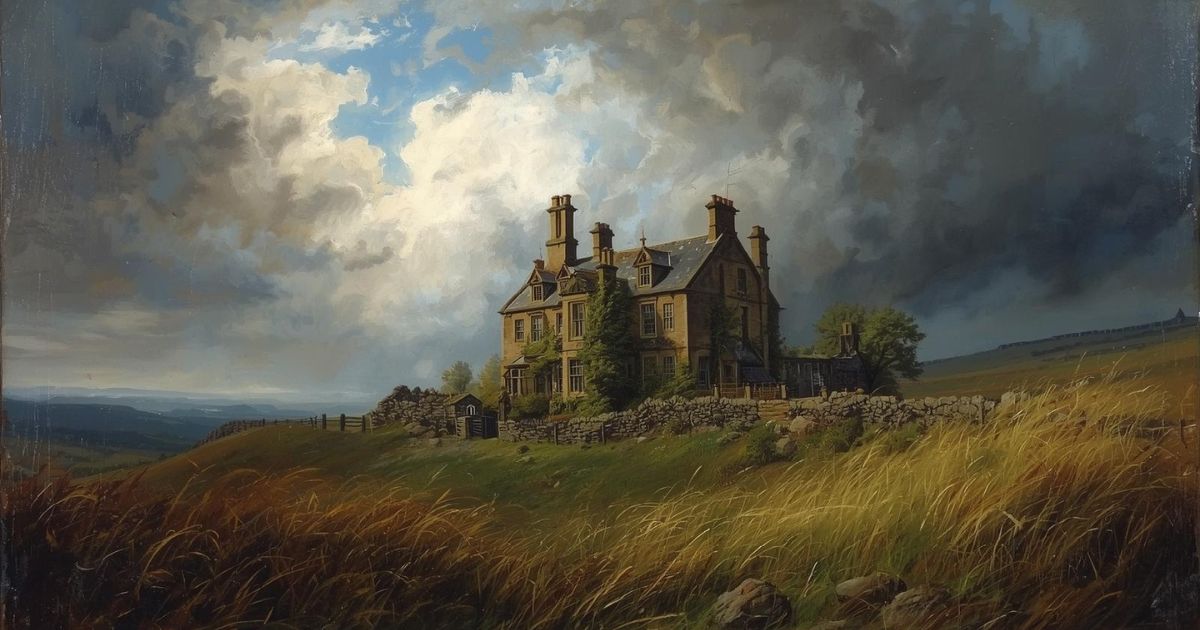
Nelly calls at the Heights but Joseph blocks the door: Catherine is thrang and the master is out. On the moor Zillah recounts Catherine's arrival, locking herself with dying Linton, begging for a doctor while Heathcliff swore his son's life was not worth a farthing. Zillah obeyed his order to leave nursing to the bride. Catherine watched Linton die alone, then told Heathcliff: He is safe, and I am free, but I feel like death.
After a fortnight upstairs Heathcliff showed her Linton's will, which left all moveables to him during her absence; she is penniless and trapped. On the first Sunday she descended in black, found books too high, and Hareton filled her frock from the dresser. He touched her curl; she recoiled in disgust. When she would have given her life for one kind word, she rejected every pretence of kindness from Hareton and Zillah, though Hareton had asked to sit up with her at night.
When frost drove her back to the fire she endured their company with stiff pride; Zillah says contempt has made her venomous. Nelly would take Catherine away but Heathcliff forbids it. Lockwood's frame closes Mrs. Dean's story: recovering in January, he plans to ride to the Heights and quit the Grange for London after October, while Catherine remains trapped in a house trained to look away.
Catherine arrives needing help with a dying husband and meets a household trained to look away. Zillah will not disobey Heathcliff; Catherine's contempt then gives Zillah an excuse to stay cold. The pattern is isolation enforced by power: no doctor, no ally, then property stripped by a will signed in Catherine's absence. Need turns to bitterness, and bitterness confirms the household's refusal to care. You see it when someone is left to carry a crisis alone while others cite orders, and wounded pride makes asking again feel impossible.
Explore this chapter with AI to uncover deeper meaning and practical takeaways.
AI Discussion