
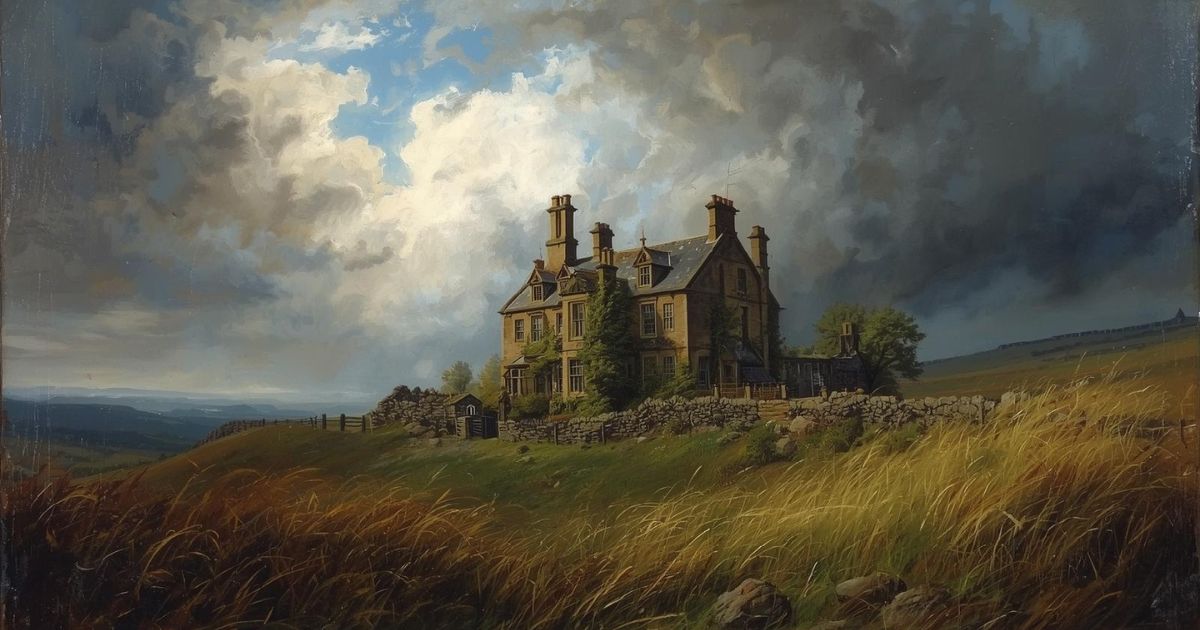
Yesterday Lockwood almost stayed by his study fire at Thrushcross Grange, but a servant smothering the hearth sent him four miles through mist and snow to Wuthering Heights. Joseph refuses to open the chained gate; a coatless young man with a pitchfork leads him in by the back.
In the kitchen Lockwood mistakes the silent young woman for Mrs. Heathcliff. She will not make tea for an uninvited guest. Heathcliff sneers when Lockwood calls her his amiable lady: she is his daughter-in-law; the rough young man is Hareton Earnshaw, degraded yet proud of his name.
The storm closes in. Heathcliff offers only a bed with Hareton or Joseph. Lockwood flees into the yard; the dogs knock him down while Heathcliff and Hareton laugh. Zillah splashes icy water down his neck and Heathcliff orders brandy. Humiliated, Lockwood accepts lodging for the night.
Lockwood walks into a place that is signaling, at every step, that he should leave.
None of this stops Lockwood from applying the social script he knows: compliment the animals, praise the lady of the house, assume he can charm a grim table into warmth with talk of happiness in exile.
Each polite move makes things worse because he is treating hostility as shyness and contempt as mystery.
Lockwood walks into a place that is signaling, at every step, that he should leave. Joseph will not open the door. The young woman will not speak. Tea is only for invited guests. The young man watches him like an enemy. None of this stops Lockwood from applying the social script he knows: compliment the animals, praise the lady of the house, assume he can charm a grim table into warmth with talk of happiness in exile. Each polite move makes things worse because he is treating hostility as shyness and contempt as mystery. When Heathcliff finally names the relationships correctly, the room does not become clearer to Lockwood; it becomes more dangerous.
Explore this chapter with AI to uncover deeper meaning and practical takeaways.
AI Discussion