
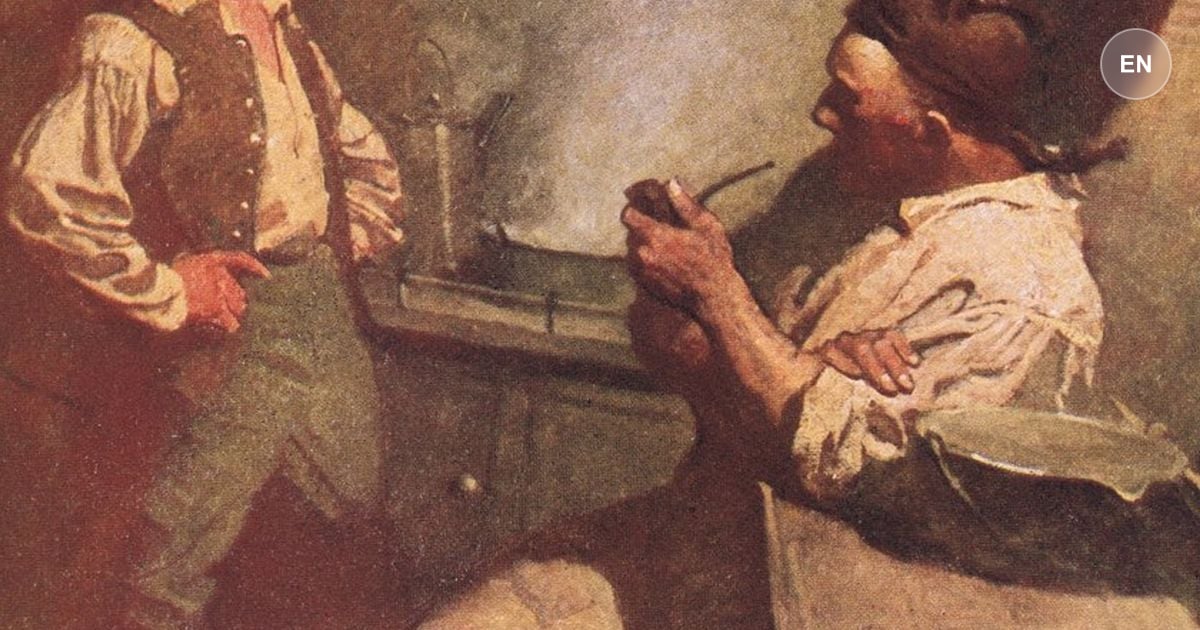
Jim finally receives the call to adventure when Squire Trelawney's letter arrives from Bristol. The squire has bought a ship called the Hispaniola and assembled a crew, led by a one-legged cook named Long John Silver who seems like a godsend. But there's already trouble brewing - Trelawney has been talking openly about their treasure hunt, which worries Jim and will likely worry Dr. Livesey. Jim's departure from home proves more emotional than expected.
Seeing a replacement boy at the Admiral Benbow makes him realize what he's leaving behind, and he experiences his first real homesickness. The journey to Bristol opens Jim's eyes to a wider world - the bustling port city fills him with wonder at the ships, sailors, and maritime life he's never truly experienced despite living by the sea. When he finally meets Trelawney in Bristol, dressed like a sea captain and brimming with enthusiasm, Jim learns they sail tomorrow.
This chapter captures that pivotal moment when dreams become reality, but also hints at the complications that arise when people can't keep secrets. Trelawney's loose tongue about the treasure and his glowing praise of Long John Silver suggest that not everything will go as smoothly as planned. Jim's mixed emotions about leaving home remind us that every adventure requires sacrifice, and that growing up means accepting both excitement and loss.
Trelawney isn't stupid - he's a successful landowner who can afford to buy ships and fund treasure hunts. But his excitement makes him act like a fool, broadcasting their secret mission to anyone who'll listen. This reveals something crucial about human nature: intelligence doesn't protect us from our emotions, and success in one area doesn't guarantee wisdom in another. When we're thrilled about something, our brains literally change. The same chemicals that make us feel powerful and confident also impair our judgment. We start seeing everyone as a potential ally instead of recognizing threats. We mistake attention for respect. In 1883, this meant pirates learning about treasure maps. Today, it means competitors learning about business plans, gossipy coworkers undermining promotions, or social media posts that come back to haunt us. The pattern is timeless because the brain chemistry is timeless. Stevenson understood that excitement is both our greatest motivator and our biggest vulnerability. The people who succeed long-term aren't necessarily smarter - they're the ones who've learned to pause when they're most excited, to sleep on big news, and to choose their confidants carefully. They know that real power often comes from what you don't say, not what you do. Every workplace has a Trelawney - someone whose enthusiasm puts the whole team at risk.
Explore this chapter with AI to uncover deeper meaning and practical takeaways.
AI Discussion