LIVE
OCD← Home
Treasure Island cover
1883
Treasure Island
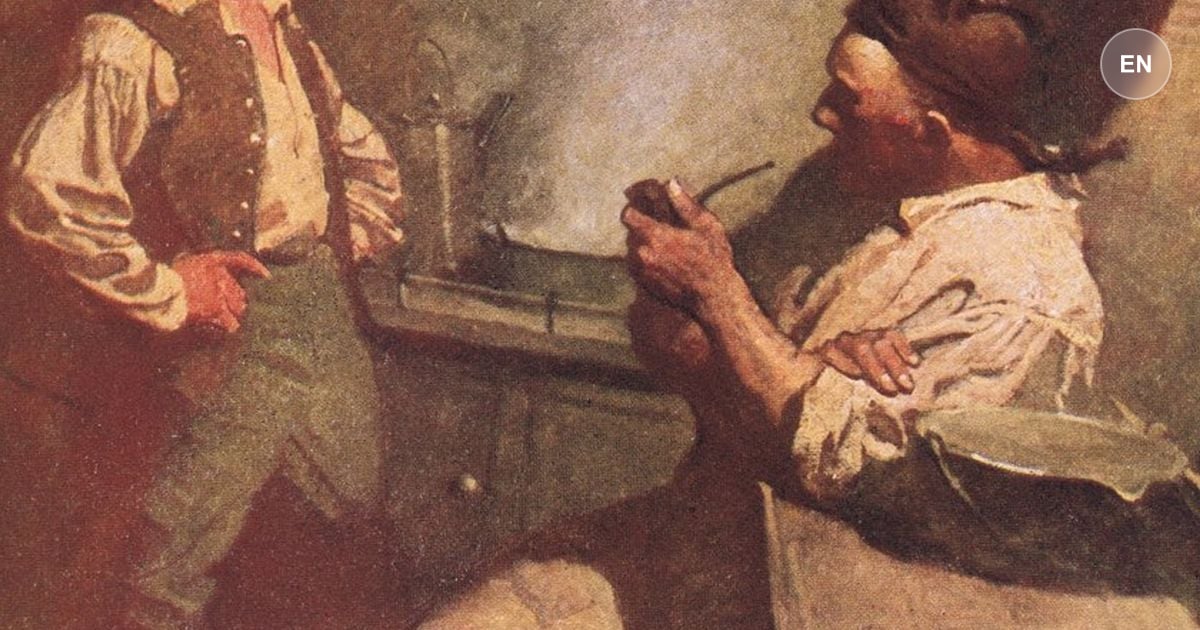
Robert Louis Stevenson · Taking Command of the Ship
Chapter 25
Ch. 24
Reading
Ch. 25
Ch. 26
Loading audio...
0:000:00

Jim finally boards the Hispaniola and discovers a grisly scene, two pirates have fought to the death in their drunken rage, leaving only the wounded Israel Hands alive. Despite being just a boy facing a dangerous pirate, Jim seizes the moment and declares himself captain of the ship. His first act is symbolic but powerful: he tears down the pirate flag and throws it overboard, officially ending Captain Silver's claim to the vessel. Hands, desperate and injured, agrees to help Jim sail the ship in exchange for food, drink, and medical care.

They strike a deal, Jim will provide what Hands needs, and Hands will teach him to navigate the ship to North Inlet where they can safely beach it. As they sail along the coast, Jim feels the intoxicating rush of command and accomplishment. He's turned his desperate escape into a major victory, reclaiming the ship for the good guys.

But Stevenson plants seeds of unease, Jim notices something disturbing in Hands' eyes, a calculating look that suggests the wounded pirate might not be as helpless or trustworthy as he appears. This chapter shows how sometimes the biggest opportunities come disguised as disasters, and how taking decisive action in chaotic moments can completely change your position. But it also warns us that desperate people are often the most dangerous, and that success can make us overconfident just when we need to be most careful.

Amplified Discussion
Why Do We Trust People Who Disappear During Crises?

Jim's CEO vanishes when the company faces its biggest crisis, leaving a teenager to hold everything together, then returns with praise and smiles when the hard work is done. This pattern, leaders who disappear during emergencies and reappear to claim credit, shows up everywhere in working-class life. The restaurant manager who calls in sick during the health inspection but shows up for the good reviews. The family member who's absent during the medical crisis but present for the inheritance discussion. The boss who's 'in meetings' during layoffs but available for the celebration when profits return. Stevenson understood something crucial about power: the most dangerous leaders aren't the ones who openly threaten you, but the ones who let you handle their problems while maintaining plausible deniability. They create situations where you have responsibility without authority, then swoop back in when it's convenient. The pattern works because we want to believe their excuses, we need to believe that someone competent is ultimately in charge. But Jim's story suggests we should pay attention to who shows up when things get difficult, not just who takes credit when things go well. The question isn't whether someone can charm you during good times, but whether they'll stand with you when everything falls apart.

Explore this chapter with AI to uncover deeper meaning and practical takeaways.

AI Discussion
Why it matters

Taking the Deck When No One Else Will

An empty command still has to be claimed out loud. Jim tumbles onto the Hispaniola, finds Hands wounded, and names himself captain rather than wait for a better officer. When a room has no one in charge, say the next concrete order before you wait for permission.

Lessons

PracticeThis week, notice when your workplace or family has moments of confusion about who's in charge, watch who steps up and how others respond to their leadership attempts.

Psych reading

The Chaos Window

Disrupted systems create temporary leadership opportunities for those bold enough to act decisively, but success can breed dangerous overconfidence.

In the mind

This chapter reveals a crucial pattern: chaos creates windows of opportunity that only exist for those bold enough to act decisively. When systems break down, whether it's a pirate ship with dead crew members or any organization in crisis, traditional power structures temporarily collapse, creating space for new leadership to emerge. The mechanism works through disruption and decisive action. When normal order breaks down, people are disoriented and looking for someone to take charge. Jim doesn't wait for permission or worry about his qualifications, he sees the vacuum and fills it immediately.

His symbolic act of tearing down the pirate flag isn't just dramatic; it's a declaration that changes everyone's reality, including his own. But the pattern also includes a dangerous second phase: success in chaos can breed overconfidence just when vigilance is most needed. This exact pattern plays out constantly in modern workplaces. When a manager quits suddenly, the person who steps up and starts organizing gets promoted, not necessarily the most qualified person. During family crises, illness, divorce, financial trouble, the relative who takes charge of logistics often becomes the new family coordinator.

In healthcare, when systems fail, the CNA who speaks up and advocates becomes the patient's real protector. During company layoffs, the employee who starts coordinating communication and resources often emerges as informal leadership. When you recognize chaos around you, ask: 'What needs doing that no one is doing?' Then do it without waiting for permission. But remember the second part of Jim's lesson, success in crisis can make you overconfident.

Stay alert to people like Hands, who appear defeated but are actually calculating their next move. The same chaos that created your opportunity is still creating opportunities for others. When you can spot the moment when normal rules don't apply, act decisively to fill the leadership vacuum, but maintain vigilance even in success. When you can name the pattern, predict where it leads, and navigate it without losing your judgment or your boundaries, you keep control instead of letting fear write the next move.

Find the right chapter

Each mood maps to a life skill. Each skill connects to the patterns in classic literature.

😔How do you feel😊

Personalize your match

Optional—life stage, what you need today, and what you're navigating help us pick chapters that fit—not generic lists. You may also freeform using the feeling search below.

Sign in to save your profile

Choices stay on this device until you sign in.

Browse the Full Library
4,582Chapters
118+Books
86Authors