
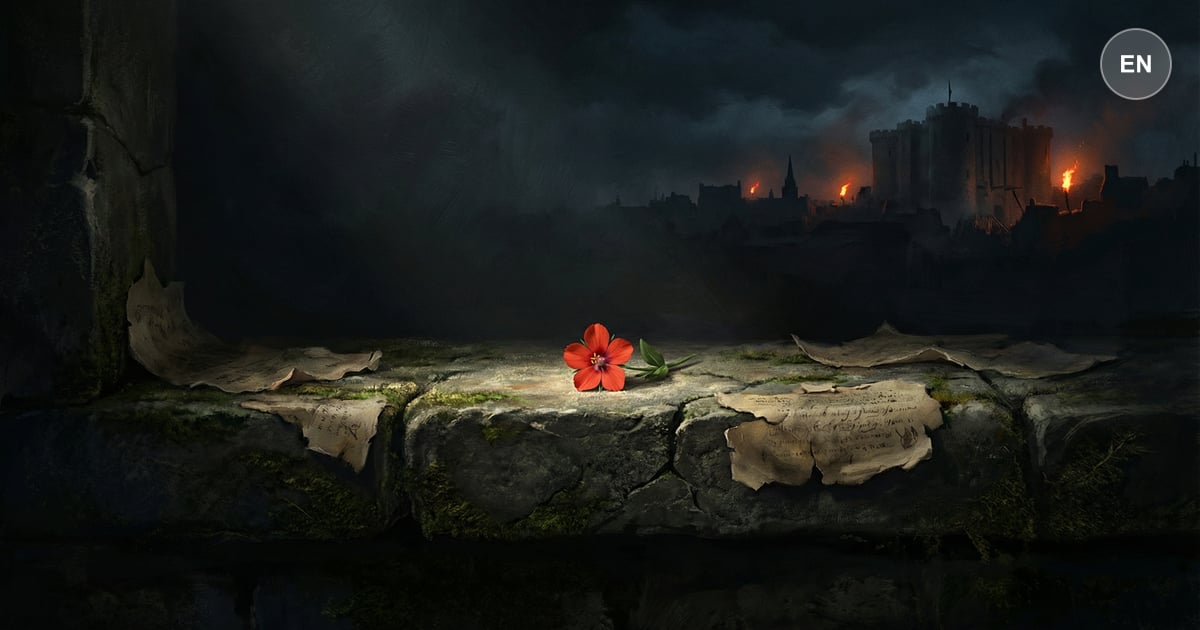
The four bays fly along the moonlit road beside the river, Sir Percy's white hands loose on the ribbons. Marguerite sits in furs on the box-seat, the English night cooling her face after the ball. He does not speak. In the moonlight his profile looks earnest, and she remembers the man who loved her before he became the lazy fop of card-rooms. She feels sudden sympathy. A week ago she would have laughed at the idea that she would spy on friends or sell a brave stranger. She has done both. Two years ago a thoughtless word helped send the Marquis de St. Cyr to the knife; that time she was morally innocent. Tonight she chose. She knows Percy would despise her worse if he knew. The coach turns into the gates of the Tudor house by the river. Grooms appear. Lights still burn in two suites divided by the width of the house, as far apart as their lives.
She lingers on the lawn until she hears his step on the gravel. She calls him back from the terrace. He answers with gallantry and a wish to go. She asks if her company is so distasteful. He says the shoe is on the other foot. She reminds him that the estrangement was not her making, then of Paris: he saw her for one hour, went east, and two years later had not forgotten. He kisses the tip of her fingers and tries to leave again. She asks, with sudden vehemence, whether love can die, and whether anything remains of the passion that might bridge the gap. He hardens. He asks if she wants to renew last year's sport and see him a love-sick suppliant so she can kick him aside like a lap-dog. She begs to bury the past. He reminds her she said she wished to dwell in it.
She means the time when he still loved her, when wealth allured her and she hoped his love would beget hers. He names the morning after their marriage: St. Cyr and his family perished, and rumour said Percy's wife had helped send them there. She says she herself told him the truth. Not until strangers had already told it, he answers. She explains: Armand was thrashed by the Marquis's lacqueys for loving an aristocrat's daughter; she meant humiliation, was duped, and realised too late. He says she then demanded he forfeit his honour, accept every action as a dumb slave, and left him weeks alone after a bald confession. Pride, she says, and she had already repented when she found the mask of indifference in place. She comes close enough that her hair touches his cheek. He calls the mask no mask. She asks for sympathy in trouble. It is yours to command, Madame.
She names Armand's rash letter, the fanatic, the guillotine. He pales, almost takes her in his arms, then pride wins again. He tells her to dry her tears and asks, gently now, how he may serve her. She cannot ask Chauvelin. She almost tells the night's work and stops, fearing she will kill the love she has just felt returning. He pledges his word that Armand shall be safe and asks permission to go. She offers gratitude. It is too soon, he says. She mounts the terrace steps hoping he will call her back. He does not move. She runs inside so he will not see her tears. Had she looked back she would have seen pride give way at last: a man kneeling on the steps, kissing the stone where her foot and hand had rested.
Marguerite and Percy's tragedy isn't that they don't love each other—it's that they both demand perfect understanding without offering perfect transparency. She wants him to believe in her innocence without explanation. He wants her to trust his love without proving it through patience. This impossible standard destroys them both. We see this pattern everywhere today: spouses who stop talking after fights, waiting for the other to apologize first; adult children and parents maintaining cold distance, each convinced they're the wronged party; coworkers who let misunderstandings fester because someone should make the first move. The aristocratic world of 1905 demanded that people maintain face at all costs, but people living on a wage today often carry that same toxic pride. We tell ourselves we shouldn't have to explain, shouldn't have to be vulnerable first, shouldn't have to risk being hurt again. But relationships aren't courtrooms where someone wins and someone loses—they're partnerships where both people either succeed together or fail apart. The most powerful person in any deadlock is the one willing to break it first. When you choose vulnerability over vindication, you're not surrendering—you're taking control of the outcome.
Explore this chapter with AI to uncover deeper meaning and practical takeaways.
AI Discussion