
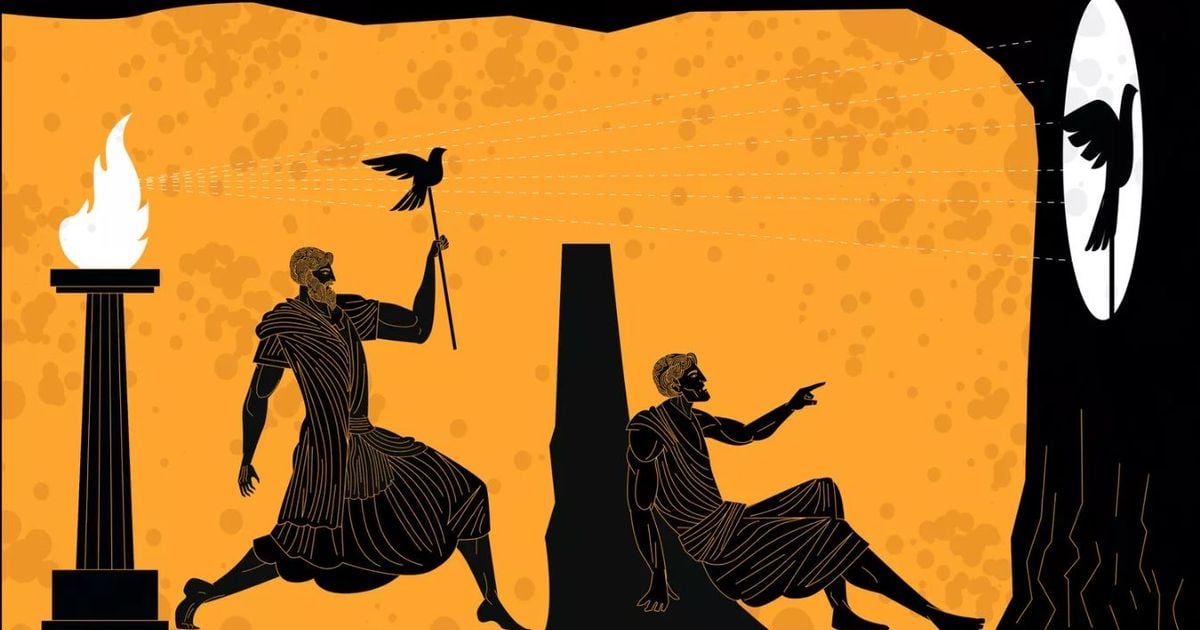
Socrates argues that the tyrannical soul is the most unjust and therefore the least happy, reversing Glaucon's earlier wager that successful vice pays. He distinguishes three kinds of pleasure corresponding to appetite, spirit, and reason, insisting that only the philosopher can judge which pleasures are truly pleasant because only reason knows what satisfies the whole person. The drunk, the honor-seeker, and the thinker each claims to live best, but they are like people comparing experiences from different vantage points. Without a ruler inside the soul, pleasure becomes a shouting match where the loudest appetite declares victory.
To settle the dispute, Socrates introduces the metaphor of a multicolored beast, a lion, and a human figure bound together. Appetite is the many-headed beast, spirit the lion, and reason the inner person who should rule. Injustice feeds the beast and starves the person; justice strengthens the ruler within. He also describes the democratic man who collects desires like souvenirs until a flashy public speaker installs a tyrannical passion as master of the soul. The tyrant's waking life is a mirror of his dreams: lawless appetite, paranoia, and no lasting friendship because every companion might become a rival.
The chapter closes by ranking lives: the philosopher is most just and happiest, the tyrant most unjust and most wretched, even if crowned and feared. Pleasure without measure is not freedom but slavery to whatever impulse shouts loudest. By tying happiness to inner order rather than external success, Plato answers the brothers' challenge from Book II: justice is choiceworthy because it harmonizes the self, while injustice multiplies conflict inside and out. External trophies cannot compensate for a soul at war with itself, and that is why the dialogue can finally turn from politics to poetry and the fate of the soul after death. Tyrants may command armies, but they cannot command their own nightmares, and that inner poverty is Plato's final answer to Thrasymachus. Happiness, he insists, tracks harmony of the soul, not the size of the tyrant's guard or the noise of the crowd that once cheered him. The argument is complete enough for Book X to speak about poetry and the soul's fate.
When Plato claims the tyrant is 729 times more miserable than the philosopher-king, modern readers often dismiss it as ancient mysticism. But working people know the truth of compound misery. Start with a warehouse worker who steals one box cutter - small thing, right? But now they're a thief. The guilt eats at them, so they snap at their family. The family withdraws, so they drink more. The drinking makes them late, risking the job they stole to protect. Each bad choice multiplies the next, creating exponential unhappiness. Plato's math captures what every addiction counselor knows: problems don't add, they multiply. The tyrannical soul isn't just unhappy - they're trapped in an accelerating cycle where each attempt to feel better makes everything worse. They're like someone in quicksand who keeps thrashing. The philosopher-king, by contrast, creates positive compound effects. One good choice (reading instead of scrolling) leads to better sleep, which leads to patience with family, which strengthens relationships, which provides support for more good choices. This isn't about moral superiority - it's about recognizing that internal governance follows mathematical laws. In your own life, you've seen how one coworker's negativity can poison an entire shift, while one person's steadiness can hold everyone together. The question Plato forces: Which multiplier effect are you creating in your own soul? Are you feeding patterns that compound into freedom or into slavery?
Explore this chapter with AI to uncover deeper meaning and practical takeaways.
AI Discussion