
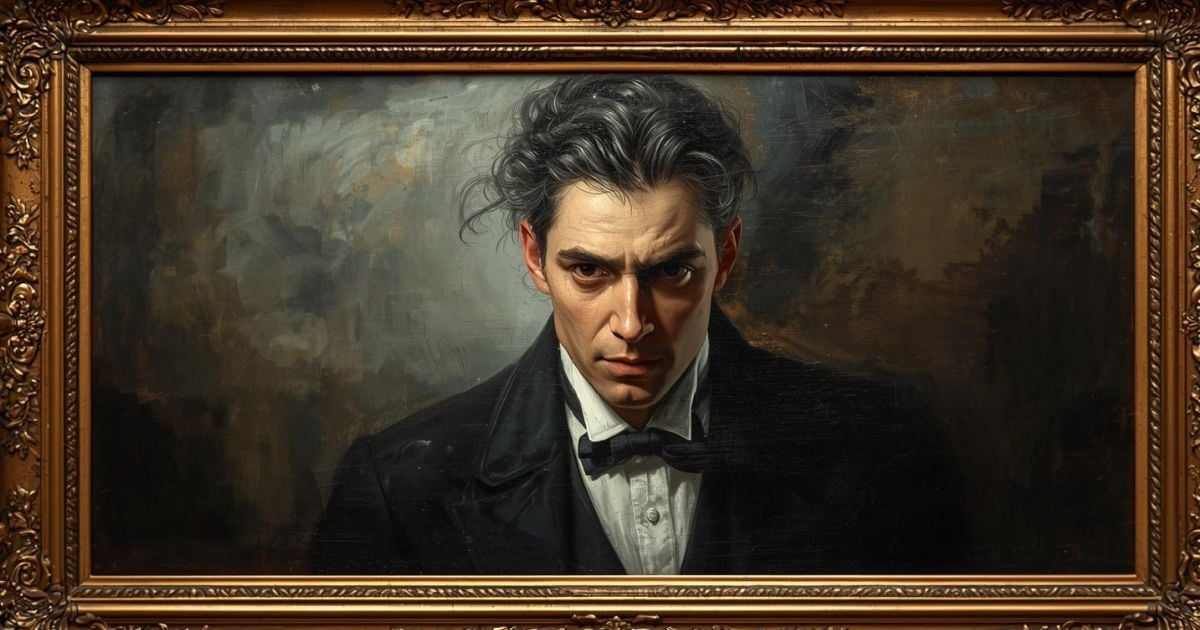
Dorian sleeps past noon the morning after the theatre, sips tea over invitations and unpaid bills, and tries to treat last night as a dream until the screen before the portrait will not let him rest. He had placed it there after seeing cruelty in the painted mouth at dawn, but daylight makes him hope imagination played a trick. He sends Victor away, locks the library doors, and confirms what he feared: the change is real while his own face stays smooth. For a moment he studies the alteration with almost scientific wonder, asking whether soul and canvas share some terrible affinity, then horror returns.
The portrait makes him conscious of how brutal he was to Sibyl, and remorse follows. He tells himself she could still be his wife, that the painting might guide him as conscience guides others, and he spends hours before the canvas until the clocks strike three, four, and the half-hour. He writes a passionate letter begging her forgiveness, covering page after page with wild sorrow. There is a luxury in self-reproach, and when he finishes he feels forgiven before he has made a single amend.
Lord Henry knocks, enters, and learns Dorian still plans to marry Sibyl and begin a better life. Dorian admits he was perfectly brutal backstage, then Henry reveals the note left unread that morning: Sibyl is dead, found on her dressing-room floor after swallowing prussic acid. Henry worries about the inquest and scandal, asks whether anyone at the theatre knows Dorian's name, urges dinner and Patti at the opera, and listens while Dorian calls himself her murderer yet marvels at how dramatic life has become.
Henry reframes the death as Jacobean tragedy, insists the girl never really lived, and Dorian sighs that Harry has explained him to himself. Alone again he sees the portrait received the news before he did, wonders whether it merely records the soul, then chooses eternal youth while the canvas bears his shame behind the screen. He imagines watching the image change like a magical mirror, decides his face will keep spring while winter comes for the painting, draws the screen back into place, and goes to the opera. Wilde marks the moral pivot: Dorian knows the magic is real, knows he caused pain, and still selects appearance over accountability.
Chapter eight is where Dorian learns to outsource conscience. He feels real remorse, writes a real letter, and then Henry arrives with better sentences. Death becomes drama. Duty becomes vulgar. Sibyl becomes less real than Ophelia. The frightening part is how fast relief follows. Dorian does not argue for long because Henry offers a story in which cruelty becomes insight and indifference becomes depth. We know this pattern when a colleague calls a layoff realism, when a friend calls ghosting self-care, or when a leader rebrands harm as necessary sophistication. The portrait still records what Dorian refuses to feel, but by evening he has chosen the bargain: his face stays young, the canvas takes the shame, and the opera still waits. Wilde is not asking whether guilt is pleasant. He is asking whether you will let eloquence replace it.
Explore this chapter with AI to uncover deeper meaning and practical takeaways.
AI Discussion