
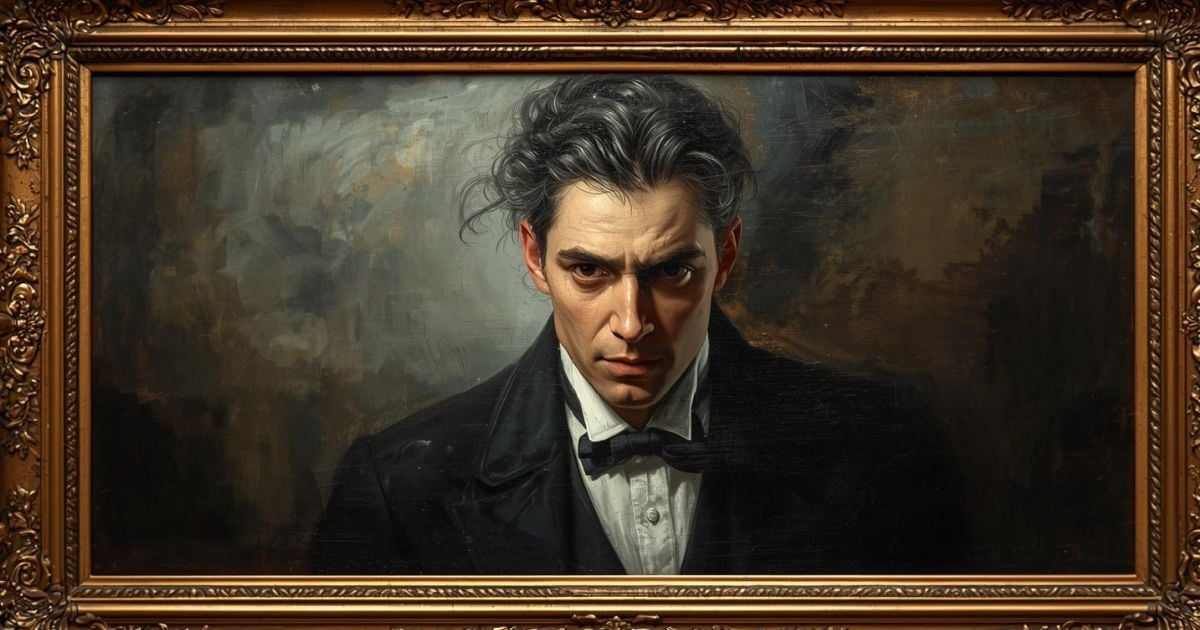
On a warm night Dorian walks home weary of being pointed out as Dorian Gray and thinks of Hetty Merton, the village girl who still believes wicked people are old and ugly. In the library he longs for his rose-white boyhood and wishes each sin had brought swift visible penalty instead of being hidden in the portrait. He smashes the mirror Henry gave him, loathing the beauty that ruined him.
He tells himself Basil's disappearance will pass, Campbell chose suicide, and the murder was a moment's madness, but the living death of his own soul still troubles him. Hoping Hetty proves he can change, he climbs to the locked room expecting the canvas to show a purer face. Instead the portrait looks more hypocritical than before, the blood on its hand brighter, and he realizes even his good deed was vanity, curiosity, or mask.
Deciding confession is impossible and the picture itself the last witness, he seizes the knife that killed Basil and stabs the portrait to kill the past. Servants hear a terrible cry. When they enter, the picture shows their master in exquisite youth again, and on the floor lies a withered, loathsome corpse they recognize only by its rings.
Chapter 20 completes Wilde's fable without sentimental rescue. Dorian does not repent to the world. He does not confess to the police. He tries to murder the one witness left, the portrait that kept his face innocent while his soul aged. The ending is both justice and horror because the supernatural logic finally inverts: the public image returns to the wall, and the body on the floor becomes what he always was underneath the bargain. Wilde refuses the comfort of saying beauty was merely a mask. It was also a tool, a permission structure, and a prison. Dorian's death is the moment when the cost of separating action from identity is paid in full. The servants recognize him by his rings because the face they knew is no longer on the corpse. That detail is the novel's last moral sentence.
Explore this chapter with AI to uncover deeper meaning and practical takeaways.
AI Discussion