
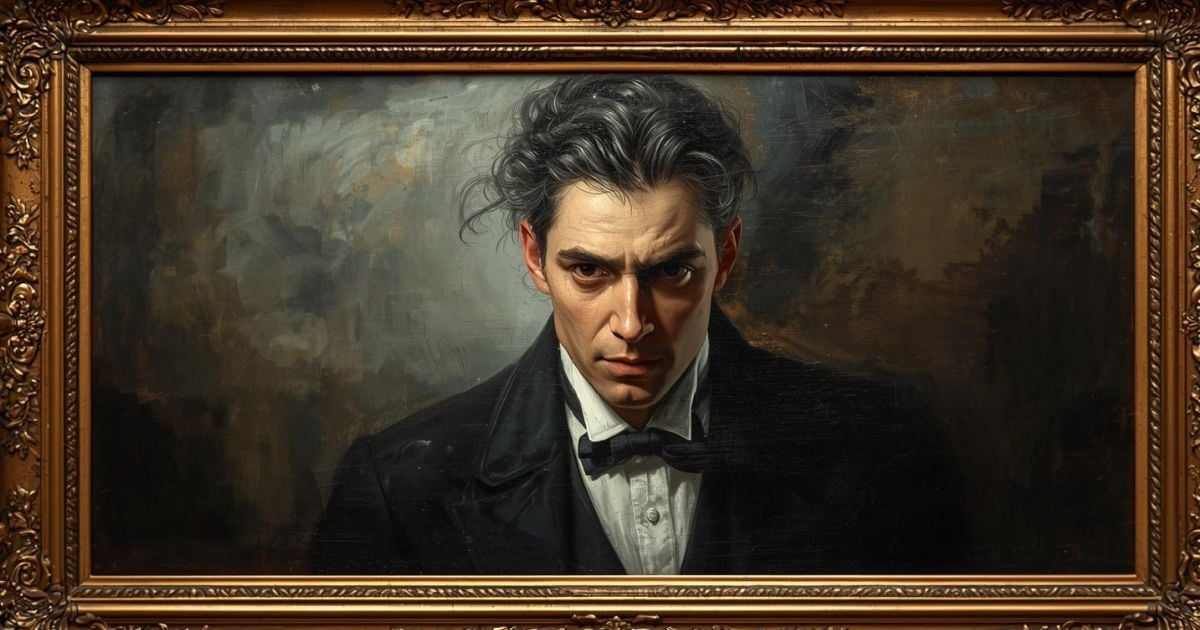
Over rose-water and strawberries, Dorian tells Lord Henry he is going to be good and has already begun by sparing Hetty, a village girl who reminded him of Sibyl Vane. He broke their plan to run away at dawn, leaving her flowerlike, and insists Henry must not call the act a sin. Henry mocks the renunciation as a new sensation and predicts Hetty will despise the husband Dorian's glamour taught her to expect.
Talk turns to Basil's disappearance, Alan Campbell's suicide, and the grey ulster man Scotland Yard still pursues. Dorian discusses it calmly while wondering at his own composure over wine, then asks over coffee whether Basil was murdered. When Henry laughs the idea away, Dorian tests him directly: what if I had murdered Basil? Henry answers that crime is vulgar and belongs to the lower orders, not to Dorian's type.
The talk moves to the missing portrait, Hamlet, and Henry quoting gain the world and lose your soul from a street preacher. Dorian plays Chopin, insists he is not the same, and begs Henry never to lend the poisonous book again. He leaves before eleven claiming fatigue, but his reform still sounds like performance Henry has already read.
Chapter 19 is the novel's last conversation between pupil and teacher. Dorian brings Henry a reform story and nearly brings him a murder confession, but Henry's philosophy has always been designed to make both gestures impossible to take seriously. Crime is vulgar. Art is sterile. Dorian remains flawless. The dialogue is exquisite and damning because it shows how intelligence can be deployed to prevent moral vision. Dorian's sparing of Hetty may matter to Hetty, but in this room it functions as proof that he can still narrate himself. The portrait is not in the music-room. It waits upstairs, unimpressed by Chopin. Wilde positions the chapter as a false dawn. Dorian wants a new life, but he still wants it on terms that leave the hidden record intact.
Explore this chapter with AI to uncover deeper meaning and practical takeaways.
AI Discussion