
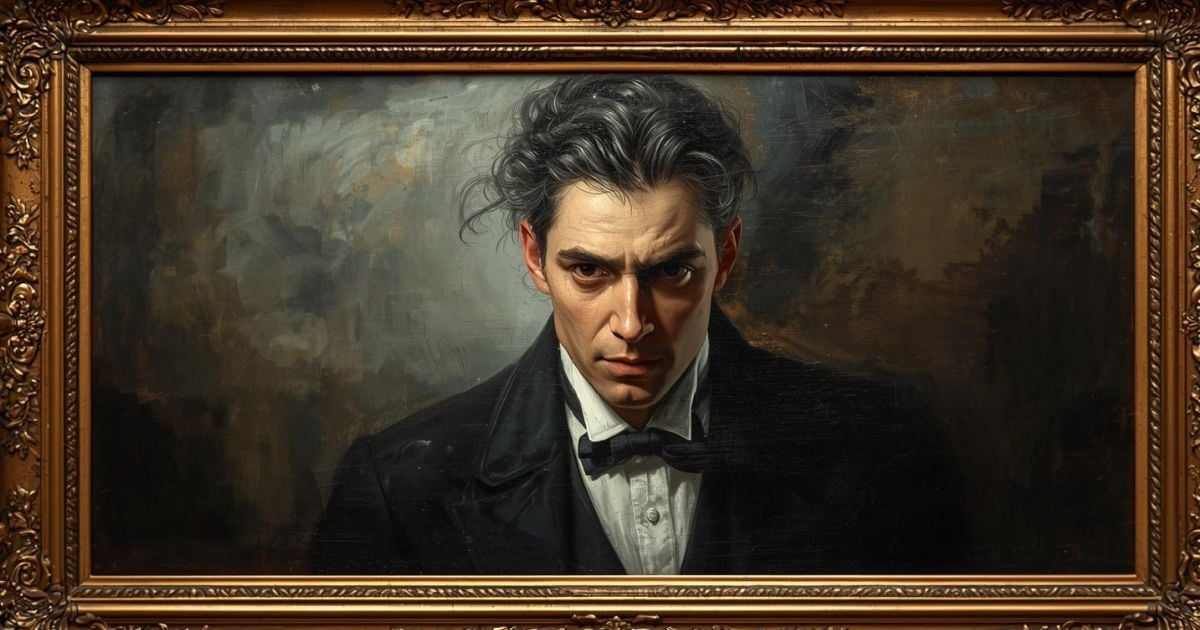
Paranoid that servants might glimpse the changing portrait, Dorian studies Victor in the glass and orders Mrs. Leaf to bring the key to his old schoolroom, a dusty chamber unopened since his grandfather died. He wraps the canvas in a purple Venetian coverlet that once served as a pall for the dead and briefly regrets not telling Basil the truth, then sends a note to Henry asking for something to read.
Mr. Hubbard and his assistant carry the screened painting up the wide staircase while Dorian helps despite the frame-maker's protests. The schoolroom was built for the boy Lord Kelso hated; Dorian remembers hiding in the cassone and chooses the one room no guest can enter. He leans the portrait against the wall, locks the door, and leaves a blank space visible behind the library screen.
Back downstairs he finds Henry's yellow-bound novel beside tea and an evening paper marked at Sibyl's inquest report. Dorian tears the clipping in two, tells himself he did not kill her, and becomes absorbed in the poisonous French book whose Parisian hero lives every century except his own.
He reads until a copper-green dusk falls, dresses late, and tells Henry at the club that the book fascinated him rather than pleased him. By nightfall two transformations are complete: shame is housed in architecture, and a new appetite has found its guide.
Chapter ten is structurally neat. Dorian locks the portrait upstairs and opens the yellow book downstairs. One act buries conscience; the other recruits appetite. He is not stupid. He tears the inquest clipping and still reads until dark. That is the choice in miniature. He will not face what he did to Sibyl, but he will study how to live as if consequences belonged to someone else. The schoolroom and the novel are the two halves of the double life he is about to perfect.
Explore this chapter with AI to uncover deeper meaning and practical takeaways.
AI Discussion