
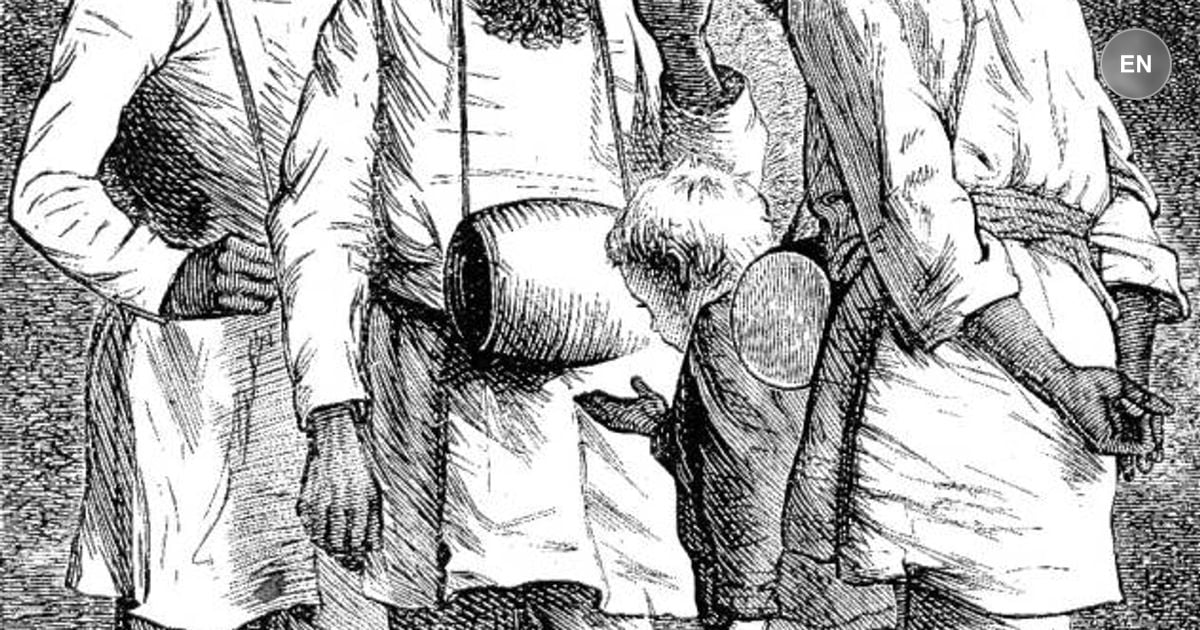
Franklin Blake opens this chapter in a state of total psychological shutdown, unable to process the nightgown evidence that seems to implicate him in the theft of the Moonstone. He laughs inappropriately when Betteredge approaches, hands over the damning garment without explanation, and has no memory of what passes between them on the beach. The first quarter of the chapter establishes this collapse not as weakness but as the honest human response to an impossible situation: a man confronted with physical proof of something he cannot remember doing. Rather than rushing to London for legal counsel or locking himself away to reason through the crisis, Franklin accepts morning grog in a servant's sitting room and finds genuine relief in ordinary companionship. He acknowledges the absurdity of this openly, mocking the reader who might expect dignified, logical behavior while admitting that Betteredge's familiar face and cold-watered spirits are the only things keeping him functional. The second quarter pivots when Betteredge spots the nightgown on the table and declares flatly that someone is lying.
Franklin cannot share this comfortable certainty. He insists the paint and the name stitched into the fabric are facts, not interpretations, and facts do not dissolve under wishful thinking. Betteredge counters with his instinct for foul play, then asks whether anything else was hidden in the tin case. This question unlocks the chapter's true subject: Rosanna Spearman's letter, many pages long, signed in a hand Franklin recognizes only after searching for the name at the end. The third quarter belongs entirely to Rosanna's voice, and it reframes everything.
Her confession opens not with the nightgown but with three words of love, stopping Franklin cold before a single piece of evidence is explained. Her letter then traces her life backward through the reformatory, the prison, the theft, and the mother abandoned by a gentleman father, sketching a social history that is, as she says herself, common enough to appear in any newspaper. What is not common is the precision of her feeling. She describes the morning Franklin emerged from the sandhills as the moment something like hope leapt up in her for the first time, and she records every small act of devotion that followed: writing his name beside hers, replacing Rachel's roses with her own, crying at night over his indifference. Her jealousy of Rachel is frank and unsparing, and her awareness that class makes her love structurally impossible gives the confession its particular ache.
The closing quarter of the chapter moves toward the evidence itself, but Rosanna insists on one more disclosure first. She describes visiting the Shivering Sand during her worst periods of loneliness and recognizing it as a place that could end her troubles permanently. The quicksand had always held a kind of claim on her, and unrequited love sharpened that claim into something deliberate. Only after establishing this does she turn to the night of the theft, recounting how Penelope's casual remark about the paint drying time first planted the seed of suspicion in her mind. The chapter ends mid-sentence, with Rosanna's testimony still unfolding, holding Franklin and the reader in the same suspended state of incomplete knowledge.
Maria's choice reveals one of love's most painful expressions: voluntary exile to protect someone else's future. She could have exposed Rachel's sleepwalking condition, saved her own reputation, and kept her job. Instead, she chose to be branded a thief rather than risk Rachel's inheritance or mental health. This pattern appears throughout working-class life - parents who don't report workplace injuries to protect their children's insurance, siblings who take blame for family mistakes to shield younger ones from consequences, friends who accept being cut off rather than reveal someone's addiction to their employer. The Victorian era's rigid class system made Maria's sacrifice particularly brutal - losing her position meant losing her livelihood and reputation permanently. Today's gig economy creates similar vulnerabilities where one accusation can destroy someone's ability to work. Yet the pattern persists: those with less power often sacrifice themselves to protect those they love. Maria's letter forces us to examine how we respond when someone has suffered for our sake. Do we honor their sacrifice by living worthy of it, or do we dismiss their pain to ease our guilt? The chapter suggests that recognizing protective love requires looking beyond surface actions to underlying motivations - distinguishing between those who hurt us and those who hurt themselves for us.
Explore this chapter with AI to uncover deeper meaning and practical takeaways.
AI Discussion