
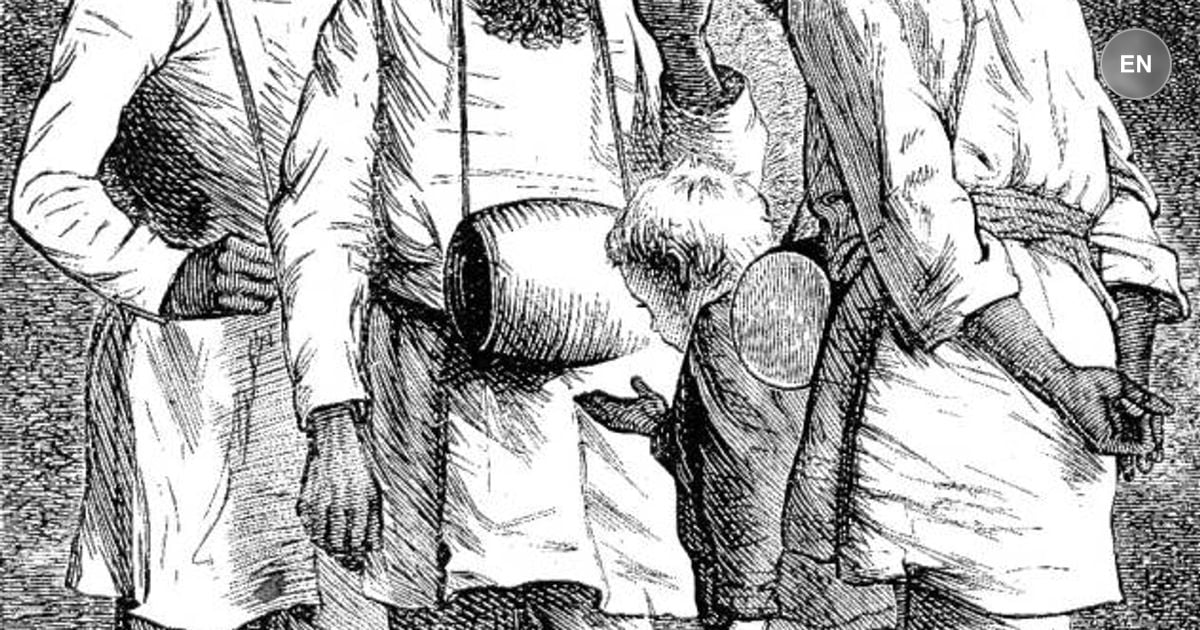
Franklin Blake finally retrieves Rosanna Spearman's hidden package from the quicksand at Shivering Sand, following her detailed instructions. After an unsettling encounter with Limping Lucy, who clearly despises him for reasons he doesn't understand, Franklin gets Rosanna's letter and memorandum. The memorandum provides precise directions for finding a chain hidden in the rocks at low tide. Despite his nervousness about the dangerous quicksand where Rosanna died, Franklin follows the instructions exactly and successfully recovers a japanned tin case.
Inside, he finds a nightgown with a paint stain, the same paint from Rachel's door that Sergeant Cuff had identified as crucial evidence. But when Franklin checks the nightgown's owner by looking for the name tag, he discovers his own name. The shocking realization hits him like a thunderbolt: according to the physical evidence, he himself is the thief who stole the Moonstone. This chapter represents the story's most dramatic plot twist, where the detective becomes the accused.
Franklin's methodical investigation, meant to clear his name and win back Rachel's love, instead provides damning evidence against himself. The discovery forces readers to question everything they thought they knew about guilt, memory, and identity. Sometimes the truth we're searching for is the last thing we want to find, and the most important mysteries might be hidden within ourselves.
Franklin Blake's discovery forces us to examine a uncomfortable reality: sometimes the truth we're desperately seeking is the truth that will destroy us. In 1868, this was revolutionary storytelling, the detective becoming the accused challenged every assumption about guilt and innocence. Today, we live this pattern constantly. The parent who monitors their teenager's social media and discovers their own parenting failures reflected in every post. The worker who documents workplace harassment and realizes they've been complicit in the very culture they're fighting. The partner who investigates infidelity and finds evidence of their own emotional neglect. We tell ourselves we're seeking justice, but sometimes we're unconsciously seeking punishment. The most dangerous investigations are the ones we conduct with complete sincerity, believing we're protecting ourselves or others, only to discover we've been building our own prosecution case. This isn't about avoiding accountability, it's about understanding that truth-seeking without emotional preparation can become a form of self-harm. Sometimes the bravest thing isn't digging deeper, but accepting that some truths require us to be stronger before we can handle them. The question isn't whether we should seek truth, but whether we're seeking it from a place of genuine growth or unconscious self-destruction.
Explore this chapter with AI to uncover deeper meaning and practical takeaways.
AI Discussion