
Jurgis rises from the snow wild with rage, but the Jones castle is dark and shut. He still believes he has come out ahead: a hundred-dollar bill in a city that starves men for nickels. Changing it is the problem. A lodging-house would take his life; a bartender examines the note, pours one beer, and pockets the rest. When Jurgis protests, the man, a known bruiser, beats him, police club him, and the court hears that a fighting-drunk tramp attacked the place with a bottle of bitters. The owner pays five dollars a week for Sunday privileges. The pugilist is a trusted henchman of the Democratic leader who hustled a record vote for this magistrate. Ten days and costs. The victim is sentenced. The thief keeps the bill. Jurgis weeps in the pen, learning that money without pull is prey.
In the Bridewell he meets Jack Duane again, a gentleman of the profession glad to throw in with a man who can be trusted. The last time Jurgis thought only of family; now he listens to old and young criminals like breakers on a beach and recognises their point of view as his own. Turned out penniless, he finds Duane hiding behind Papa Hanson's cellar dive and Rosensteg the fence. That night they blow out a lamppost, let a workingman pass, wait out a policeman, and mug a brisk walker with a slingshot. The wad and watch yield a living. In the morning Jurgis buys a paper and reads the pleasure of the crime: a concussed insurance man who may lose fingers. He accepts the cost because hunger has already answered. Duane keeps him hidden, then, when the arm strengthens, walks him into saloons and sporting houses where holdup men drink with the city's powers.
There he sees the army that transfers Chicago from "the people" to the businessmen who own it. Twice a year millions move through bands, rockets, documents, and cash votes; year-round the same army lives on bribes, campaign funds, and police partnership with vice. Buck Halloran, a political worker, sends Jurgis to a labour pay office as "Michael O'Flaherty" to collect duplicate envelopes. Later, drunk at One-eyed Larry's benefit ball, Jurgis wrecks a dance hall and lands in a stinking station. Halloran telephones the district leader; the fine is suspended. Pull, the thing that let Connor and the bartender jail him, now opens the door the other way. With Duane he follows a piped country buyer under the elevated, a revolver under the nose, and vanishes through a bartender's cellar into the next brothel, twenty of the hundred and thirty going to the man who held the door.
Crime has a racing desk as well. Goldberger, a sporting-house runner, talks of doped horses, cipher tips from New Orleans, and a Racing Trust that owns legislatures and newspapers and milks poolrooms like a shell game. There are ups and downs, inside jail if not out of it, but April elections mean prosperity for every heeler. Republicans paid four dollars a vote last time to the Democrats' three. Jurgis hangs in dives until the risks weary him. Then Duane is caught drilling a safe, a friendly policeman lets him slip, the papers howl, and Duane flees. In that vacuum Bush Harper, right-hand of Mike Scully, studies Jurgis's face. Harper remembers the night watchman who once helped naturalise him at Brown's. He offers a regular salary in Packingtown if Jurgis will come, do as he is told, and keep his mouth shut.
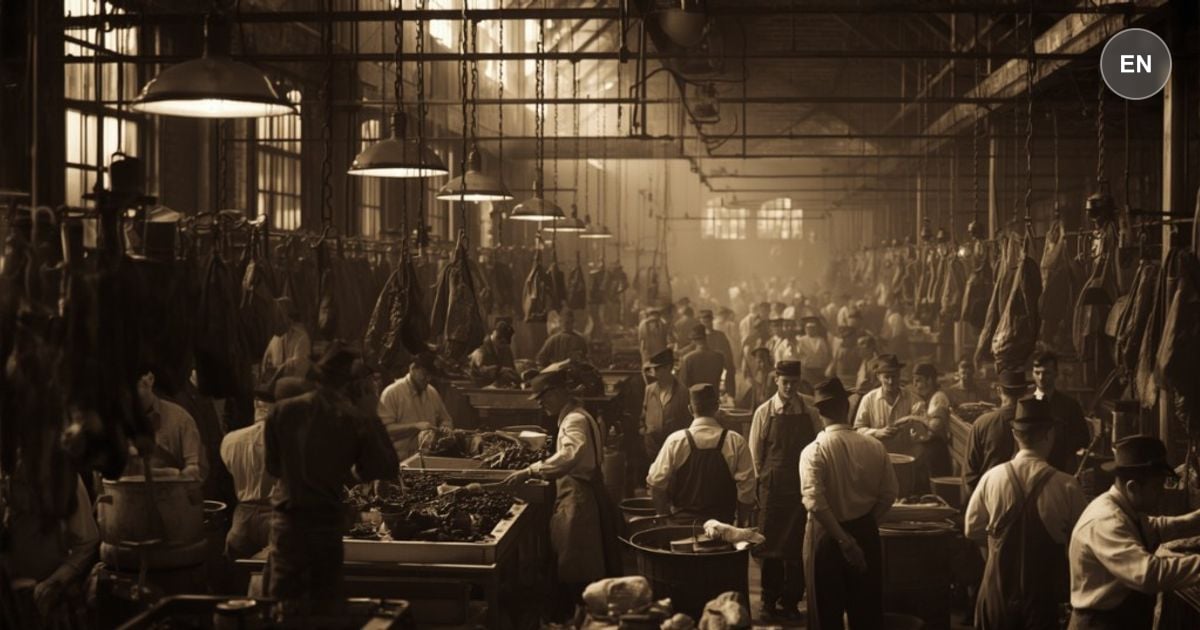
Scully is the Democratic boss of the yards, master of dumps, brick-yards, and the ice pond, and, though Jurgis does not know it, of the unpaved street where Antanas drowned, of the magistrate who first jailed him, and of the company that sold and then robbed him of the tenement. The packers pull Scully's strings. The present game is finer. A rich brewer wants the alderman's badge and will put up a rare fund; Scully cannot quite elect a Jew in that ward, so he goes to the Republicans: they may have a stooge elected with the brewer's money while Democrats keep the real power. Jurgis, a known union man who has never talked politics, can come out Republican without exciting suspicion. Harper laughs at the blacklist. Scully's note to Durham puts Jurgis back trimming hogs; the foreman who once would have fired him says only, All right. Jurgis joins the union again, roots for Scotty Doyle, the ex-tenpin setter, and nightly brings a dozen new members into the Doyle Republican Association, spending the brewer's money on brass bands, red capes, fireworks, and the best free beer the ward has ever tasted.
On election morning he is out at four in a two-horse carriage, herding Lithuanians, Poles, Bohemians, and Slovaks to the polls, voting half a dozen times himself, then passing the same men to the next handler. The precinct captain gives him a hundred dollars, and three times more; not more than twenty-five of each lot sticks in his pocket. The balance buys actual votes. On a day of Democratic landslides they elect Doyle by nearly a thousand plurality. From five in the afternoon until three in the morning Jurgis treats himself to an unholy jag, and nearly everyone else in Packingtown does the same, cheering the crushing of an arrogant plutocrat by the common people.
Sinclair shows us something uncomfortable: good people become part of bad systems not through sudden moral collapse, but through exhaustion and opportunity. Jurgis doesn't wake up evil, he wakes up tired of being honest in a dishonest world. This pattern repeats everywhere today. The healthcare worker who bills for services not provided because the hospital demands impossible productivity numbers. The teacher who passes failing students because the district threatens to close schools with low test scores. The mechanic who recommends unnecessary repairs because honest work doesn't pay rent. Each person can point to the system that forced their hand. But here's what Sinclair understood: every compromise makes the next one easier. The nurse who falsifies one timesheet finds it simpler to falsify the next. The teacher who inflates one grade discovers it's less stressful than fighting the system. We tell ourselves we're just surviving, just being realistic, just playing the game everyone else plays. But we're also becoming the reason the next person has to make the same choice. The system doesn't just crush people, it converts them. Recognition is the first step toward resistance. When you hear yourself saying 'everyone does it' or 'I have no choice,' pause. Those are the words of someone being recruited.
Explore this chapter with AI to uncover deeper meaning and practical takeaways.
AI Discussion