
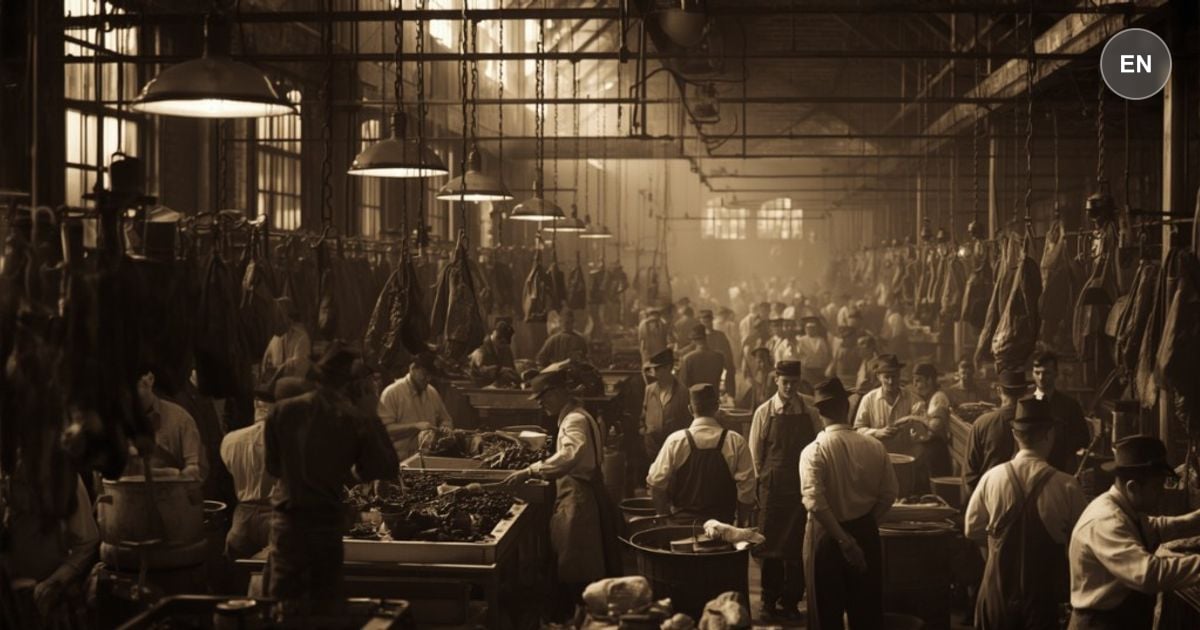
With Marija trimming beef and Elzbieta on sausage, the family can read Packingtown's joke from the inside: they use everything of the pig except the squeal. Jonas had already shown them pickle rooms where sour meat is rubbed with soda for free-lunch counters, hams pumped with pickle, and the worst of them given thirty per cent until the smell dies. After a white-hot iron in the bone hole, there is no longer Number Three Grade. Elzbieta's hoppers take what is left: mouldy sausage returned from Europe, meat from floors of spit and sawdust, piles stored under leaky roofs where rats leave dung, poisoned bread, rats, and meat shovelled together. Men wash their hands in the water that goes into the sausage. Spring-cleaned waste barrels of rust, nails, and stale water go in with fresh meat. Chemistry browns what they cannot afford to smoke, and the same bowl is stamped special for two cents more a pound.
The work leaves Elzbieta no faculty but the machine. She falls silent. Ona, who once sang, drags herself home. They eat, crawl into bed, and rise by candlelight. When memory wakes them, they know they have lost: six years of house payments still ahead, and they cannot stand six years of this. Ona learns to weep without waking Jurgis. Their moods no longer meet.
Jurgis has found drink. In the fertilizer pit every organ works in pain; liquor lets him laugh for an hour. One day he drinks every coin in his pockets and comes home half piped, happy and savage and then sick with shame at the family's faces. After that the saloons on every corner put out a hand as he walks, and he holds Ona's arm tight so he will not go in. He hates the marriage that keeps him from walking off like Jonas. Little Antanas, not yet smiling, is a mass of measles and sores, tied to the bed at night because there is no doctor and Kotrina cannot watch him all day. Ona is with child again. She develops the cough that killed old Dede Antanas, and she comes home shuddering, moaning, flinging herself on the bed. Elzbieta says pregnancy does this. Jurgis is not persuaded. He begs to know what happened. She pulls herself together, sobs on his shoulder, and tells him it will be all right, while he stares at her like an animal that cannot see the thing hunting her.
Sinclair shows us something uncomfortable: how survival can trap us into participating in systems we know are wrong. Jurgis knows the meat is poisoned, but he needs the job. Modern workers face identical dilemmas. The CNA knows the nursing home is understaffed, but needs the paycheck. The warehouse worker knows the safety violations, but can't afford to get fired. The restaurant worker knows the food handling is questionable, but rent is due. This isn't moral weakness, it's systematic entrapment. The system deliberately creates conditions where speaking up means losing everything. It manufactures desperation, then exploits that desperation to maintain itself. Workers become unwilling accomplices not through choice, but through necessity. The genius of this trap is how it makes victims blame themselves. We think we're weak for not speaking up, ungrateful for complaining, or selfish for wanting better. But recognizing the trap is the first step toward escaping it. Sinclair understood that individual moral choices happen within systems designed to limit those choices. The question isn't whether you're strong enough to resist, it's how to build collective power that makes resistance possible.
Explore this chapter with AI to uncover deeper meaning and practical takeaways.
AI Discussion