
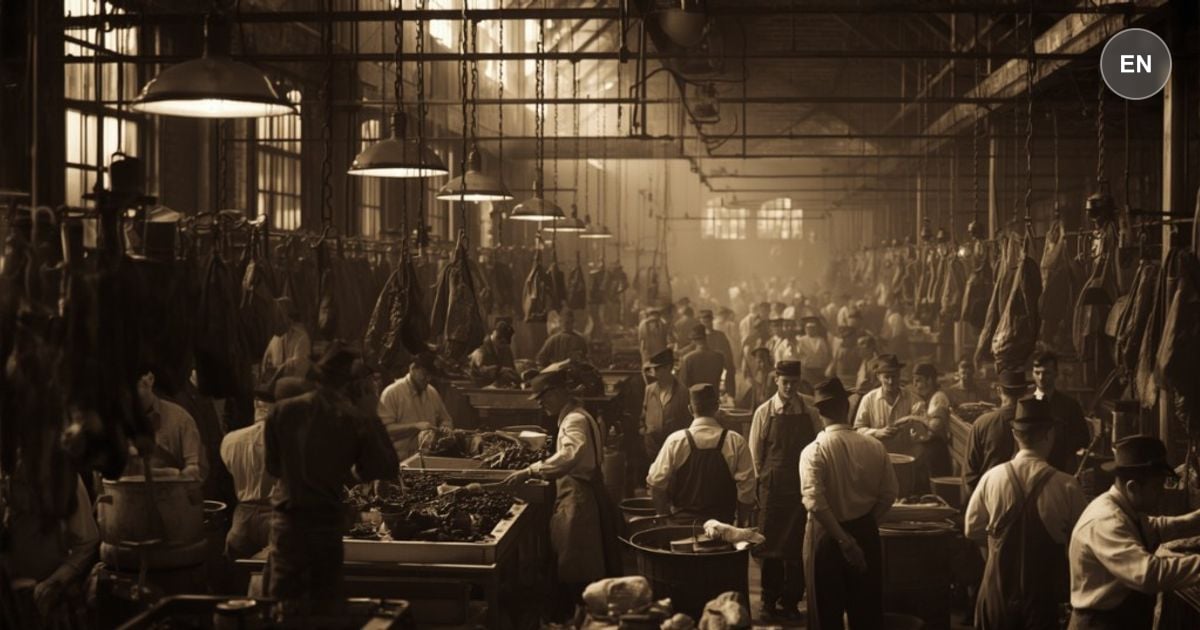
Summer returns and Jurgis earns again, but less than before because the packers hire surplus hands to break strikes and keep everyone hungry for hours. Speed-up follows: the same pay, more cans, more cuts, more blood. When the canning girls walk out, the company fills their places overnight; the strike fails, and Marija learns that collective action without leverage is only a gesture the bosses can absorb. Packers hire surplus hands so speed-up can follow the same pay.
For a moment the family saves. Marija deposits wages in a bank, then lives through a run when rumor says the institution may fail: two days in line, terror that her life savings will vanish, relief when cash is finally in her hands. The cushion is thin, but real, until winter arrives early with a blizzard that buries Packingtown to the windows. Marija's bank run ends in an early blizzard burying Packingtown.
Jurgis becomes the kind of hero poverty demands. He carries Ona through chest-deep snow day after day so she will not lose her cellar job; he hauls Stanislovas when the boy's mania of cold makes him scream at dawn. Strength is the family's only insurance, and it is burning fast while baby Antanas watches from a room they can barely heat. Jurgis carries Ona through chest-deep snow to save her cellar job. Speed-ups intensify as bosses squeeze more work for the same pay, driving the canning girls to a failed strike.
A loose steer on the killing floor twists Jurgis's ankle. The company doctor shrugs: months off work, no compensation, not the firm's fault. Income collapses to Ona's thirty dollars and the child's thirteen; rent, coal, and adulterated food must stretch across eleven mouths. Jurgis lies helpless and understands that hard work may not be enough to survive America. A loose steer twists his ankle; eleven mouths live on Ona's thirty dollars. Marija experiences the terror of a bank run, standing in line for two days to retrieve her life savings while fearing financial ruin.
Sinclair reveals something terrifying: Jurgis's twisted ankle isn't just bad luck, it's the inevitable result of a system designed to extract maximum labor while providing zero security. The packers hire excess workers to break strikes, speed up production, and ensure everyone stays desperate. When Jurgis gets hurt, there's no compensation because it 'wasn't the company's fault.' This isn't accidental; it's strategic. Vulnerable workers can't resist, can't organize, can't say no. Today's gig economy operates on identical principles. Uber drivers have no sick leave, so they work while ill. Amazon warehouse workers face impossible quotas that cause injuries, then get fired for missing work during recovery. Healthcare workers take on dangerous patient loads because they can't afford to lose jobs with benefits. The pattern is everywhere: one missed paycheck, one car breakdown, one medical emergency away from disaster. Individual solutions have limits when the system itself creates vulnerability. Building small emergency funds helps, but real security requires collective action, unions, safety nets, policies that don't treat human fragility as a personal failing. The question isn't whether you're working hard enough. It's whether the system allows hard work to actually build security, or whether it's designed to keep you perpetually one crisis away from losing everything you've built.
Explore this chapter with AI to uncover deeper meaning and practical takeaways.
AI Discussion