
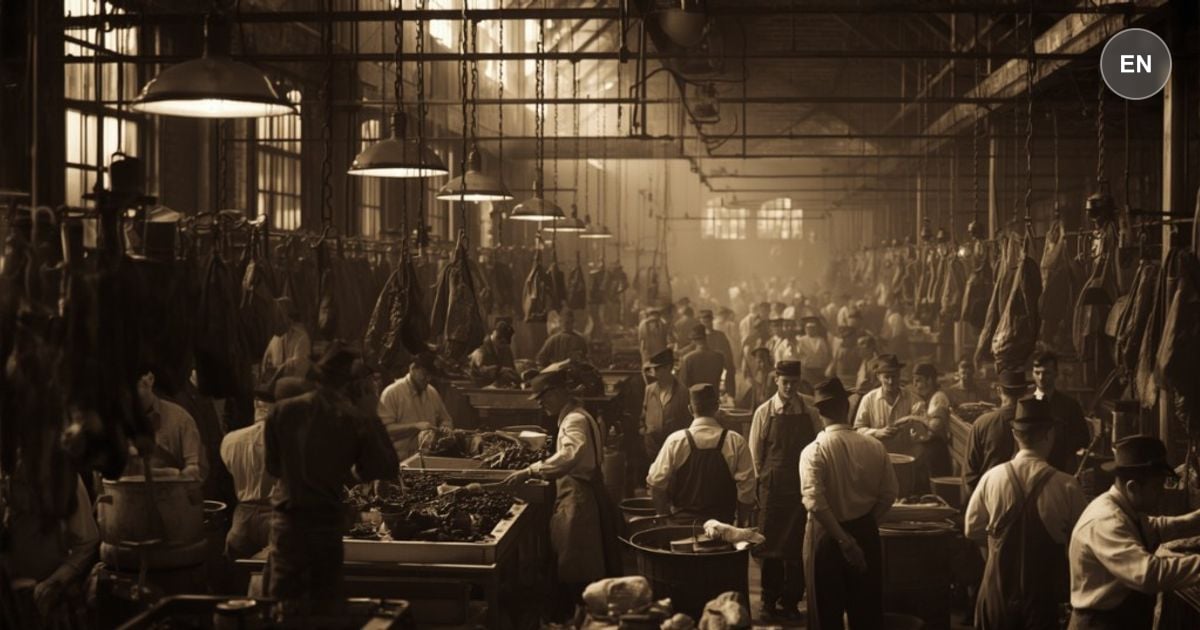
Ona and Jurgis celebrate their wedding in the back room of a Chicago saloon, surrounded by their Lithuanian immigrant community. Marija Berczynskas has carried the day on her broad shoulders, and the hall behind the yards fills with music, food, and the informal law of the veselija: no one goes hungry, even children from the street. Ona arrives barely sixteen, overwhelmed with happiness, while Jurgis stands shy in his new suit despite the giant strength that will soon feed the stockyards. Tamoszius Kuszleika, who practices violin after killing-bed shifts, plays with possessed energy that turns the shabby room into something like home.
The feast becomes a portrait of Packingtown in miniature. Guests eat, dance, and sing without ceremony; older couples cling to homeland steps while the young prefer the two-step. Sinclair pauses the revelry for Jadvyga and Mikolas, engaged five years while accidents and blood poisoning keep pushing marriage away, and for Alena painting cans in her pride. Speeches follow, including Dede Antanas's solemn blessing, then hours of dancing as Tamoszius drives the musicians past exhaustion. Marija herself roars a lovers' parting song and pounds the table with a carving fork until the trio learns it note by note.
The acziavimas turns celebration into collection: each man dances with the bride and pays Teta Elzbieta what he can, but Sinclair makes the cost explicit. The feast will run two or three hundred dollars, more than many guests earn in a year of dangerous cellar work, yet the community cannot surrender the one ritual that proves they remain human. To skip the veselija would mean admitting defeat, not merely suffering it.
After midnight the mood sours. Young men sneak away without paying, crowd the bar on the host's dime, or mock the family to its face. Ona listens in terror as the bills are named: hall, ducks, musicians, church, and the open-ended beer tab Graiczunas will inflate. Marija fights the shirkers while the orchestra grinds through "In the good old summertime" until three in the morning, though every guest must report to the yards at seven, including Ona, who was refused even unpaid leave after her wedding. Jurgis carries his exhausted bride home through the pale dawn and whispers that she need not go to Brown's today, then answers her panic with the refrain that will define his American ordeal: he will work harder.
Sinclair reveals something devastating about how poverty works: it's not just about lacking money, it's about how the need to remain human in dehumanizing circumstances creates financial traps. The Lithuanian immigrants aren't being frivolous with their wedding feast. They're fighting for their souls. In the stockyards, they're treated like animals, paid like animals, worked like animals. The veselija is proof they're still people with culture, dignity, and joy. But that proof costs everything. This pattern dominates working-class life today. The quinceañera that costs a year's wages. The funeral that requires three credit cards. The wedding that starts a marriage in debt. The graduation party that celebrates achievement while creating new burdens. These aren't stupid decisions, they're desperate attempts to maintain identity in systems designed to strip it away. The cruelty is that capitalism profits from this desperation. Banks know people will borrow for weddings. Funeral homes know grief makes people spend. The system creates the dehumanization, then profits from our attempts to prove we're still human. Understanding this doesn't mean abandoning celebration, it means finding ways to honor what matters without feeding the machine that's grinding you down.
Explore this chapter with AI to uncover deeper meaning and practical takeaways.
AI Discussion