
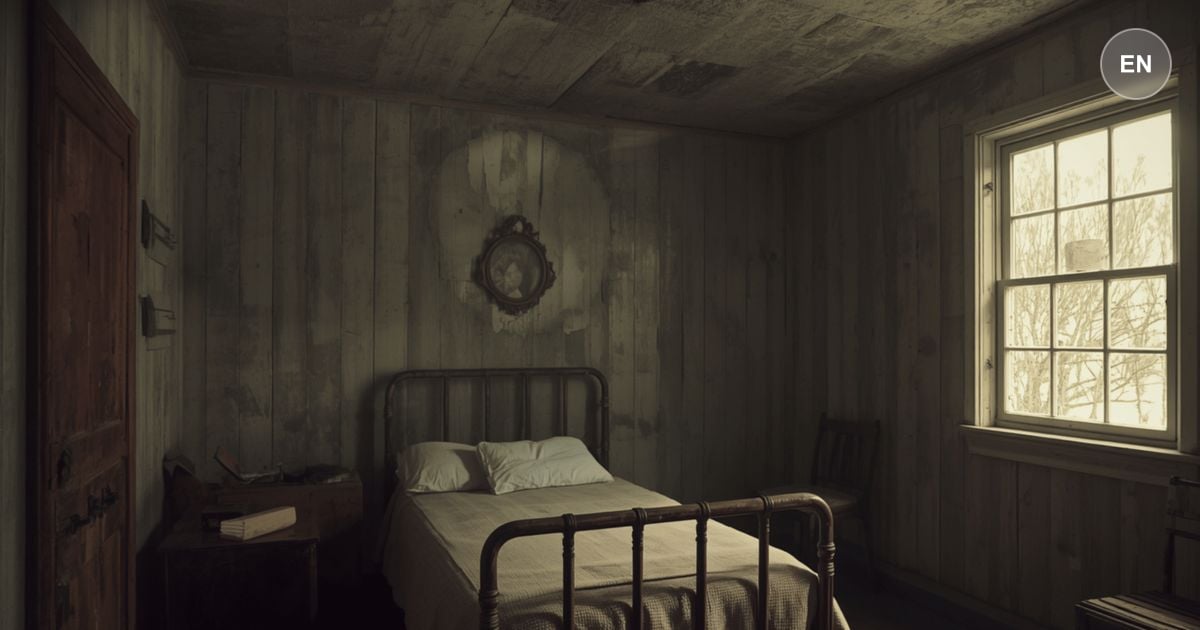
Offred stands in front of a mirror wearing makeup and civilian clothes for the first time in years, and the face looking back at her belongs to someone she used to be. Fred has arranged this transformation in secret, routing the clothes and cosmetics through channels Serena will never see. The lipstick feels wrong on her mouth. The loose hair feels like exposure. She looks like a woman from before Gilead, which is exactly the point.
Fred is taking her to Jezebel's, a club hidden inside a converted hotel where Commanders bring women they are not supposed to have access to. He chatters on the ride over, nervous and pleased with himself, the way someone acts when they believe they are giving you a gift. Offred watches him and feels hatred settle into her like ballast. Not the hot, shaking kind. The cold, useful kind. It steadies her.
Nick drives them through checkpoints where Guardians salute the Commander's car without question. Each salute is its own small lesson: the men who wrote the rules do not live inside them. The law is a fence built for other people.
Offred chooses a false name for the night, something from her old life. It is a tiny act of reclamation in a situation where she controls almost nothing else. Back at the house, Rita saw her leave in unfamiliar clothes and crossed herself. Cora whispered a blessing. Serena stayed upstairs, pretending not to know what she almost certainly knows.
Moira might be inside Jezebel's. That possibility is the thread Offred follows through the whole chapter. Her friend disappeared into the system, and the system has a habit of sending women to places like this. Offred does not know what she will find. She knows she will use whatever she finds.
As the car descends toward the hotel, music pulses through the walls before the doors even open. The sign outside is modest, designed to look like nothing. Offred steps out into perfume and bass and the particular darkness of a place that exists because powerful men decided it should. Her heart hammers. She goes in anyway.
There is a sentence in this chapter that does not appear on the page but runs underneath every scene: the law is a fence built for other people. Atwood does not say it directly. She shows it. The Guardian salutes the Commander's car. The checkpoints part. The club exists inside a hotel that is not supposed to exist. Fred did not sneak into Jezebel's. He arranged it, the way you arrange a dinner reservation. That is the detail worth sitting with. He did not break the system. He used it. And the system cooperated completely.
This is how selective enforcement actually works. It is rarely dramatic. It does not announce itself. It looks like a long lunch that nobody clocks. It looks like a lease violation that gets overlooked in one unit and cited in another. It looks like a charge nurse whose documentation errors never make it to the incident report. The rule exists on paper. The paper just has an invisible footnote that most people are never told about.
Atwood wrote this novel in 1985, but she was drawing on patterns that are genuinely ancient. Every concentrated power structure eventually produces a class of people who gain the ability to decide when the rules apply to them. That ability, the quiet permission to be exempt, turns out to be more valuable than almost anything else power offers. It is not the salary or the title. It is the gate.
The reason this matters for readers today is not political. It is practical. When you are the person being held to the standard that others escape, the first mistake is assuming the rule is the actual rule. The second mistake is staying silent because naming it feels dangerous. Offred cannot speak freely. Most of us can, at least in some form. The question worth sitting with is this: in your own life, where have you seen the gate? And who holds the key?
Explore this chapter with AI to uncover deeper meaning and practical takeaways.
AI Discussion