
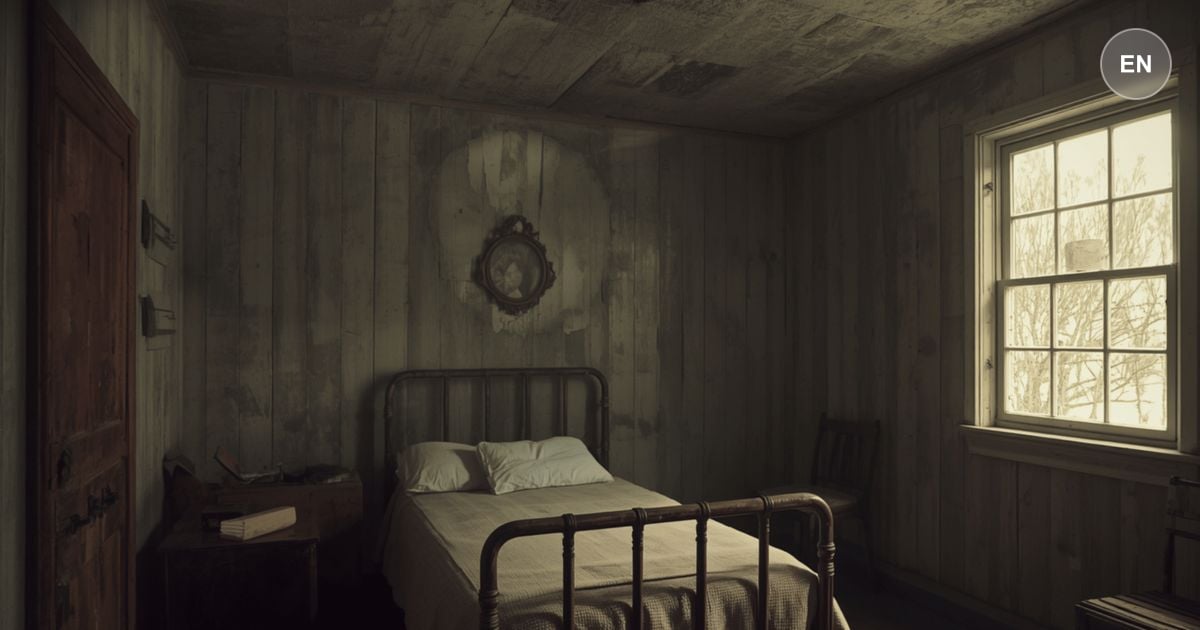
Fred comes home late, smelling of alcohol and another woman's perfume. Serena knows. She cannot say so directly, because his rank sits above her rage, so she punishes the air instead. Doors close. A hiss leaks through walls. Something upstairs eventually shatters. The house becomes a pressure cooker with no release valve, and Offred absorbs all of it the way furniture absorbs heat: silently, invisibly, without anyone asking how she feels.
Then Fred summons her to the study and does something almost worse than silence. He confesses. He tells her about Jezebel's, a secret club where Commanders drink and pay for sex with women who refused the roles Gilead assigned them. He speaks the way a man speaks to a priest, leaning into the relief of being heard. The grotesque part is that he seems to think this intimacy is a gift. He follows the confession with an offer: he will take her there. A treat. As though access to a place built on coercion is something a woman should feel grateful to receive.
Offred listens because listening is how she survives. Internally she recoils, because Jezebel's is proof of everything Gilead pretends not to be. The men at the top outlawed pleasure for everyone beneath them and then built a private room where they could have as much of it as they want. The moral code was never moral. It was always a fence to keep others out.
She nods yes to the outing. Not because she wants to go, but because refusal is unthinkable, and because somewhere in the back of her mind lives a small, stubborn hope: Moira might be there. That hope, fragile and probably wrong, is enough to make her nod.
Flashbacks surface her mother's voice, warning that women who stay comfortable while systems tighten around them are not innocent bystanders. Offred looks at Serena and sees both victim and architect. The complexity does not comfort her. It just sits there, heavy and true.
Upstairs, the vase breaks. Offred descends to her room knowing that whatever comes next will not arrive wrapped in scripture. It will arrive wearing lipstick and feathers, and it will still not be a choice.
There is a moment in this chapter that is easy to miss because it is wrapped in something that looks like intimacy. Fred confesses to Offred. He tells her about Jezebel's. He leans forward the way people do when they want to be understood, and he seems to expect gratitude. That is the part worth sitting with: he genuinely believes he is giving her something. He has confused access to his private exception with generosity.
This is not a story about one corrupt man. It is a story about how systems protect the people who run them. Gilead built an entire moral architecture around sacrifice, modesty, and obedience. Women were assigned roles. Desires were regulated. Pleasure was framed as dangerous. And then the men who built that architecture constructed a private room where none of it applied to them. The rules were never a shared value. They were a tool. The tool was pointed at specific people, and Fred was never one of them.
You do not have to live inside a fictional theocracy to recognize this shape. It shows up in workplaces where attendance is tracked to the minute for hourly workers while salaried managers disappear for long afternoons. It shows up in families where one person preaches frugality and quietly spends. It shows up in institutions that publish values statements and then protect the people who violate them, as long as those people hold enough rank.
What Atwood is giving us in this chapter is not just a portrait of hypocrisy. She is showing us how hypocrisy gets repackaged as sophistication. Fred does not see himself as a hypocrite. He sees himself as someone complex enough to understand that rules are for managing others. That reframe is the most dangerous part of the pattern, because it means the person living inside the exception will never voluntarily close the door.
So the question worth sitting with is this: when you have followed a rule that cost you something real, who else in the room was actually following it?
Explore this chapter with AI to uncover deeper meaning and practical takeaways.
AI Discussion