
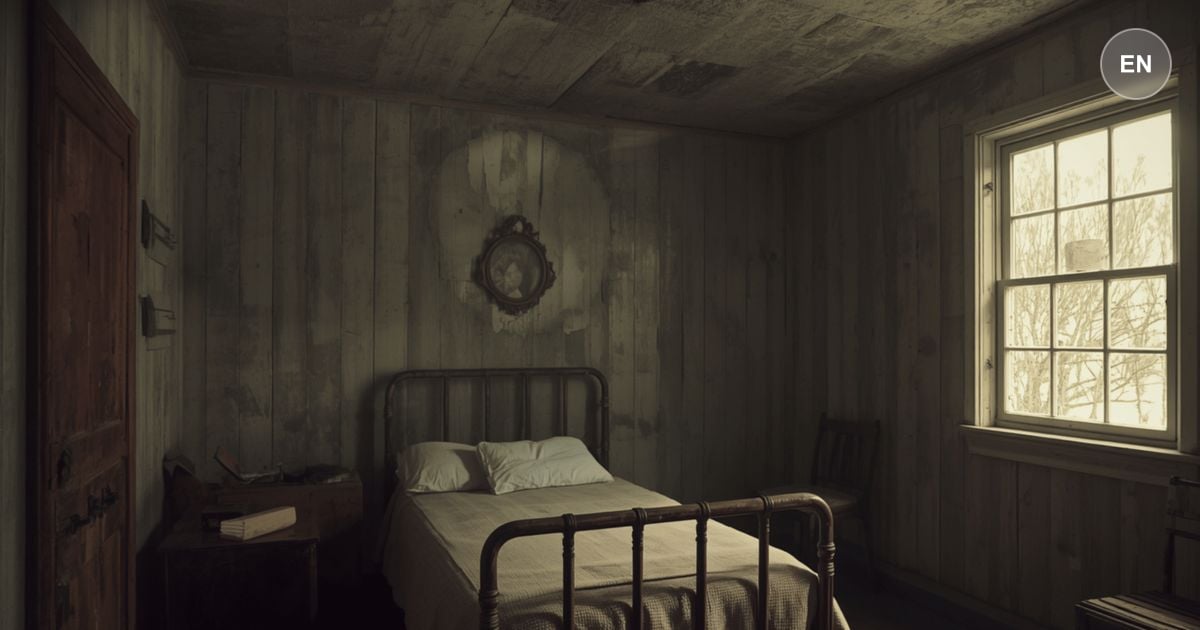
Serena Joy's winter garden looks like something from a magazine: clipped roses, frozen earth, knitting needles clicking in the cold air. But nothing here is peaceful. Offred is sent outside to kneel in the dirt and plant bulbs she will never see bloom, while Serena moves through the space like a woman who needs to cut something. She snips flowers with precise, controlled violence. She speaks about God's plan in the same tone she might use to discuss the weather. Her hands shake when she thinks no one is watching.
Atwood uses this garden scene to show us one of the novel's sharpest ironies. Before Gilead existed, Serena Joy was famous. She packed stadiums. She sang gospel and gave speeches telling women that careers were empty, that fulfillment lived in submission and home life. Crowds cheered. She was brilliant at the microphone, blonde and certain and loud. Then the regime she helped make possible came to power, and Serena got exactly what she preached. She got the home. She got the submission. She lost everything else: intimacy, respect, any real authority, and the motherhood she wanted most of all.
Offred watches her and almost feels pity. Then she pulls that feeling back. Pity costs energy she cannot afford, and Serena is not her ally. The Ceremony makes that clear enough. During it, Serena holds Offred's head in her lap while the Commander rapes her. They share the same trauma and stand on opposite sides of it. There is no sisterhood here, only a hierarchy with both of them inside it.
Flashbacks weave through the scene, layering Serena's television smile over Offred's memories of her own mother, a woman who burned books and marched in protests. Two completely different visions of womanhood, both now buried under Gilead's rules. Offred sees her mother in every forbidden memory and her missing daughter in every empty crib.
As dusk comes, Nick is smoking near the garage. He and Offred exchange a glance, just a glance, but it carries something real. A flicker of recognition across all the distance the regime has placed between them. Offred files it away. In a world this controlled, a look is a seed.
Serena Joy is one of literature's most uncomfortable portraits because she is not a cartoon villain. She is a person who believed in something, or believed in the power of saying she believed in something, and then got exactly what she asked for. She spent years telling women that careers were hollow, that submission was sacred, that the home was the highest calling. Crowds cheered. She had a microphone and an audience and a sense of mission. What she did not have was a plan for what happened next. When Gilead came to power, it took her at her word. The home she preached about became the only place she was allowed to be. The submission she celebrated became the rule she lived under. The motherhood she held up as the ultimate purpose became the thing she could not have without Offred's body. She got the argument she made. She did not get the exception she assumed she would be. This is the part that makes readers uncomfortable, because most of us have done a version of this on a smaller scale. We have agreed to norms at work that we thought would protect us and then watched them used against us. We have supported policies that seemed fair in the abstract and then found ourselves on the wrong side of them. We have enforced standards on others that we quietly broke ourselves, and then felt the sting when someone noticed. The Serena Joy pattern is not about evil. It is about the gap between the ideology we perform and the life we actually want to live. Atwood is asking a question that applies far outside Gilead: when you argue for a rule, are you arguing for a principle or for a weapon? Because principles apply to everyone. Weapons have a way of turning around. The discomfort of this chapter is the point. It is not asking you to feel sorry for Serena. It is asking you to look at the rules you are helping enforce right now and ask whether you would still want them if they applied to you too.
Explore this chapter with AI to uncover deeper meaning and practical takeaways.
AI Discussion