
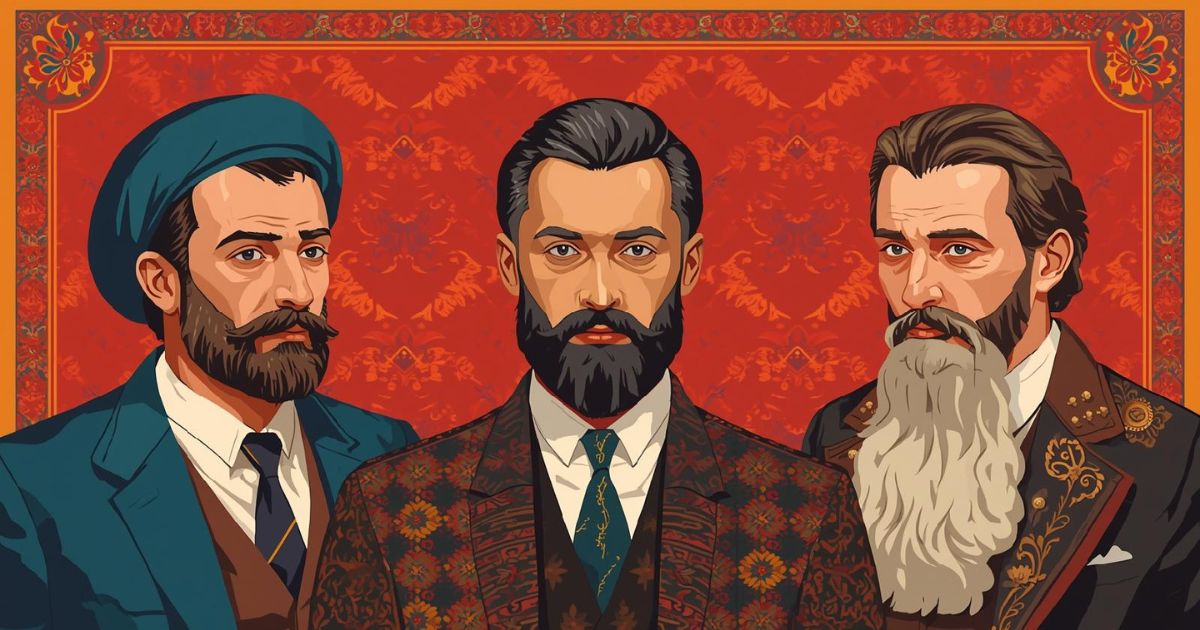
Fathers and teachers, what is the monk? In the cultivated world the word is pronounced with a jeer, or used as abuse, and the contempt is growing. There are sluggards, gluttons, and insolent beggars among monks, and educated people point at them: you live on the labour of others. The meek ones, who yearn for solitude and prayer, are passed over in silence. Zossima says he would surprise his hearers if he told them that the salvation of Russia may come again from those meek monks. They are made ready in peace for the day and the hour, the month and the year. That star will rise out of the East. Look at the worldly, and at all who set themselves above the people of God. Has not God's image been distorted in them?
He turns to freedom. The modern doctrine tells a man not to be afraid of his desires, and even to multiply them. He knew a champion of freedom who, deprived of tobacco in prison, was so wretched that he almost betrayed his cause to get it again. That man says he is fighting for humanity. What is he fit for? He can manage an action that is quickly over. He cannot hold out. Obedience, fasting, and prayer are another road, and the monk's road is not idleness. Among the people there is still a bearing that is not servile. You are rich and noble, you are clever and talented, well, be so, God bless you. I respect you, but I know that I too am a man. By respecting you without envy, I prove my dignity. Merchants chase rank. In Europe the people are rising against the rich with violence, and the leaders teach them that their wrath is righteous. Their wrath is accursed, for it is cruel. God will save Russia as He has saved her before.
In his wanderings he met his old orderly, Afanasy, in the town of K. Eight years had passed. Afanasy saw him in the market-place, ran up, and took him home. He was married, with two children, and he and his wife earned their living in the market. He set the samovar and brought the children to be blessed. Zossima said he was only a humble monk, and that he would pray for them, and that he had prayed for Afanasy every day since that day, because it had all come from him. Afanasy brought out half a rouble for the monastery and thrust another half-rouble into his hand for the road. Zossima took it, bowed to him and to his wife, and went out rejoicing. Later he asks the company why a man should not, sometimes, make his servant sit on the sofa and offer him tea. Everyone laughed. The question was frivolous, he says, and his answer was not clear, but the thought in it was right. And why cannot I be a servant to my servant, and even let him see it?
Love all God's creation, the whole of it, and every grain of sand. Love the animals, love the plants, love everything. If you love everything, you will perceive the divine mystery in things. He tells them to pray for those who are dying and do not know the one who prays. How touching it must be, at the dread moment, to feel that a fellow creature is left on earth who loves you. Humble love is a terrible force, and it is stronger than violence. If you are sinful yourself, rejoice for the righteous man. No one can judge a criminal until he recognises that he is worse than the man before him. Work without ceasing. If you remember in the night, as you go to sleep, that you have not done what you ought, rise and do it. Love to throw yourself on the earth and kiss it. Kiss the earth and love it with an unceasing love. Water it with the tears of your joy, and do not be ashamed of that ecstasy. Hell, he says, is the suffering of being unable to love. Then the notes break into the telling of the death. He had been cheerful that evening. A pain took him in the chest. He smiled, sank from his chair onto his knees, bowed his face to the ground, stretched out his arms, and quietly and joyfully gave up his soul to God. The news reached the monastery before dawn, and by morning the town was talking. Before a day had passed, something happened so unexpected that the town still remembers that day of suspense.
Dostoevsky wrote this during the Industrial Revolution, when traditional communities were dissolving and people were gaining unprecedented individual freedom. Sound familiar? Today's gig economy, social media, and consumer culture offer infinite choices but often deliver anxiety and loneliness. Zossima's insight cuts through the noise: the more we focus on satisfying our own desires, the more enslaved we become to those desires. Modern psychology confirms this—studies show that people with too many choices experience decision paralysis and regret, while those with meaningful constraints report higher satisfaction. The freedom to swipe endlessly on dating apps doesn't create better relationships than committed partnership. The freedom to job-hop doesn't necessarily create more fulfilling careers than developing expertise and relationships in one place. Zossima suggests that real freedom comes from choosing our limitations wisely—committing to people, causes, and practices that serve something beyond ourselves. This doesn't mean accepting exploitation or abuse, but rather recognizing that some constraints liberate us from the exhausting tyranny of infinite options. When we stop asking 'What can I get?' and start asking 'What can I give?', we often find the satisfaction that endless consumption promised but never delivered.
Explore this chapter with AI to uncover deeper meaning and practical takeaways.
AI Discussion