
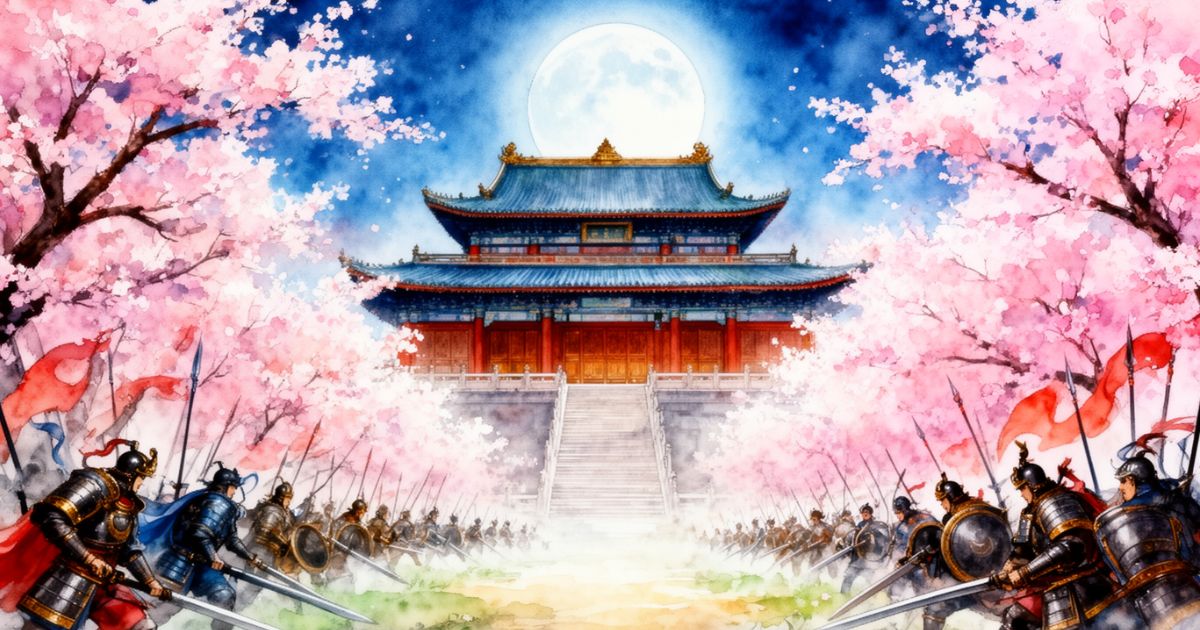
Sun Tzu opens by refusing the excuse that scale changes the rules. A large host moves like a small one once ranks, signals, and subdivisions turn numbers into one body, and direct and indirect manoeuvres keep that body unshaken under pressure. Only two attack methods exist, direct and indirect, but their interplay produces endless variation, like five notes making countless melodies.
The middle of the chapter shifts from theory to felt force. Onset should hit like a torrent; decision should land like a falcon's swoop. Energy stores in the bent crossbow and releases in the trigger pull, so the terrible moment is preparation becoming commit. Even simulated disorder, fear, and weakness assume real discipline underneath, because bait only works when the host can hold formation while pretending to fray.
Sun Tzu closes on combined energy rather than heroic individuals. The clever fighter sets baits, keeps the enemy marching, and waits with picked men while the main force rolls downhill like logs and stones: still on flat ground, unstoppable on a slope. Good fighting men generate momentum like a round stone dropped from a mountain, and that is the image he leaves for the chapter on energy. Without slope and coordination, the same host on flat ground spends force and gains nothing.
Energy is stored and released at the decisive moment like a bent crossbow or a diving falcon. Direct and indirect methods combine into endless variations, but the principle is mass at the point of contact. Large forces succeed through coordination, not mere numbers. Scatter strength and you lose; concentrate timing, talent, and capital where the opponent is thin and the payoff is decisive.
Explore this chapter with AI to uncover deeper meaning and practical takeaways.
AI Discussion