
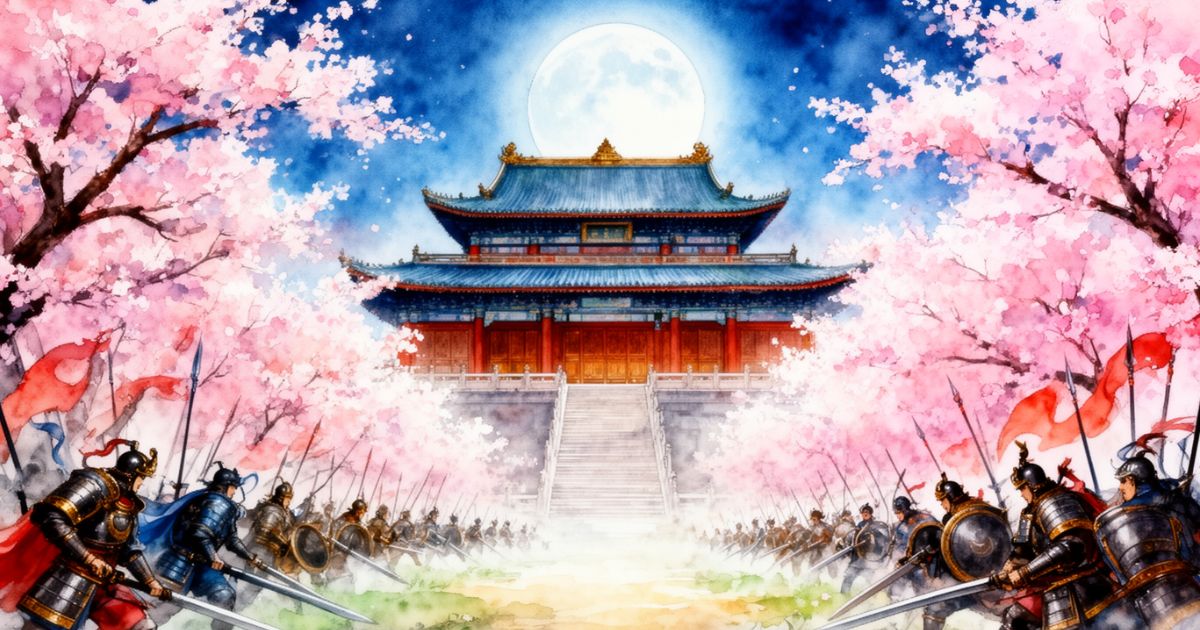
The good fighters of old first put themselves beyond the possibility of defeat, and then waited for an opportunity of defeating the enemy. Security against defeat lies in one's own hands. The opportunity of defeating the enemy is provided by the enemy himself. A good fighter can therefore make himself safe and still cannot make the enemy's defeat certain. One may know how to conquer without being able to do it. Security against defeat means defensive tactics. Ability to defeat the enemy means taking the offensive. Standing on the defensive indicates insufficient strength. Attacking indicates a superabundance of strength. The general skilled in defence hides in the most secret recesses of the earth. The general skilled in attack flashes forth from the topmost heights of heaven. One result is the ability to protect oneself. The other is a victory that is complete.
To see victory only when it is already within the ken of the common herd is not the acme of excellence. Neither is it excellence to fight and conquer and hear the whole Empire say, "Well done!" To lift an autumn hair is no sign of great strength. To see the sun and moon is no sign of sharp sight. To hear thunder is no sign of a quick ear. What the ancients called a clever fighter is one who not only wins, but wins with ease, so that his victories bring him neither reputation for wisdom nor credit for courage. He wins his battles by making no mistakes. Making no mistakes establishes the certainty of victory, because it means conquering an enemy that is already defeated. He puts himself into a position that makes defeat impossible, and he does not miss the moment for defeating the enemy. The victorious strategist seeks battle only after the victory has been won. He who is destined to defeat first fights and afterwards looks for victory.
The consummate leader cultivates the Moral Law and strictly adheres to method and discipline, and thus it is in his power to control success. Military method runs in a chain: measurement, estimation of quantity, calculation, balancing of chances, and victory. Measurement owes its existence to Earth, quantity to measurement, calculation to quantity, the balancing of chances to calculation, and victory to that balancing. A victorious army opposed to a routed one is as a pound's weight placed in the scale against a single grain. The onrush of a conquering force is like the bursting of pent-up waters into a chasm a thousand fathoms deep.
Skilled fighters first make themselves invincible, then wait for the enemy to become vulnerable. Defence is within your control; the opportunity to attack depends on the opponent's mistakes. Sun Tzu warns that visible strength can invite attack while hidden preparation buys time. In careers and companies, runway, reputation, and core capabilities are the invincible base that lets you act when others overextend.
Explore this chapter with AI to uncover deeper meaning and practical takeaways.
AI Discussion