
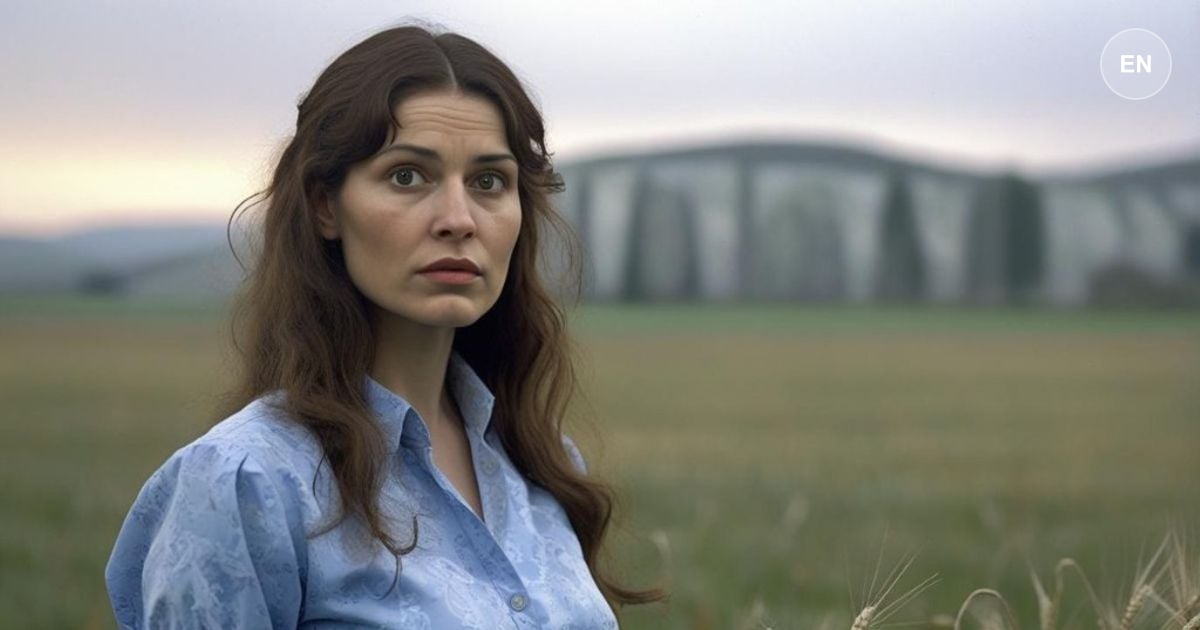
Angel will not take his father’s mare. He hires a trap and drives up the hill Tess once came down full of hope and climbed again with that hope broken. He passes Cross-in-Hand, the stone where Alec made her swear she would never tempt him on purpose, and comes to Flintcomb-Ash, the address he thinks her mother meant. No one there has heard of a Mrs Clare. Cottagers and farmer remember Tess by her Christian name only. She never used his while they were apart. He learns now, for the first time, what the work cost her, and that she would rather bear it than ask his father for money. She left without notice for her parents beyond Blackmoor. The farmer who was harsh with her is polite to Angel, and lends a horse as far as the edge of the Vale.
Next day he walks into Marlott. Another family is busy in the garden of her old house, and the spring birds sing as if nobody in particular were missing. John Durbeyfield is dead. The widow and children said they were going to Kingsbere, then went on to another place. In the churchyard a headstone finer than the rest names him John Durbeyfield, rightly d’Urberville, and closes with How are the Mighty Fallen. The sexton says the dead man wanted to lie at Kingsbere, where his ancestors are, but there was no money. Even this stone has not been paid for. Angel calls on the mason and pays.
Joan’s village is more than twenty miles further. He finds her at evening in a house inside a walled garden, the old furniture stowed where it will fit. He has to tell her that he is Tess’s husband and that he wants Tess at once. Joan keeps one hand against her cheek. A small child asks if this is the gentleman who is going to marry Tess. Joan is sure Tess would not wish to be found. Angel, thinking of the tender letter, answers that he knows Tess better than her mother does. Joan sees what the delay has done to him, and says at last that Tess is at Sandbourne. She has never been there herself and knows no street. The family is not in want. He does not go inside. He walks to the station, and the last train to Sandbourne takes him.
Hardy shows us something brutal about human nature: how we use physical and emotional distance to avoid confronting the damage our choices cause others. Angel Clare spent months in Brazil, probably telling himself he needed time to think, that Teresa would understand, that he was being principled. Meanwhile, she was working brutal jobs, watching her father die, losing her home. His distance wasn't noble reflection - it was protection from witnessing the consequences of his abandonment. This pattern dominates modern relationships. The parent who works late to avoid seeing their teenager's pain. The manager who avoids the staff kitchen after layoffs. The partner who finds reasons to be busy when their relationship is struggling. Distance feels like wisdom or necessity, but often it's cowardice dressed up as principle. We tell ourselves we need space to think clearly, but really we need space to avoid seeing clearly. The people we leave behind don't get the luxury of distance. They live with the daily reality of our choices while we process our feelings somewhere safe. When we finally return, ready to face things, we're often shocked to discover that damage has been done, relationships have shifted, and people have learned to live without us. The hardest truth is that sometimes our absence teaches people they don't actually need our presence.
Explore this chapter with AI to uncover deeper meaning and practical takeaways.
AI Discussion