
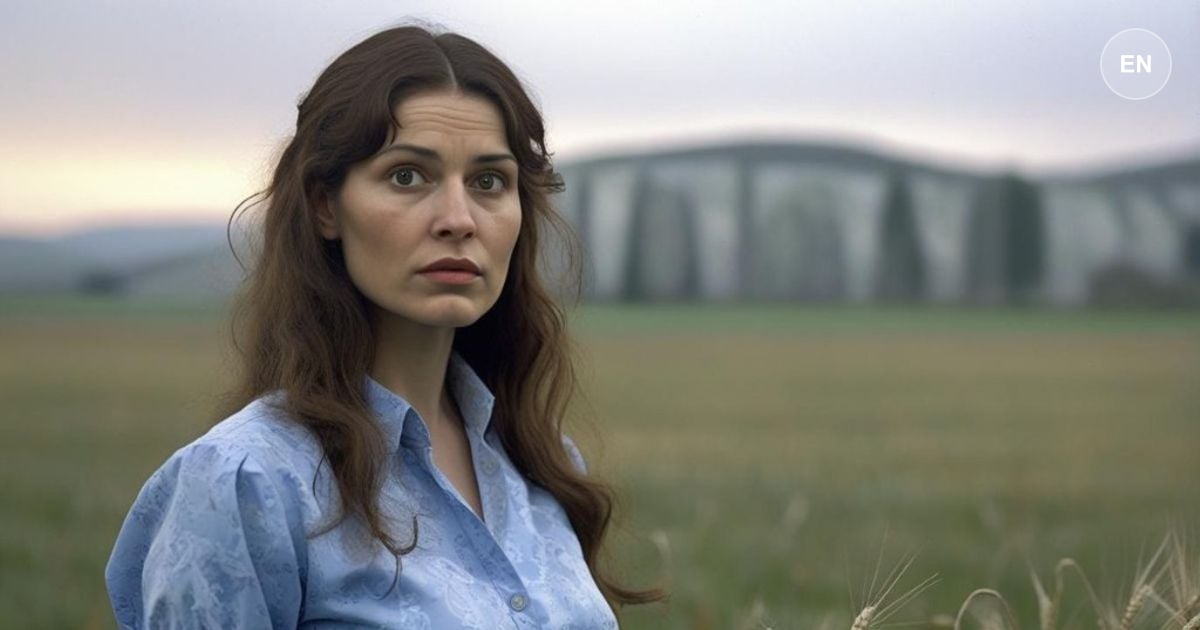
No farmer sends a wagon for the Durbeyfields. Other families are fetched by the men who have hired them. Joan’s household are only women, not regular labourers, so they hire a wagon and pay for it themselves. The day stays dry. By two o’clock they are moving, a cooking-pot swinging from the axle and the clock in Joan’s lap striking at every lurch. At a wayside inn Tess finds Marian and Izz on a bright wagon with three horses, leaving Flintcomb-Ash with a family a farmer sent for. Marian leans down. The gentleman who follows Tess came asking there after she had gone, and they did not tell him where she was. Tess answers that he found her. The wagons part. Theirs is painted, with brass on the harness. Hers has never been painted, and two tired horses pull it towards a place where nobody is waiting.
They reach Kingsbere late, under Greenhill, the town the d’Urbervilles called home for five hundred years. A man tells Joan the rooms were let before her letter arrived that morning. She and ’Liza-Lu search the town and find nothing. The driver unloads the dresser, the cradle, and the clock under the churchyard wall, takes nearly her last shilling, and leaves them in the open. Joan says the family vault is their freehold. They set the four-post bed under the d’Urberville Window, draw the curtains into a tent, and put the small children inside. In the lane she meets Alec on horseback. She has no liking for him, but she points him towards the church and goes on to look for food. He says he will see them again if they still have no shelter. Tess goes into the church, among tombs with the brasses torn away, and stops at the stone over the door of the old sepulchre. A figure on the altar-tomb moves in the dusk. It is Alec. The shock drops her, and he catches her. He stamps his heel, the vault answers, and he tells her a sham d’Urberville can do more for her than the dead knights under the floor. She tells him to go. He whispers that she will be civil yet. She bends over the entrance and asks why she is on the wrong side of that door.
Marian and Izz take the other road, talking of Angel and of the man hovering near Tess. If Clare knew the straits she was in, they think, he might come and take care of his own. A month later, settled, they hear that he is coming home, and they still know nothing more of her. Marian opens the penny ink-bottle they share, and the two of them write to Emminster Vicarage. Look to your Wife if you do love her as much as she do love you. An enemy in the shape of a friend is near her, and a woman should not be tried past her strength.
Hardy understood something that modern psychology confirms: predators don't create vulnerability, they hunt it. They circle job layoffs, evictions, medical bankruptcies, divorces. They know exactly when to appear with their 'generous' offers. The timing isn't coincidence; it's strategy. Thomas doesn't need to threaten Teresa directly. Her homelessness does the threatening for him. This is why abusers often escalate during pregnancy, illness, or job loss, not because crisis makes them angry, but because crisis makes their targets dependent. The pattern appears everywhere: the boss who offers advancement right after your spouse loses their job, the relative who pays your rent then monitors your every decision, the loan company that approves you right after bankruptcy when banks won't touch you. They're not helping, they're investing in your future compliance. The most dangerous help comes when you need it most. That's why building multiple safety nets before crisis hits isn't paranoia, it's survival strategy. Emergency funds, diverse relationships, documented skills, knowledge of your rights. When you have options, you can evaluate offers clearly. When you're desperate, every trap looks like a door. The question isn't whether you'll face crisis, it's whether you'll face it with choices or without them.
Explore this chapter with AI to uncover deeper meaning and practical takeaways.
AI Discussion