
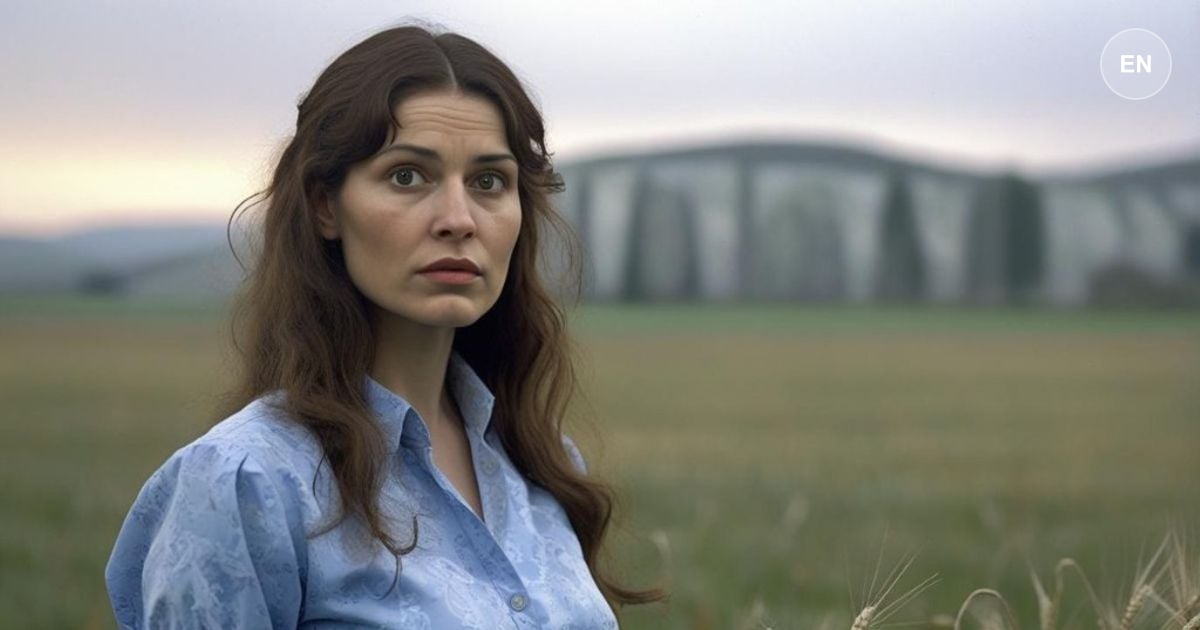
Rain slides down the casement on the last night the Durbeyfields will sleep in the cottage where the children were born. Tess kneels at the glass. A spider’s web shivers in a corner where no flies ever come. Joan, ’Liza-Lu, and Abraham are out saying goodbye. Tomorrow is Old Lady-Day, and the family must leave. John Durbeyfield is dead, and his was the last life on the house. Tess has made any softer arrangement impossible. She was seen in the churchyard, scraping a baby’s grave back into shape with a little trowel, and Joan, scolded for harbouring her, offered to go at once and was taken at her word. A carter with a large family is to have the rooms. Tess tells herself she ought never to have come home.
Alec d’Urberville rides up in a white mackintosh and taps the pane with his crop. He tells her of the d’Urberville Coach, a sound only that blood is said to hear, left from an old murder. He cannot remember whether the man killed the woman or she killed him. Then he sees the packed tubs. He offers the garden-house at Trantridge, a school for the children, and a written promise that her mother will not be turned out again. Tess says the rooms at Kingsbere are already taken. He tells her not to wait for Angel, who will never make it up with her. She says she has money at her father-in-law’s if she asks. He answers that she will starve before she asks. His hand comes through the half-open window. She pulls the stay-bar, and his arm is caught against the stone. He rides off.
She writes to Angel that she can never forgive him, that she did not mean to wrong him, and that the injustice is all his, and she runs the note out to the postman. In the unlit room the four smallest children, dressed in black, sing that here they suffer grief and pain, and in heaven they will not part. She hides her face at the pane. She cannot believe the hymn. Joan’s pattens sound on the path. Joan sees the hoof-marks and asks who called. Tess says nobody. A child by the fire names the gentleman on horseback. Tess still withholds the name. Tomorrow, in the lodging at Kingsbere, she will tell her mother every word. She has said the rider was not her husband. She stays in the doorway, and it weighs on her more and more that, in a physical sense, this man alone is her husband.
Hardy shows us something uncomfortable: communities often punish victims more than perpetrators. Teresa's family faces eviction not because of what was done to her, but because her presence reminds everyone of something they'd rather forget. This pattern persists today in ways both obvious and subtle. Sexual assault survivors face questions about their clothing, their drinking, their decisions - while perpetrators often face minimal consequences. Whistleblowers lose their jobs while the corruption they exposed continues. Families affected by police violence get scrutinized for any past mistakes while systemic problems remain unaddressed. The mechanism is always the same: it's easier to blame the person who disrupts our comfort than to address the system that created the problem. We see this in workplaces where employees who report harassment face retaliation, in schools where bullying victims get suspended for fighting back, in neighborhoods where domestic violence survivors are treated as troublemakers. The community's comfort takes priority over justice. Hardy understood that moral cowardice often masquerades as moral standards. When we ask 'What was she wearing?' instead of 'Why did he think he had the right?' we reveal whose comfort we're really protecting.
Explore this chapter with AI to uncover deeper meaning and practical takeaways.
AI Discussion