
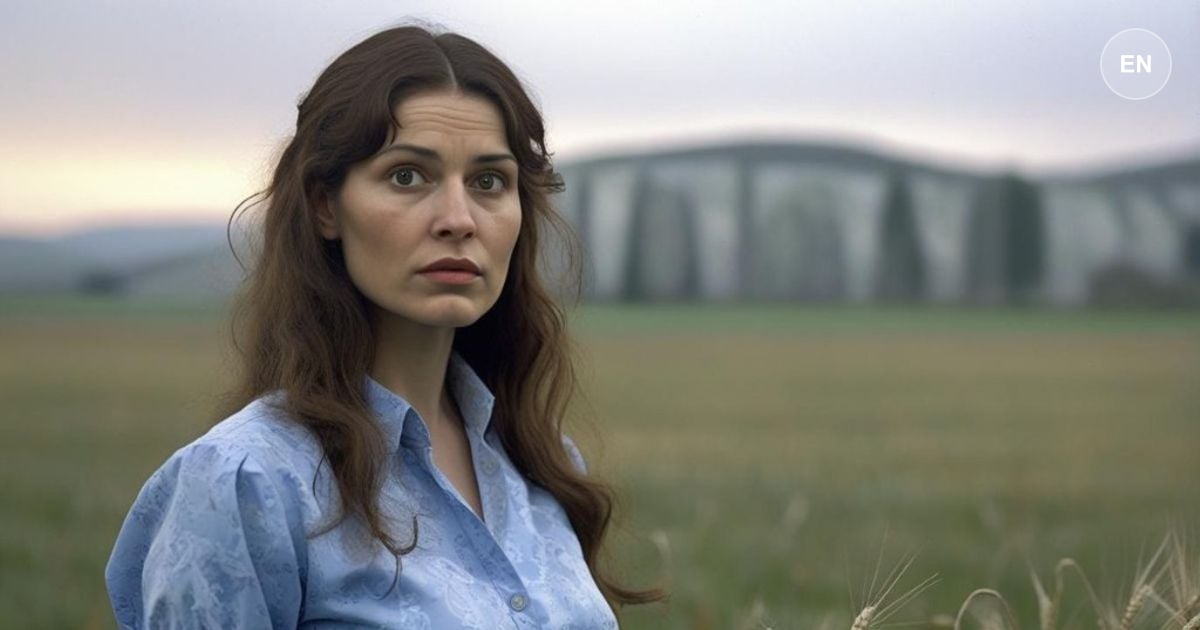
With Prince dead the haggling failed, and Joan sent Tess to claim kin of the rich Mrs d'Urberville on the edge of The Chase, and to ask for help. Tess wanted work. She hated the part of poor relation, and she told her mother not to think of a match. John would not have his children beholden to strange kin. He was head of the noblest branch, he said, and would live up to it by staying home. His pride made refusal harder. She had killed the horse. She would go, and keep for herself the choice of whether any help was asked.
The van from Shaston left her at Trantridge Cross. The Slopes was not an old manor. New red brick, glass-houses, a tent on the lawn, the ancient Chase only a view beyond the fence, the whole place bright as the last coin from the Mint. She had thought they were an old family. This was all new. She did not know that the name on the house had been chosen, not inherited. Tringham had been right about John: he was the lineal man. Simon Stoke, a northern merchant, some said a money-lender, had taken d'Urberville from a book in the British Museum and joined it to Stoke. Tess supposed a name came by nature.
Alec stepped from the tent smoking, three or four and twenty, called her Beauty, and told her he was Mr d'Urberville. The mother she had walked there to see was an invalid. She offered him the name worn down to Durbeyfield, a seal with a ramping lion and a castle, a spoon Joan stirred the pea-soup with. He claimed the crest. The word Stokes escaped him, and he took it back. Poor relations did not seem to disappoint him. He held a strawberry to her mouth after she asked to take it in her hand, piled roses on her, and in the tent watched her eat through his smoke. She told him she had killed the horse and did not know what to do for her father. His mother must find her a place, he said, and she must drop d'Urberville. Durbeyfield only: quite another name. She wished for no better. In the drive he leaned as if to kiss her, then let her go. She went on with Prince still the reason she had come. He sat astride a chair and laughed at the funny thing, and at what a crumby girl.
Hardy shows us something crucial about human predators: they don't create your crisis, but they sure know how to exploit it. Alec didn't kill the horse or create the d'Urberville family's poverty, he just recognized opportunity when desperation walked through his door. This pattern repeats across centuries because crisis creates the perfect hunting ground for manipulators. When you're drowning, you're grateful for any hand extended, even if it's pulling you toward deeper water. The brilliant cruelty of predatory behavior is how it masquerades as rescue. Alec feeds Teresa strawberries and calls it generosity. Modern versions offer jobs with strings attached, loans with hidden terms, help with unspoken expectations. They count on your gratitude to silence your instincts. The timing is never accidental, they approach when you're most vulnerable, when saying no feels impossible. Understanding this pattern doesn't make you cynical; it makes you strategic. Real help doesn't come with boundary violations or uncomfortable conditions. Real help doesn't require you to suppress your instincts or accept treatment that feels wrong. The question becomes: how do we distinguish genuine assistance from predatory opportunity when we're in crisis mode and our judgment feels compromised by need?
Explore this chapter with AI to uncover deeper meaning and practical takeaways.
AI Discussion