
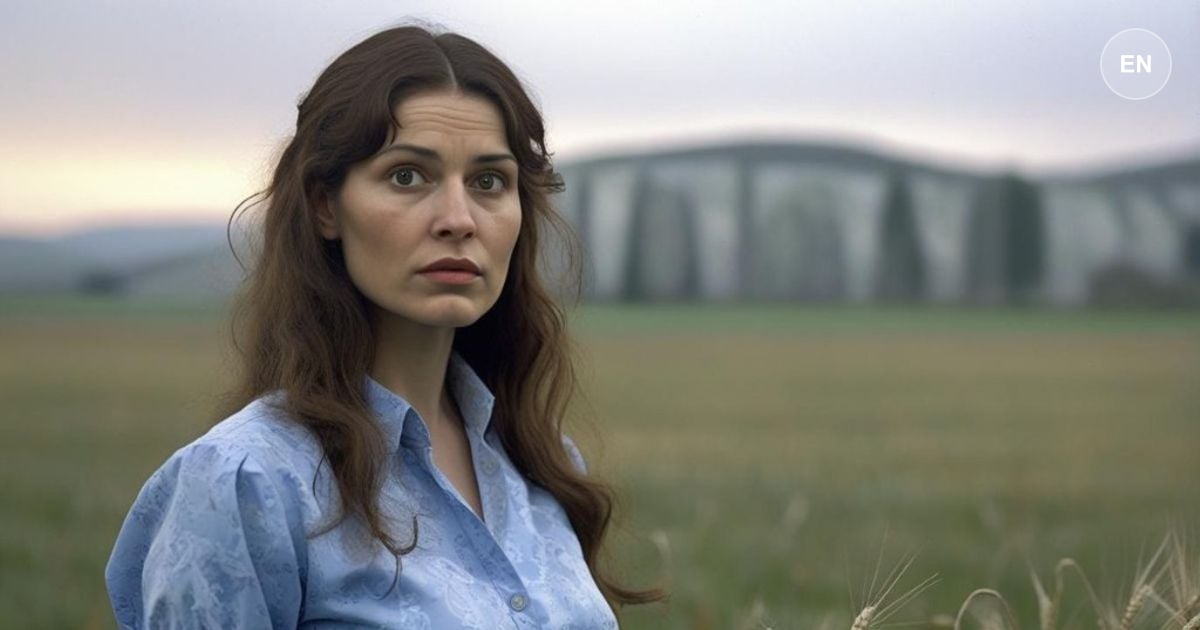
The rick had to be finished by moonlight. The engine was promised to another farm next day, so the humming went on with less rest than ever. About three, Tess looked up and saw Alec under the hedge. He waved, and blew her a kiss, as if the quarrel was done. She looked down and stayed with the sheaves. She was the only woman on the machine, shaken through, and the sinking stack had cut her off from Marian and Izz. She had drunk no ale. The dread of it went back to her childhood. Groby came up and offered to let her stop if she would join her friend. She knew who had asked him. She shook her head.
The rats ran when the bottom of the rick was opened. Dogs, shouts, and Marian screaming that one had got inside her clothes, and then the drum stopped. Tess stepped to the ground too emptied to speak above a breath. Alec had watched the rat-catching. He was beside her at once, and he would not take the slap as an insult. He had told the farmer that women ought not to be set at steam-threshing. He walked her as far as the cottage. At the hedge, under a cold moon, he said the religious fit was over and a little kindness remained. If he could not make the old relation lawful, he could still lift the worry from her and from her parents and sisters. He had seen them. They had not known where she was. Chance had found her. She asked him not to name the children, or she would break down. If he helped them, let him do it without telling her. Then she said she would take nothing from him, for them or for herself. He did not come indoors.
By her own lamp she wrote, and she called Angel her husband whether the word angered him or not. She was exposed to a temptation she was afraid to name. She begged him to come at once, before anything terrible happened, or else to let her come to him. She knew the distance. The punishment was deserved. She asked him not to be just, only a little kind, and to come even if she had no claim. She did not mind the work. One line to say he was coming soon, and she would wait cheerfully. She was the woman he had loved at the dairy, not the one he disliked and had never seen. The past had died when she met him. Men still called her handsome. Those looks mattered only because they were his, and when they drew trouble she had tied her face up. If she fell into a snare, the last state would be worse than the first. She would live as his servant if she could not live as his wife. She signed herself his faithful heartbroken Tess, and asked him to come and save her from what threatened. The lamp burned on in a cottage Alec had already found. Would a line from Angel reach her while she could still refuse?
Hardy understood something about human nature that remains brutally relevant: predators don't strike randomly, they hunt strategically. In Teresa's world, Alec waits until the threshing machine has ground her down, until her family's poverty weighs heaviest, until Angel's absence feels most crushing. Today, this same pattern plays out everywhere. Payday loan companies cluster around factories and hospitals, knowing when shifts end and when people are most desperate. Abusive partners escalate their control during stressful life events, new jobs, sick relatives, financial crises, when their victims have the least emotional bandwidth to resist. Multi-level marketing schemes specifically target isolated parents, promising financial freedom when bills are piling up. The timing isn't coincidental; it's calculated. Physical exhaustion weakens emotional defenses. Financial desperation clouds judgment. Isolation eliminates outside perspectives that might expose the manipulation. Hardy shows us that recognizing this pattern isn't about being suspicious of everyone, it's about understanding that genuine helpers don't disappear when you get stronger, while predators only circle when you're wounded. The most dangerous offers often come wrapped in false kindness during our darkest hours. When someone who previously harmed you suddenly reappears with 'help' during your crisis, that's not redemption, it's opportunism. The question becomes: how do we build genuine support networks before we need them, so we're not forced to choose between predators and isolation when life gets hard?
Explore this chapter with AI to uncover deeper meaning and practical takeaways.
AI Discussion