
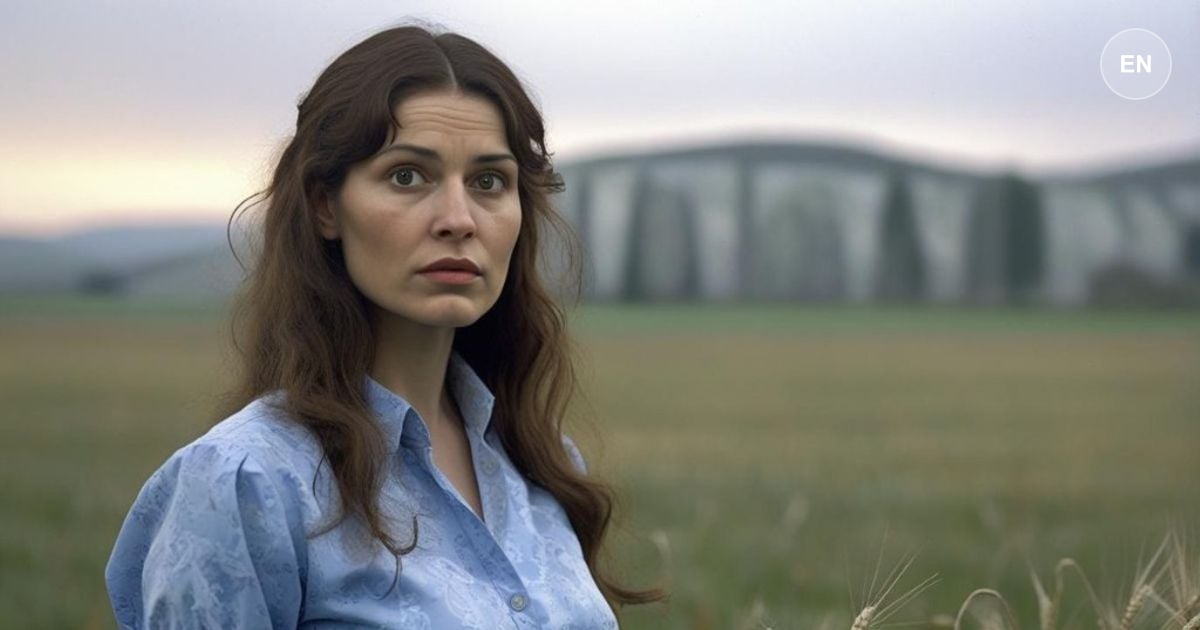
On Sunday the four dairymaids dress for Mellstock Church, Tess's first outing in two months at Talbothays. Night rain has flooded fifty yards of the low lane. On a work day they would walk through in pattens. Today they are in thin shoes and pink, white, and lilac gowns, and every mud spot would show. They cling to the roadside bank, flies and butterflies trapped in their skirts, until Angel Clare comes wading round the bend in dairy clothes and long boots, a cabbage-leaf in his hat and a thistle-spud in his hand. He has been out to see the hay. He is not going to church. He saw their trouble from far off and hurried, with one of them in particular in mind. Four hearts give a single throb. Standing in the water under the bank, he says he will carry every one of them across.
Marian goes first, a dead weight of plumpness on his arm. Izz lowers herself dry-lipped, the verse about a time to embrace already in her mouth, and rides calmly. Retty shakes and hinders him. Tess, last, feels the same excitement she had scorned in the others and tries to climb the bank instead. She is in his arms before the excuse is finished. Three Leahs to get one Rachel, he whispers. She tells him the others are better women. Not to me, he says. Three quarters of the labour were for this fourth quarter. He bends his face, says Tessy, and stops short of a kiss. The three he has already set down are in sight. He leaves her on dry ground and splashes back. Marian looks at her without joy. They have no chance against her. He would have kissed Tess if she had encouraged him ever so little.
That night Tess tells Retty, tears running, that she will stand in nobody's way. If he ever asks, she will refuse him, as she would refuse any man. The reserve among the girls breaks. Izz had lain still against his breast hoping, and he did not kiss her, and she talks of leaving Talbothays. Then the dark room turns to a lady his family have looked out for him, a Doctor of Divinity's daughter near Emminster, whom he does not much care for and is sure to marry. Tess starts. She has never heard of her. They ache over a bride's dress and veil until sleep comes, the cheese-wring dripping downstairs. After that Tess keeps no further thought that his notice means a grave intention. A summer liking of her face, nothing more: and she, the one he prefers, less worthy in the eyes of propriety than the homelier girls he ignores.
Hardy shows us something remarkable: when Marian, Izz, and Retty realize Angel prefers Teresa, they don't turn vicious. They accept their loss with dignity and maintain their friendship. This isn't weakness, it's strategic intelligence. These women understand something crucial about their position in the world. They're dairy maids competing for a gentleman farmer's son. The odds were always long, and turning bitter won't improve them. More importantly, they need each other. In their economic position, female friendships are survival networks. Burning bridges over a man who was probably unattainable anyway would be self-destructive. This pattern persists today. Wage-earning women often show more grace in romantic competition than their middle-class counterparts because they can't afford the luxury of dramatic feuds. They understand scarcity, of good jobs, stable housing, reliable childcare, trustworthy friends. When you're living paycheck to paycheck, you don't destroy relationships over someone who was likely temporary anyway. The dairy maids' response reveals a form of practical wisdom: preserve your support network, maintain your dignity, and save your energy for battles you can actually win. Their grace isn't resignation, it's strategic emotional management in a world that offers limited options.
Explore this chapter with AI to uncover deeper meaning and practical takeaways.
AI Discussion